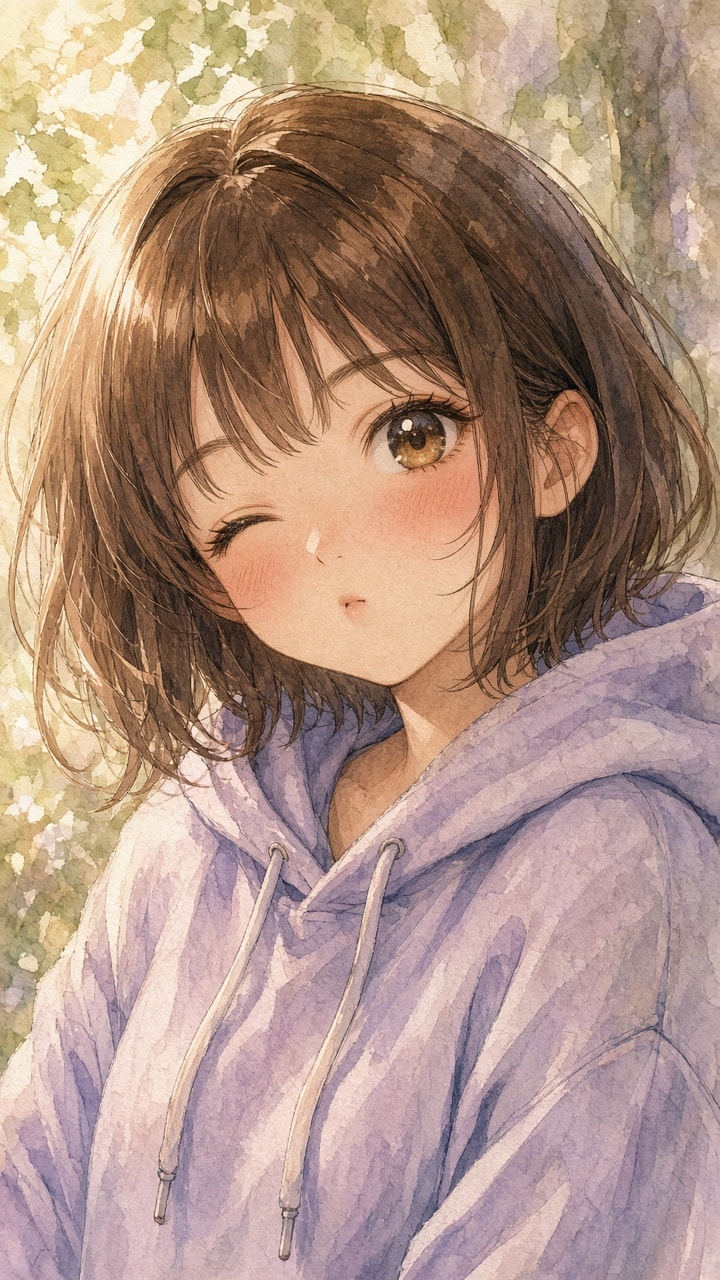
A cozy hand-painted watercolor anime close-up of an original character with a cheeky wink, puffed cheeks and a tiny pout, lit by soft warm sunlight.
Create a beautiful 9:16 vertical hand-painted anime illustration of a cute young girl with short chestnut-brown hair, soft bangs and big sparkling hazel eyes. She is making a playful childish expression, one eye tightly closed in a wink, cheeks puffed slightly, and lips forming a tiny funny pout. Her head is tilted naturally toward the camera. She wears a pastel lavender oversized hoodie. Soft warm sunlight, delicate blush, expressive facial details, textured watercolor and hand-painted anime art style, muted natural background, charming imperfect details, close-up portrait, adorable and full of personality. Original character design, highly detailed, beautiful artistic finish.
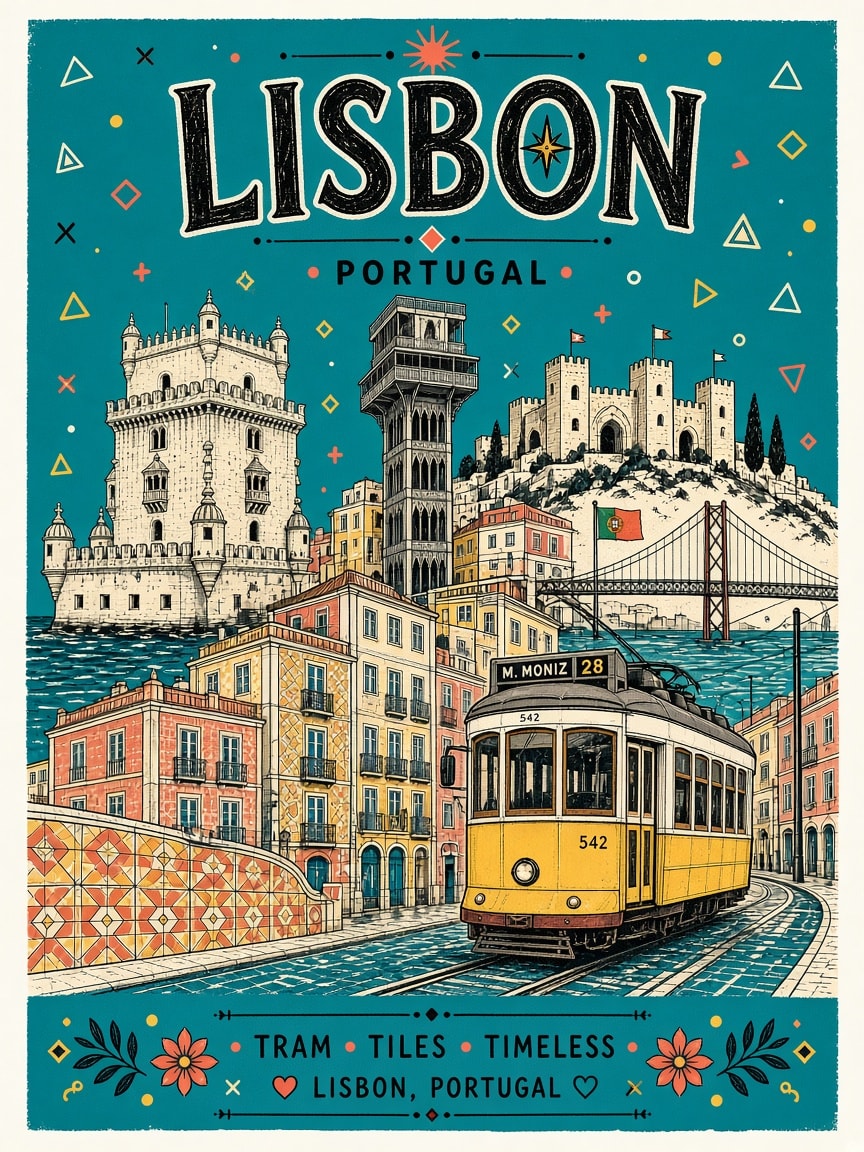
Turn any city into a vintage-inspired souvenir travel poster in a hand-drawn architectural doodle style, with bold ink outlines, its iconic landmarks, a local vehicle in the foreground and the city name in hand-lettered type. Just set the city variable.
INTERNATIONAL CITY TRAVEL ART PRINT COLLECTION

Create a charming, vintage-inspired travel poster featuring Lisbon, Portugal, illustrated in a distinctive hand-drawn architectural doodle style.

Showcase the city's most iconic landmarks, buildings, monuments, towers, bridges, and recognizable architectural details, arranged together in a dense yet balanced artistic composition. Incorporate a recognizable local element, such as a vintage car, tram, taxi, bicycle, or public transport, in the foreground.

Use bold black ink outlines, intricate hand-drawn details, playful geometric patterns, and slightly imperfect sketch-like textures. Add the city name prominently within the illustration using creative hand-lettered typography.

Present the artwork inside a clean white poster border, surrounded by a vibrant solid-color background that complements the city's identity. Use a limited palette of black, warm white, and one or two bold accent colors.

Overall aesthetic: Minimalist European travel illustration, retro souvenir poster, whimsical architectural line art, screen-print texture, playful composition, and premium collectible wall-art design.

Keep the artwork visually cohesive, highly detailed, charming, and instantly recognizable as a celebration of the destination. Avoid photorealism, 3D effects, gradients, and unnecessary decorative elements.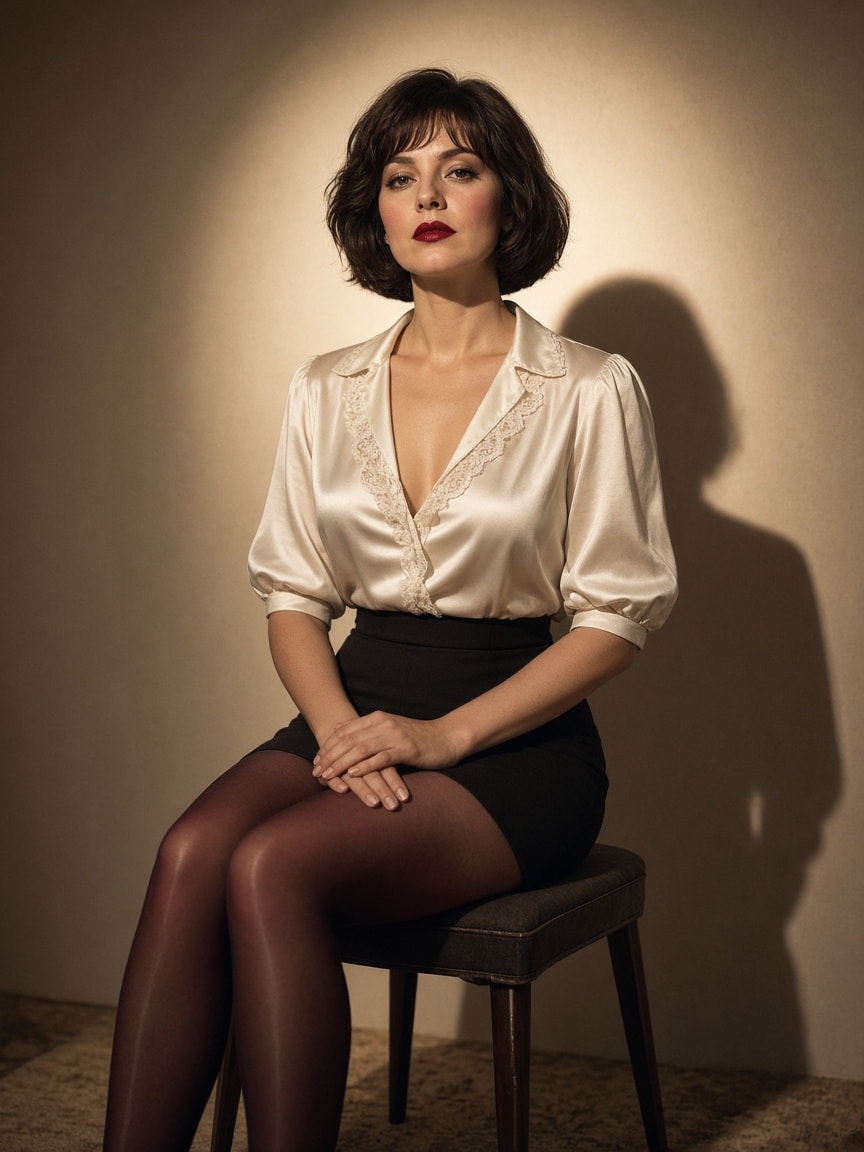
Turns an uploaded photo of a woman into a photorealistic 1970s editorial studio portrait with a crimson lip, ivory satin lace blouse, warm spotlight glow and analog film tones, keeping her exact identity.
Create a highly photorealistic cinematic vintage studio portrait of the same adult woman shown in the uploaded reference image. Preserve her exact facial identity, recognizable features, natural skin tone, face shape, eyes, nose, lips, and facial proportions without beautification or alteration.

Appearance & Makeup:
She has a short, softly tousled dark-brown bob with gentle loose curls framing her cheeks and delicate wispy bangs across her forehead. Her expressive hazel-brown eyes are enhanced with subtle smoky eyeliner, naturally shaped eyebrows, softly flushed cheeks, and elegant deep crimson-red lipstick. Her complexion is warm and luminous, with realistic skin texture and natural details.

Outfit & Styling:
She wears an elegant ivory satin blouse with a modest, softly draped neckline, delicate lace detailing around the collar, and subtle puff sleeves. The blouse is neatly fitted and tucked into a high-waisted black tailored mini skirt with a refined silhouette. Add sheer dark burgundy stockings for a sophisticated vintage-inspired look. The overall styling should feel elegant, tasteful, and timeless rather than revealing.

Pose & Composition:
She sits gracefully on a low vintage studio chair, leaning slightly forward with relaxed shoulders and a confident posture. Her hands rest naturally together on her lap. Her chin is gently raised as she looks directly into the camera with a confident, subtly mysterious expression.

Lighting & Background:
A minimalist warm beige studio wall serves as the background. A strong directional spotlight creates a soft circular glow behind her, accompanied by a beautifully defined shadow falling to one side. Rich warm shadows, gentle highlights across her face, and subtle cinematic contrast create an intimate vintage Hollywood atmosphere.

Photography Style:
Classic 1970s editorial portrait photography, vintage studio glamour, warm analog film tones, authentic skin texture, subtle film grain, sophisticated color grading, professional fashion photography, sharp facial focus, beautifully balanced composition, highly detailed, photorealistic, vertical  portrait.

Maintain the reference woman's exact identity throughout. No cartoon features, no anime aesthetics, no artificial skin smoothing, no exaggerated body proportions, and no changes to her recognizable appearance.
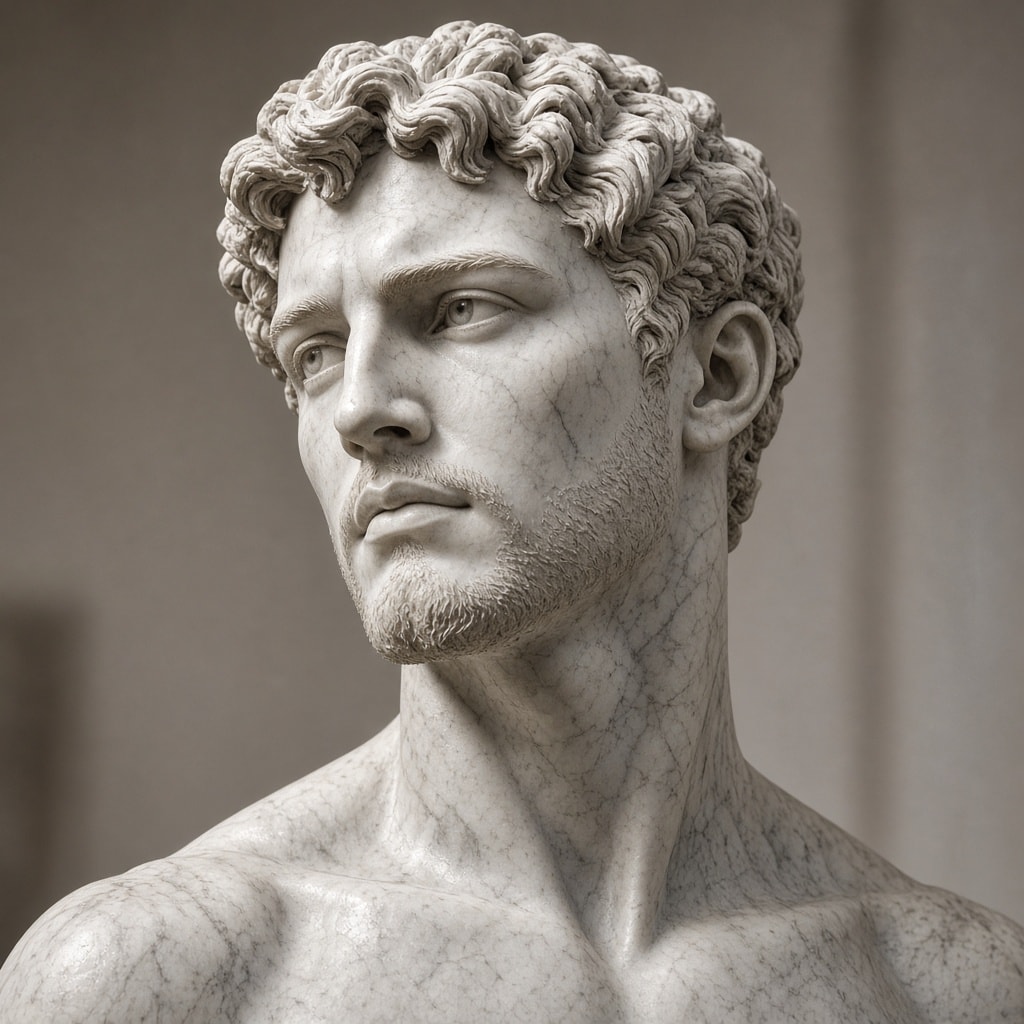
Turns any uploaded portrait photo into a museum-grade classical marble statue bust with chiseled features, natural stone veins, sculpting marks and soft gallery lighting.
Turn the uploaded photo into a hyper-realistic marble sculpture avatar in classical Greco-Roman statue style. Precisely chiseled facial features with subtle imperfections, visible stone veins, and natural marble grain texture. Smooth yet slightly weathered surface, realistic sculpting marks, and refined anatomy. Soft museum-style directional lighting casting gentle shadows to enhance depth and contours. Neutral gallery background with shallow depth of field, elegant fine-art atmosphere, timeless aesthetic, ultra-high resolution, cinematic realism, 1:1 aspect ratio, premium statue portrait quality.

A detailed realism prompt for an unedited, straight-out-of-camera phone selfie: a curly-haired man in his twenties reclining on a sofa in a lived-in room, with visible pores, warm household light and none of the plastic, over-retouched AI look.
Candid phone snapshot, shot with front phone camera, real phone photo of an attractive adult man in his early-to-mid 20s, an unedited camera photo, SOOC. He has thick, voluminous dark brown curly hair with naturally defined loose ringlets, styled in a slightly messy shape with several prominent curls falling across his forehead. His hair has natural volume, subtle shine, and individual flyaway strands. He has light olive skin, blue-grey eyes, thick dark eyebrows, a straight nose with a small silver nose stud, naturally full pink lips, and a defined jawline. He has a neatly trimmed dark mustache and a distinctive short, fuller goatee concentrated around his chin. Small sparkling silver diamond-style stud earrings are visible in both ears.

He is wearing a relaxed white cotton graphic T-shirt with oversized green and purple printed lettering across the front. The shirt has a slightly loose fit, natural fabric creases, and a simple rounded neckline.
He is reclining comfortably against a sofa or bed, holding his iPhone slightly above his face to take a close-up front-facing selfie. His head rests naturally against the surface behind him, shoulders relaxed. He looks directly into the camera with a subtle, confident half-smile and a calm, relaxed expression. His face is the main focal point.

The framing is vertical 9:16 portrait, close-up selfie from the upper chest upward, shot with front phone camera at a slightly elevated angle. His face is centered, with his voluminous curly hairstyle occupying much of the upper frame and his white graphic T-shirt visible across the lower foreground. Candid phone shot, spontaneous and slightly imperfect, like a casual selfie taken while relaxing at home.

The environment is a cozy, ordinary bedroom or living space. Behind him is a light cream-colored wall with a subtle textured painted finish. A large black flat-screen television is partially visible on the upper-left side of the background. On the right side, a dark black backpack or soft travel bag hangs casually near the wall, with realistic fabric folds and straps visible. A small section of light beige furniture or bedding is visible behind his shoulders.

Lighting is warm, soft indoor household lighting, creating natural illumination across his face with gentle shadows beneath his curls, nose, and chin. His skin has natural highlights, and the white shirt retains visible cotton texture without appearing overexposed.
Real photo look, IG phone snapshot: visible pores, natural skin-tone variation, under-eye texture, subtle freckles and facial imperfections, individual defined hair curls, natural catchlights in the eyes, accurate facial proportions, natural mustache and goatee texture, visible cotton weave. Natural colors, authentic handheld perspective.

Avoid the look of modern high-definition digital fashion photography. No plastic skin, no excessive smoothing, no beauty retouching, no sharp digital look, no cinematic lighting, no dramatic color grading, no filters, no distorted anatomy, no extra fingers, no watermarks or added text overlays. Strictly vertical 9:16 portrait orientation.
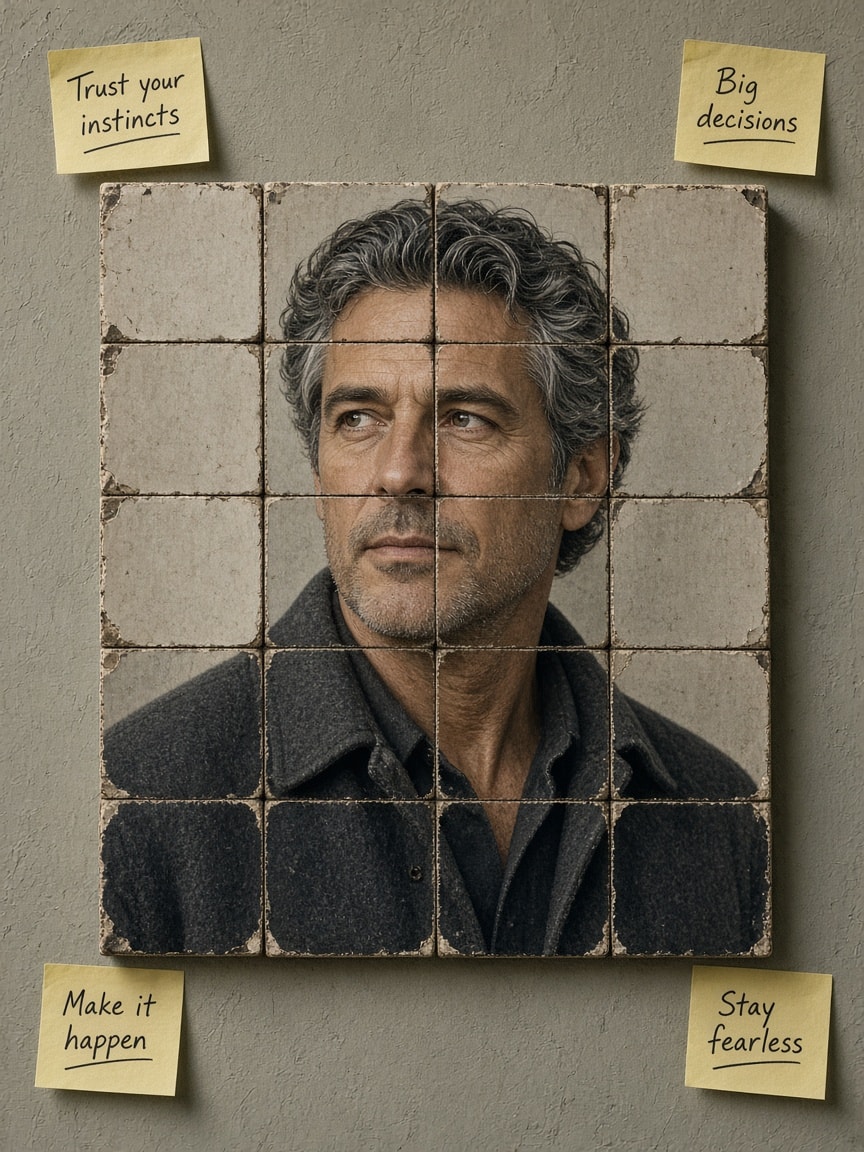
A structured JSON prompt that rebuilds your uploaded photo as a photorealistic portrait assembled from weathered ceramic tiles on a sage plaster wall, with seamless continuity across the grout lines and four handwritten motivational sticky notes around it.
{
  "task": "Transform the uploaded photograph into a cinematic, photorealistic vintage tiled portrait poster.",

  "reference_image": {
    "source": "Use the user's uploaded photograph as the primary identity reference.",
    "identity_preservation": "Preserve the person's exact facial identity, facial structure, skin tone, hairstyle, eye shape, and recognizable features.",
    "gender": "Automatically follow the uploaded subject.",
    "expression": "Maintain the original expression or create a subtle, confident, natural expression."
  },

  "composition": {
    "layout": "Vertical editorial poster.",
    "structure": "A large rectangular portrait assembled from approximately 4 columns and 5 rows of individual square, slightly irregular ceramic or paper tiles.",
    "portrait": "The subject occupies the central majority of the composition, visible from the head to the upper torso.",
    "tile_effect": "Every tile is physically separated by thin, dark, realistic grout lines. Slight variations in alignment, chipped edges, worn corners, and subtle shadows create an authentic handmade tiled-wall appearance.",
    "continuity": "The portrait must align seamlessly across all tiles, with facial features and body details continuing naturally across tile boundaries."
  },

  "environment": {
    "background": "Muted dusty sage-gray textured plaster wall.",
    "surface": "Aged, slightly weathered surface with subtle imperfections.",
    "lighting": "Soft natural diffused daylight with gentle shadows."
  },

  "styling": {
    "clothing": "Automatically create tasteful, sophisticated clothing that complements the subject's appearance. Prefer vintage-inspired casual or smart-casual styling.",
    "aesthetic": "Understated vintage editorial photography.",
    "color_palette": "Muted earthy browns, charcoal, dusty sage, warm beige and subtle faded tones."
  },

  "personalized_details": {
    "sticky_notes": {
      "placement": "Four small yellow handwritten sticky notes positioned around the outer edges of the tiled portrait.",
      "messages": [
        "Trust your instincts",
        "Big decisions",
        "Make it happen",
        "Stay fearless"
      ],
      "style": "Authentic handwritten black ink, slightly imperfect lettering, naturally curled paper corners and realistic shadows."
    },
    "signature": "A tiny handwritten 'prompt by @yourusername' near the bottom-left tile. Omit if no username is supplied."
  },

  "photography": {
    "style": "Ultra-realistic photographic portrait.",
    "lens": "50mm editorial portrait photography.",
    "details": "Natural skin texture, realistic hair strands, detailed fabric textures, subtle film grain and authentic photographic imperfections.",
    "color_grading": "Warm vintage film aesthetic with restrained contrast."
  },

  "quality_control": {
    "priority": [
      "Preserve the uploaded person's identity.",
      "Keep the face realistic and anatomically accurate.",
      "Ensure the tile grid is clearly visible.",
      "Maintain seamless portrait continuity across tiles.",
      "Keep sticky notes outside the main facial area.",
      "Avoid excessive AI beautification."
    ],
    "avoid": [
      "Changing facial identity",
      "Plastic-looking skin",
      "Artificial facial features",
      "Broken tile alignment",
      "Floating tiles",
      "Excessive decorative elements",
      "Cartoon or illustrated appearance",
      "Distorted text",
      "Watermarks"
    ]
  },

  "output": {
    "aspect_ratio": "3:4",
    "resolution": "High resolution",
    "rendering": "Photorealistic vintage editorial poster"
  }
}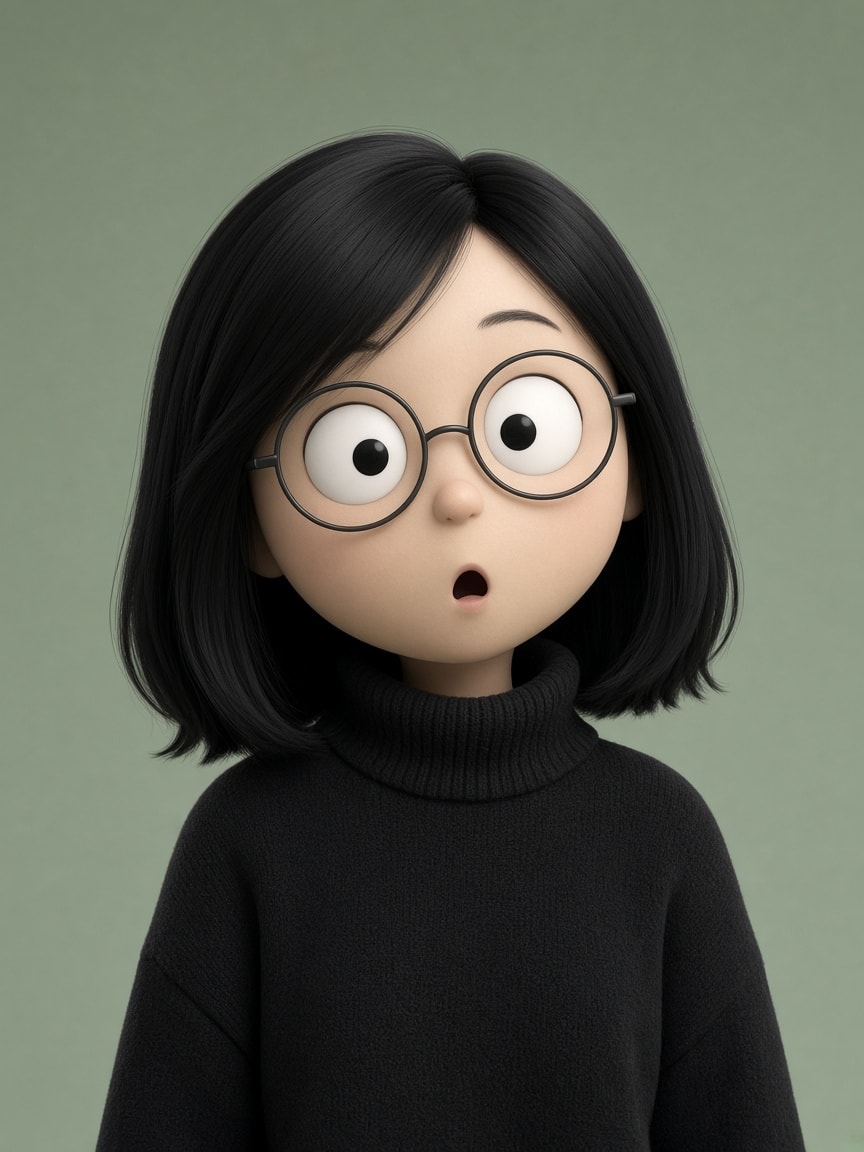
A short photo-to-3D prompt that turns a selfie into an adorable animated character with a big round head, huge googly eyes, round glasses and a tiny "o" mouth, while keeping the person's recognizable features and hairstyle.
Turn my photo into a cute 3D animated portrait. Preserve recognizable features and hairstyle. Add a big round head, huge googly eyes, tiny pupils, round glasses, a button nose and tiny “o” mouth. Slightly surprised expression. Oversized black turtleneck, soft matte 3D, sage-green background, chest-up, 3:4.
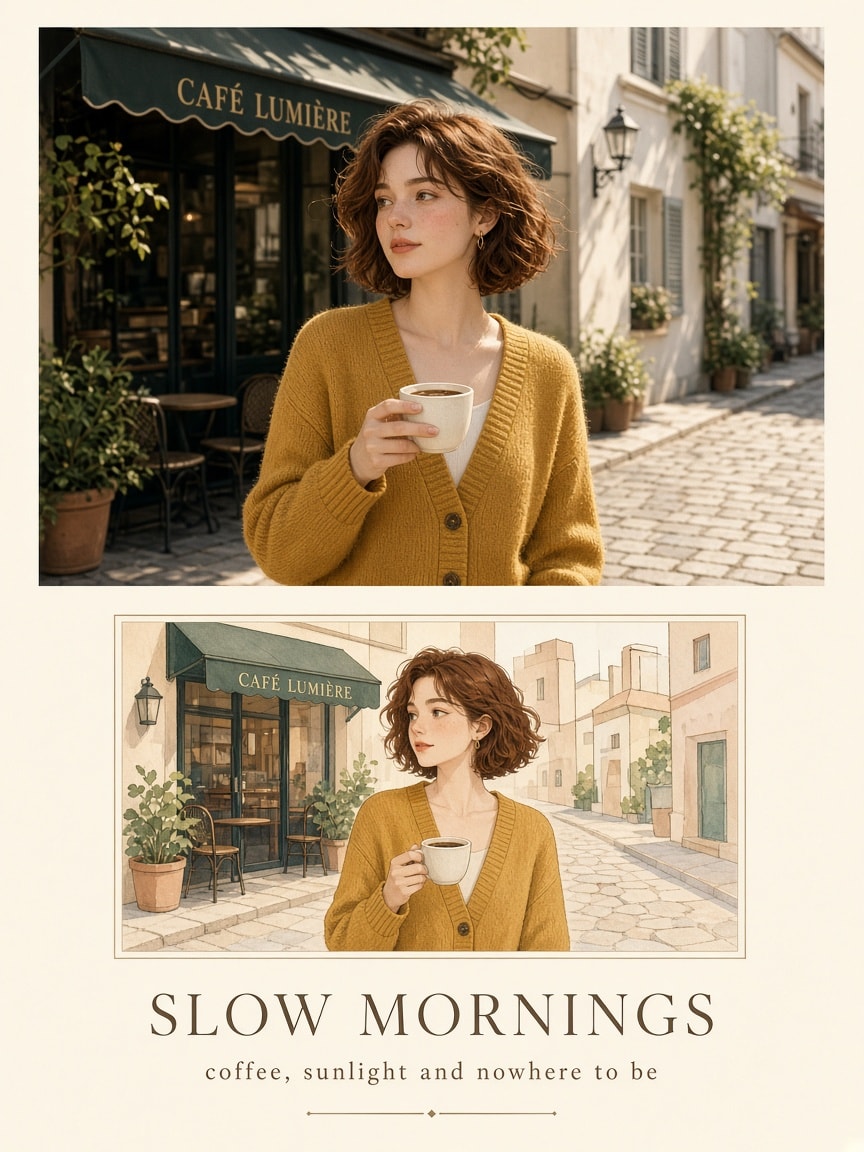
Upload any photo and get a premium Japanese-style editorial poster: the top half keeps the original photo, the bottom half recreates the same person and pose as a soft hand-painted 2D illustration in a framed artwork, with an elegant uppercase headline and tagline.
Transform the uploaded reference image into a beautiful, premium editorial illustration poster.

Composition: Create a vertical 4:5 split-layout design. The upper half should display the original photograph in its realistic photographic style, preserving the subject's exact appearance, facial features, hairstyle, outfit, pose, and expression.

The lower half should feature a beautifully stylized 2D illustration of the exact same subject, recreating the original photograph's pose, expression, clothing, and composition. Convert the subject into a charming, hand-painted digital illustration with soft brush textures, clean shapes, delicate outlines, warm skin tones, and beautiful artistic details.

Background Design: Transform the original background into a creative illustrated environment. Add minimal geometric architecture, abstract shapes, subtle plants, soft natural elements, and a complementary color palette inspired by the original photograph.

Poster Layout: Place the illustration inside a clean rectangular artwork frame, surrounded by a warm ivory or cream-colored background. Add a large elegant uppercase headline beneath the illustration, with a small complementary subtitle and a subtle decorative line.

Typography: Use thin, sophisticated, widely spaced uppercase lettering. Choose a short title that matches the mood of the photograph, with a smaller minimalist tagline underneath.

Art Direction: Modern Japanese editorial poster design, contemporary lifestyle illustration, soft pastel colors, warm sunlight, minimalist graphic design, artistic storytelling, premium magazine aesthetic.

Important: Maintain the original person's identity and recognizable features. The illustrated version must clearly resemble the person in the original photograph. Keep the top photograph realistic and the bottom illustration artistic. Ensure both versions match perfectly in pose and composition.

High-quality details, balanced layout, elegant negative space, professional art direction, 4:5 portrait poster.
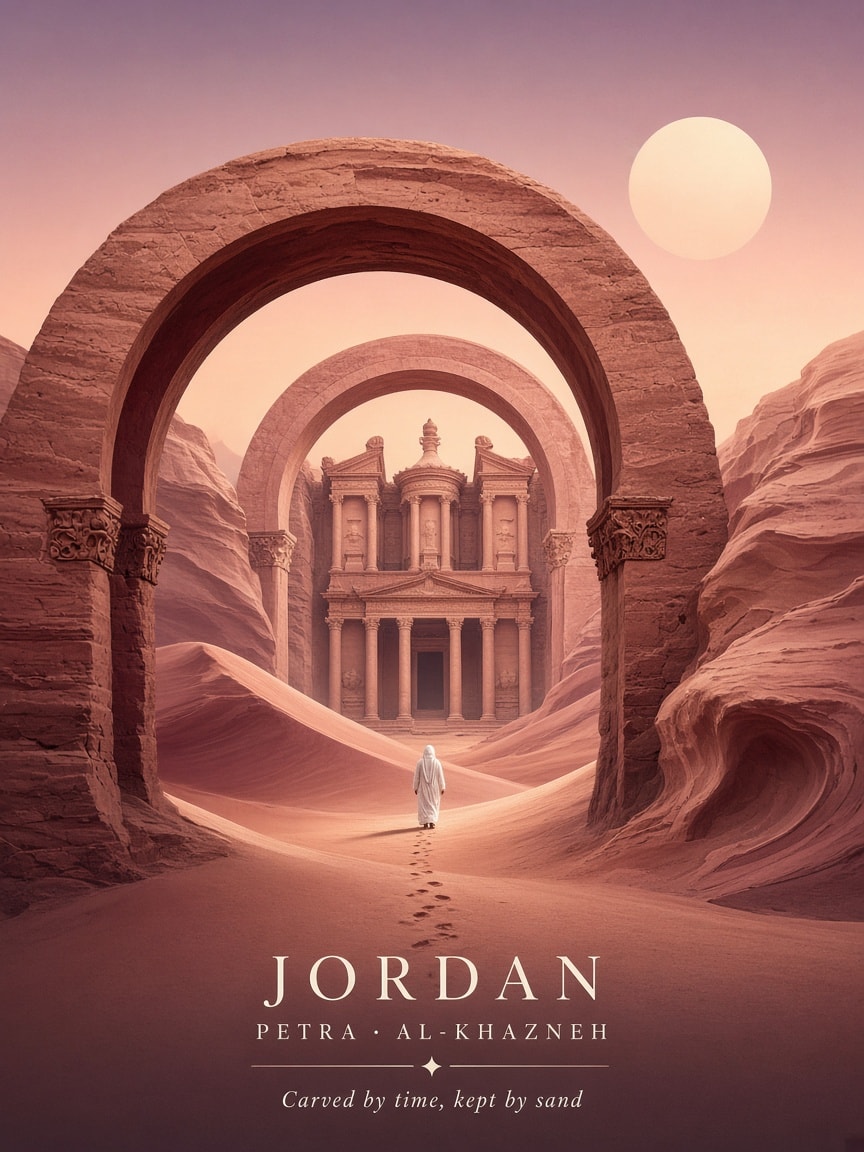
A reusable collectible travel-art template: name a landmark, city and country and the model frames it inside a monumental arch with a smaller nested arch for infinite depth, adds a dreamlike landscape, a lone traveller with footprints, an oversized sun or crescent moon, a unique colour palette and minimal typography with a tiny poetic tagline.
Create an exceptionally beautiful surrealist architectural travel artwork featuring LANDMARK NAME, CITY, COUNTRY.

1. THE SIGNATURE COMPOSITION

Create a monumental architectural arch or doorway as the dominant foreground frame.
Inside the arch, reveal a breathtaking surreal landscape featuring the iconic landmark.
Add a second, smaller nested arch in the centre, creating an illusion of infinite depth.
Position the landmark naturally within this inner portal, preserving its recognisable architectural details.

2. DREAMLIKE LANDSCAPE

Surround the landmark with abstract rolling landscapes inspired by the destination.
Add a tiny solitary traveller walking towards the inner arch.
Create a delicate trail of footprints leading towards the landmark.
Introduce a crescent moon or oversized sun in the distant sky.
Use beautiful gradients, dramatic shadows and atmospheric lighting.

3. COLOUR IDENTITY

Every destination must have its own distinctive palette. Never repeat colours.

4. ART DIRECTION

Surrealist architectural photography.
Minimalist geometric composition.
Cinematic colour grading.
Monumental arches and nested frames.
Dreamlike scale and perspective.
Rich textures and soft atmospheric gradients.
Deep, sophisticated shadows.

5. TYPOGRAPHY

Add the country and landmark name in elegant minimal typography, with a tiny poetic tagline.

No clutter, no unnecessary decorations, no random buildings. Premium collectible travel-art aesthetic. Vertical 4:5

Keep the nested arches as the signature element in every poster, but change the landscape, lighting, colour palette and architectural details for every destination. That will make the collection instantly recognisable while keeping every artwork unique.
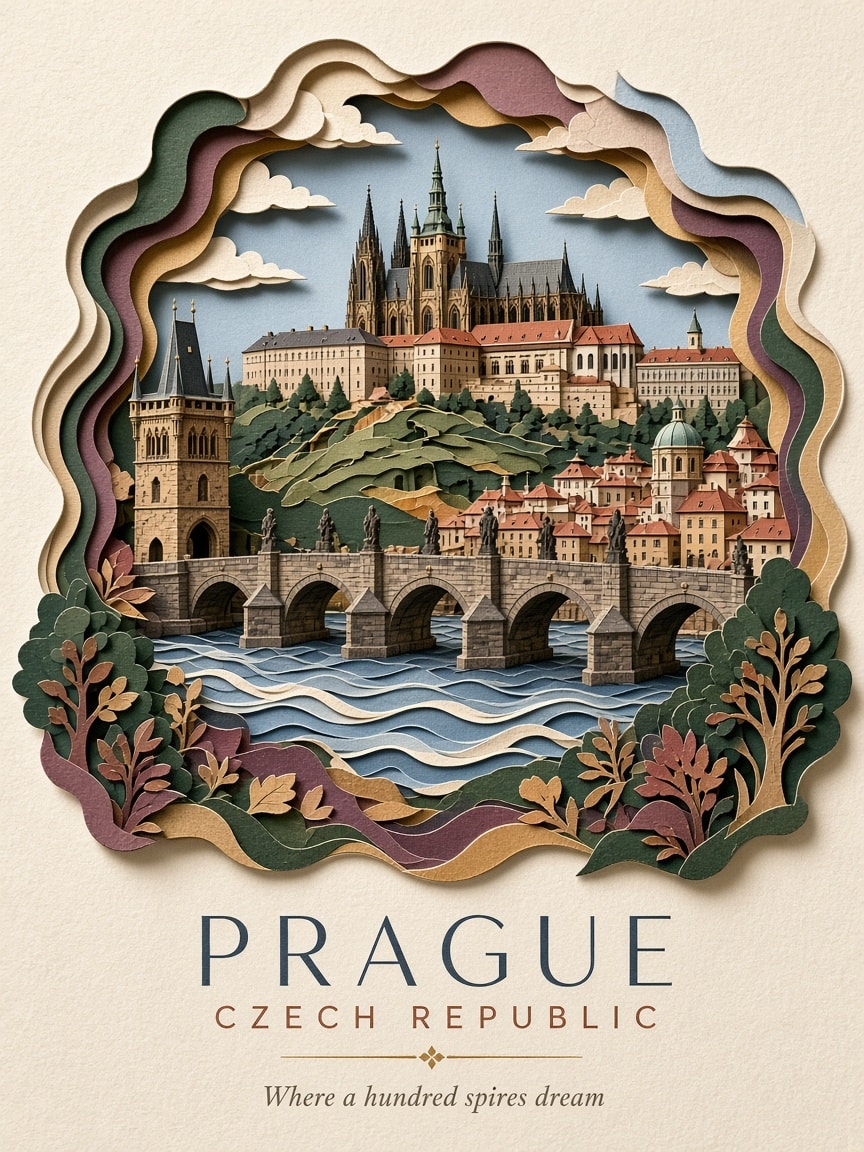
A reusable travel-poster template: fill in [LANDMARK NAME], [CITY] and [COUNTRY] and the model builds the destination as a handcrafted miniature diorama from layered, sculpted coloured paper, with paper-cut hills, rivers and clouds, a destination-specific palette, an organic paper-cut frame and minimal typography with a short poetic tagline.
Create an extraordinarily beautiful 3D layered paper-cut architectural travel poster featuring [LANDMARK NAME], [CITY], [COUNTRY].

Transform the destination into an enchanting miniature architectural world, crafted entirely from intricately layered, sculpted and cut coloured paper.

1. CENTRAL ARCHITECTURAL SCENE

Feature the destination’s most iconic landmark as the main attraction.
Preserve its authentic and recognisable architectural identity.
Recreate buildings using multiple layers of carefully cut paper.
Include distinctive rooftops, windows, arches, towers, domes, bridges or architectural details specific to the destination.
Arrange smaller surrounding buildings to create a charming miniature cityscape.
Make the entire scene resemble a beautifully handcrafted architectural diorama.

2. LAYERED PAPER LANDSCAPE

Build an extraordinary three-dimensional environment.

Flowing paper-cut hills and sculpted mountains.
Layered rivers, lakes, coastlines or ocean waves where appropriate.
Curved bridges, winding pathways and miniature staircases.
Overlapping paper clouds, hills and architectural backgrounds.
Intricate foreground elements framing the composition.
Beautiful irregular paper-cut edges surrounding the scene.

Every layer should have visible depth, delicate edges and realistic cast shadows.

3. UNIQUE DESTINATION DETAILS

Include small architectural and cultural elements that make each destination instantly recognisable.

Select details according to the location rather than repeating the same decorations.

4. DESTINATION-SPECIFIC COLOUR PALETTE

Create a completely original colour identity for every destination.

Use 6–9 harmonious shades inspired by its architecture, culture, landscape and atmosphere.

Combine rich colours, soft pastels, contrasting paper layers and carefully selected neutral tones.

Never repeat the same palette between different destinations.

5. THREE-DIMENSIONAL PAPER ART

Authentic handmade paper-cut aesthetic.
Multiple overlapping cardstock layers.
Sculpted paper architecture.
Delicate folded and curved paper details.
Visible paper thickness.
Soft realistic shadows between layers.
Beautiful tactile textures.
Intricate miniature craftsmanship.
Gentle studio lighting.

The artwork must look like a real handcrafted paper sculpture photographed professionally, not a flat illustration or plastic 3D render.

6. DISTINCTIVE POSTER COMPOSITION

Place the entire architectural scene inside an elegant irregular organic paper-cut frame.

Use a balanced vertical composition with:

Large miniature architectural scene in the centre.
Beautiful layered foreground.
Subtle surrounding negative space.
Soft neutral background.
Realistic depth and dimensional shadows.

7. MINIMAL TYPOGRAPHY

Below the artwork, write:

[CITY / DESTINATION NAME]

[COUNTRY]

Add one short, elegant poetic tagline of approximately 3–6 words inspired by the destination.

Use elegant uppercase modern typography for the destination name and a delicate refined serif font for the tagline.

Keep typography minimal, correctly spelled and beautifully positioned.

8. FINAL ART DIRECTION

A breathtaking fusion of miniature architecture, layered paper sculpture, handcrafted papercraft, whimsical storytelling and premium contemporary travel poster design.

Extremely intricate craftsmanship, sophisticated colour harmony, realistic paper shadows, beautiful depth, exquisite architectural details and museum-quality presentation.

Portrait 2:3 composition. No watermark, no unnecessary text, no photorealistic buildings, no plastic appearance.
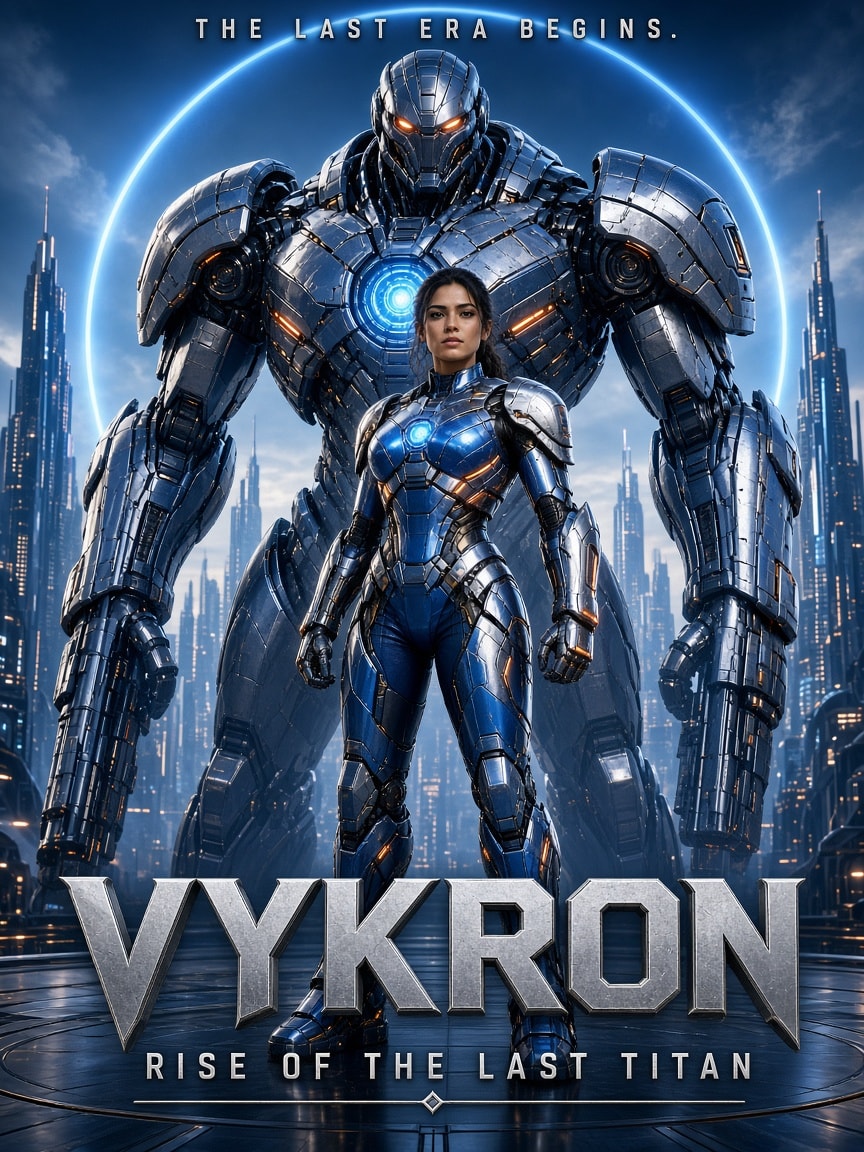
A structured JSON prompt for a clean, theatrical-quality movie poster of an original franchise, VYKRON: Rise of the Last Titan. An adult heroine in cobalt-and-silver battle armor stands in front of one giant mechanical Titan, framed by a glowing energy ring over a calm futuristic skyline, with strict anti-clutter rules, a cobalt/cyan/orange grade and exact poster typography. Swap the title and character details to make your own blockbuster poster.
1{2 "aspect_ratio": "3:4",3 "style": "premium Hollywood sci-fi superhero theatrical poster, photorealistic CGI, clean cinematic composition, IMAX production quality, sophisticated visual storytelling",...+2 more lines
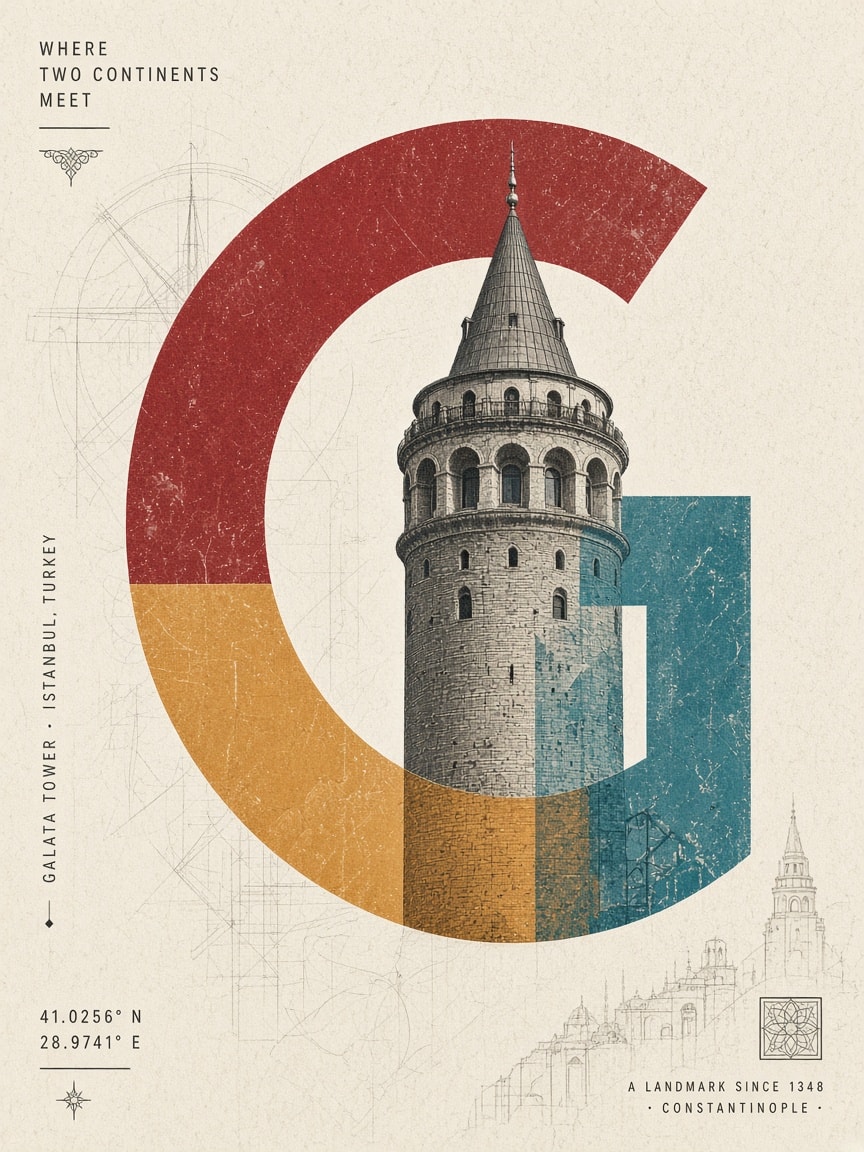
A reusable template for collectible architectural art prints: fill in [LANDMARK NAME], [CITY] and [COUNTRY] and the model builds one enormous uppercase letter from the destination's name, fuses the landmark into it as a double exposure, colours it with a palette drawn from the place's culture, and finishes it with editorial Swiss-style typography, coordinates and a tagline on textured ivory paper.
Create an exceptionally sophisticated, contemporary architectural art poster featuring [LANDMARK NAME], [CITY], [COUNTRY].

1. GIANT TYPOGRAPHIC COMPOSITION

Feature one enormous, oversized uppercase letter associated with the destination name as the central graphic element.

The letter should dominate the composition, extending almost across the entire poster.

Use bold, elegant, geometric typography with distinctive curves and negative spaces.

2. LANDMARK INTEGRATION

Seamlessly integrate a highly detailed architectural photograph or realistic architectural illustration of [LANDMARK NAME] into and across the oversized letter.

The landmark should appear to emerge from the typography, partially overlap its boundaries and interact naturally with its shape.

Preserve the landmark’s authentic architectural details, proportions and recognisable silhouette.

Create an artistic double-exposure effect where the architecture and typography become one unified visual composition.

3. DISTINCTIVE COLOUR TREATMENT

Choose a unique colour palette inspired by the destination’s cultural identity, national colours and architectural character.

Use two or three contrasting colours within the oversized typography.

Apply translucent colour overlays across selected sections of the landmark, creating a beautiful combination of architectural photography, coloured light and graphic shapes.

Every new destination must receive a different colour combination. Never repeat palettes.

4. TEXTURE & BACKGROUND

Use a warm ivory, soft white or subtle textured paper background.

Introduce delicate architectural sketch marks, distressed ink textures, faded photographic grain and subtle print imperfections around the central composition.

Keep the surrounding space clean and uncluttered.

5. EDITORIAL TYPOGRAPHY

Include the following information:

[LANDMARK NAME]

[CITY NAME]

[COUNTRY NAME]

Add small vertical typography along one side, geographical coordinates and a subtle destination-inspired tagline.

Use sophisticated editorial typography with carefully balanced spacing.

6. ART DIRECTION

Luxury architectural editorial design, experimental typography, architectural double exposure, contemporary Swiss graphic design, oversized letterforms, cinematic monochromatic photography, translucent colour blocking and minimalist gallery poster aesthetics.

7. FINAL PRESENTATION

Create a visually striking, intellectual and artistic collectible landmark poster.

The architecture must remain recognisable while becoming an integral part of the oversized letter.

Vertical 4:5 composition, premium art-print quality, exceptional visual balance and sophisticated negative space.

Avoid ordinary travel-poster layouts, decorative clutter, excessive colours and generic typography.
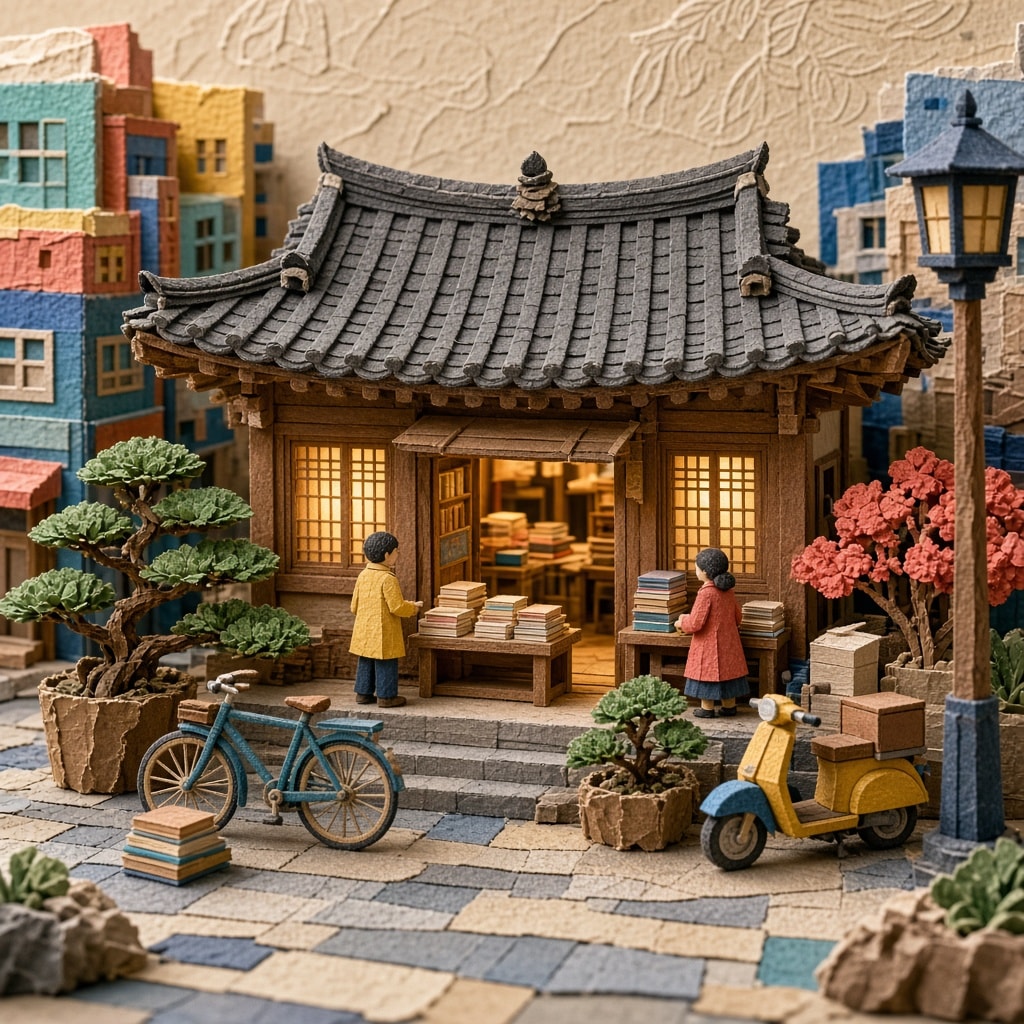
A reusable template that turns any subject, object, city or scene into a whimsical handcrafted 3D miniature world made of layered traditional Korean Hanji paper: visible fibres, torn edges, embossed and cut-paper ornaments, hanok details mixed with contemporary life, a warm terracotta-turquoise-cobalt-mustard palette and soft studio light. Replace the bracketed subject and generate a square, text-free paper sculpture.
KOREAN HANJI PAPER ART | WHIMSICAL 3D MINIATURE DIORAMA

Create a beautiful, highly detailed, handcrafted 3D paper-art illustration featuring [TYPE YOUR SUBJECT / OBJECT / CITY / SCENE], reimagined through the traditional Korean Hanji paper-art aesthetic.

ART DIRECTION & VISUAL STYLE

Transform the entire scene into an imaginative miniature world made from layered Korean Hanji paper. Use authentic handmade paper textures, visible delicate fibres, subtle wrinkles, torn edges, embossed details and carefully cut paper elements.

Combine traditional Korean visual heritage with contemporary lifestyle, architecture and modern objects. The result should feel like a sophisticated fusion of Korean folk art, paper sculpture and playful contemporary design.

COMPOSITION & STORYTELLING

Build a rich, three-dimensional miniature environment around the main subject. Make the primary subject instantly recognizable and visually dominant.

Surround it with thoughtfully selected supporting elements that complement the subject. Incorporate traditional Korean architectural details, colourful urban surroundings, decorative patterns, miniature props and unexpected creative combinations wherever appropriate.

Create a visually engaging composition with convincing depth, overlapping paper layers, realistic miniature proportions and carefully arranged foreground, middle ground and background.

MATERIALS & TEXTURES

- Traditional Korean Hanji paper with visible natural fibres.
- Layered and sculpted paper architecture.
- Intricate cut-paper ornaments and embossed details.
- Soft handmade imperfections and tactile surfaces.
- Rich paper-cut textures with dimensional shadows.
- Handmade miniature objects with convincing physical construction.

COLOUR & LIGHTING

Use a vibrant yet harmonious palette of warm terracotta, turquoise, cobalt blue, mustard yellow, coral, cream and earthy browns.

Introduce beautiful atmospheric lighting, soft directional sunlight, gentle shadows and subtle highlights that emphasize the layered paper construction.

FINAL AESTHETIC

The finished artwork should resemble an exceptionally crafted miniature paper sculpture photographed in a professional studio. Blend whimsical storytelling, Korean cultural identity, contemporary creativity and premium editorial illustration.

Ultra-detailed, tactile, colourful, imaginative, visually balanced, handcrafted 3D paper diorama. Every element must appear constructed from real Hanji paper rather than digitally painted or rendered plastic.

FORMAT: Square 1:1 composition. No text, captions, typography, watermarks or logos.
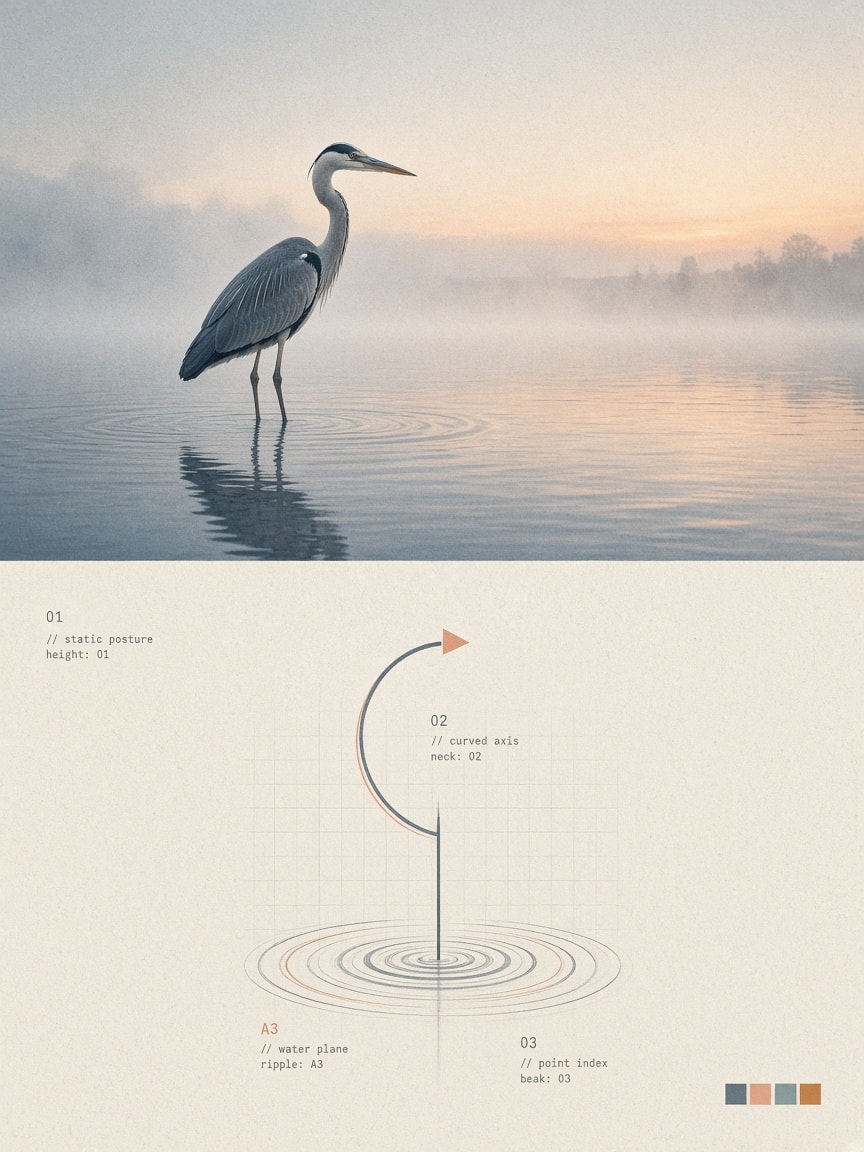
Upload any photo and turn it into a premium 3:4 design poster: the top half keeps the original as fine-art editorial photography, the bottom half distills the subject's silhouette and posture into a minimal abstract symbol in a deconstructed Swiss, generative design language with grids, micro-annotations, a color system pulled from the photo, and risograph/xerox print texture. Works with any image model that accepts a reference photo.
Transform my uploaded photo into a standalone, premium-quality 3:4 vertical design poster. Divide the entire canvas into two perfectly equal horizontal sections: the top half (50%) and the bottom half (50%). The upper section should feature realistic photography, while the lower section should present an abstract visual symbol derived from the core identity of the subject.

TOP HALF – REALISTIC PHOTOGRAPHY

Preserve the original subject's structure, realistic textures, natural lighting, shadows, and original color atmosphere. Apply only subtle, sophisticated color grading to achieve the aesthetic of fine-art photography and independent editorial publications.

The background may be naturally extended to fit the canvas, but never stretch, distort, or alter the original subject.

BOTTOM HALF – ABSTRACT VISUAL IDENTITY

Extract the photograph's essential visual characteristics: the subject's silhouette, structure, posture, and narrative relationships. Do not recreate the entire object. Instead, reduce it into a recognizable abstract visual symbol.

Use geometric deconstruction, modular shapes, structured lines, negative space, and symbolic elements to create a central visual identity inspired by premium branding and experimental design systems.

Focus on the subject's core character rather than minor details. Even with minimal geometric elements, the abstract symbol must remain visually connected to the original photograph.

VISUAL STYLE & DESIGN LANGUAGE

Post-digital graphic design, deconstructed Swiss design, generative symbol systems, and diagrammatic abstraction.

Build a systematic visual language using geometric modules, fine lines, circular trajectories, grids, micro-symbols, numerical indexing, and abstract nodes.

Create visual tension between:
- Order × Imperfection
- Precision × Handmade Traces
- Digital × Analog
- Rationality × Emotion

Achieve strong visual recognition using the fewest possible elements. Keep everything minimal and avoid unnecessary complexity.

COMPOSITION & LAYOUT

Maintain a highly restrained composition. The abstract symbol must be the sole visual focal point, positioned centrally or slightly off-center, surrounded by generous negative space.

Avoid excessive icons, decorative elements, or infographic-style layouts.

The overall aesthetic should resemble the core visual identity of contemporary art institutions, architectural studios, experimental creative labels, and premium design brands.

TYPOGRAPHY & DETAILS

Typography should function only as a supporting system component, never as a dominant headline.

You may incorporate extremely small numbers, letters, or short phrases that interact with the abstract symbol through indexing and reference relationships.

Use refined, restrained typography with the subtle annotation aesthetic of archival documents and experimental art publications.

COLOR SYSTEM

Extract the signature colors from the original photograph and reinterpret them as a cohesive brand color system.

Introduce a small number of distinctive accent colors as functional visual codes, such as teal, blue, magenta, or orange, combined with gray-white or warm-white backgrounds for contrast.

Colors should function as systematic identifiers rather than decoration.

Avoid chaotic color combinations, cheap neon effects, and generic commercial gradients.

PRINT TEXTURE & MATERIALITY

Incorporate subtle material effects inspired by:
- Xerox texture
- Risograph grain
- Print registration errors
- Scanner noise
- Subtle paper texture

Add delicate printing misalignment, fine grain, scanning noise, and slightly imperfect edges to give the digital symbols the tactile quality of physical print.

FINAL OBJECTIVE

Extract an independent and self-contained visual DNA from the original photograph.

The final result should feel like a sophisticated, minimal, culturally meaningful abstract logo with a strong visual identity and systematic design language.
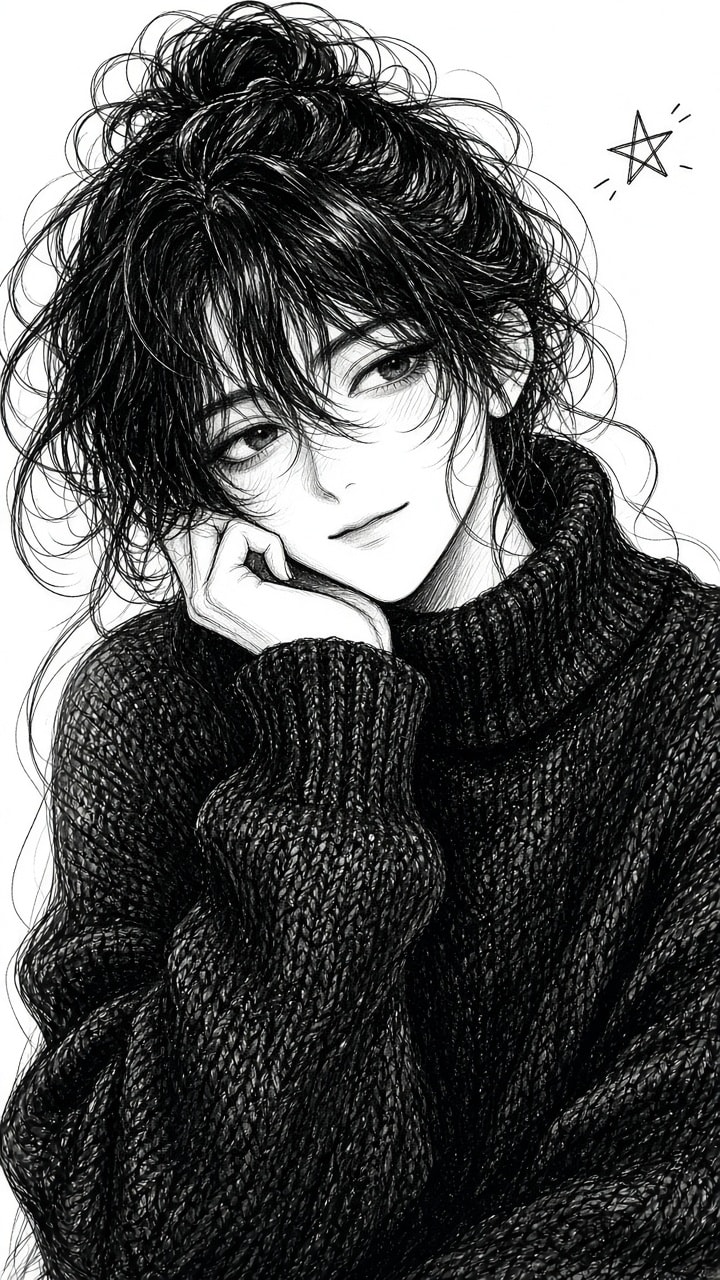
A ready-to-use 9:16 JSON prompt for an authentic black-and-white manga ink portrait: an original anime woman with a voluminous messy high bun rests her cheek on one hand in an oversized black sweater, gazing sideways. It calls for intricate ink linework, fine cross-hatching, soft pencil shading on the face, white-highlighted hair strokes and a pure white paper background with a tiny heart doodle, plus a negative prompt that keeps out color, 3D and photorealism.
{
  "aspect_ratio": "9:16",
  "style": "Black and white manga ink sketch, detailed hand-drawn illustration",

  "prompt": "A beautiful young anime woman with large expressive eyes, long eyelashes, full lips and a dreamy sideways gaze. Extremely voluminous messy black hair tied in a loose high bun, with wispy bangs and wild flowing flyaway strands. Her head is slightly tilted, resting gently on one hand, with naturally curved fingers supporting her cheek. She wears an oversized black sweater with loose sleeves and detailed fabric folds. Medium close-up portrait, head and upper torso visible, centered composition. Intricate black ink linework, fine cross-hatching, delicate pencil shading on the face, dense black hair strokes with white highlights, expressive sketchy outlines. Pure white paper background with a tiny hand-drawn heart doodle in the upper right corner. Strong black and white contrast, authentic manga illustration, elegant, dreamy and playful.",

  "negative_prompt": "Color, 3D, photorealism, watercolor, extra fingers, distorted face, messy background, text, watermark, blurry details"
}
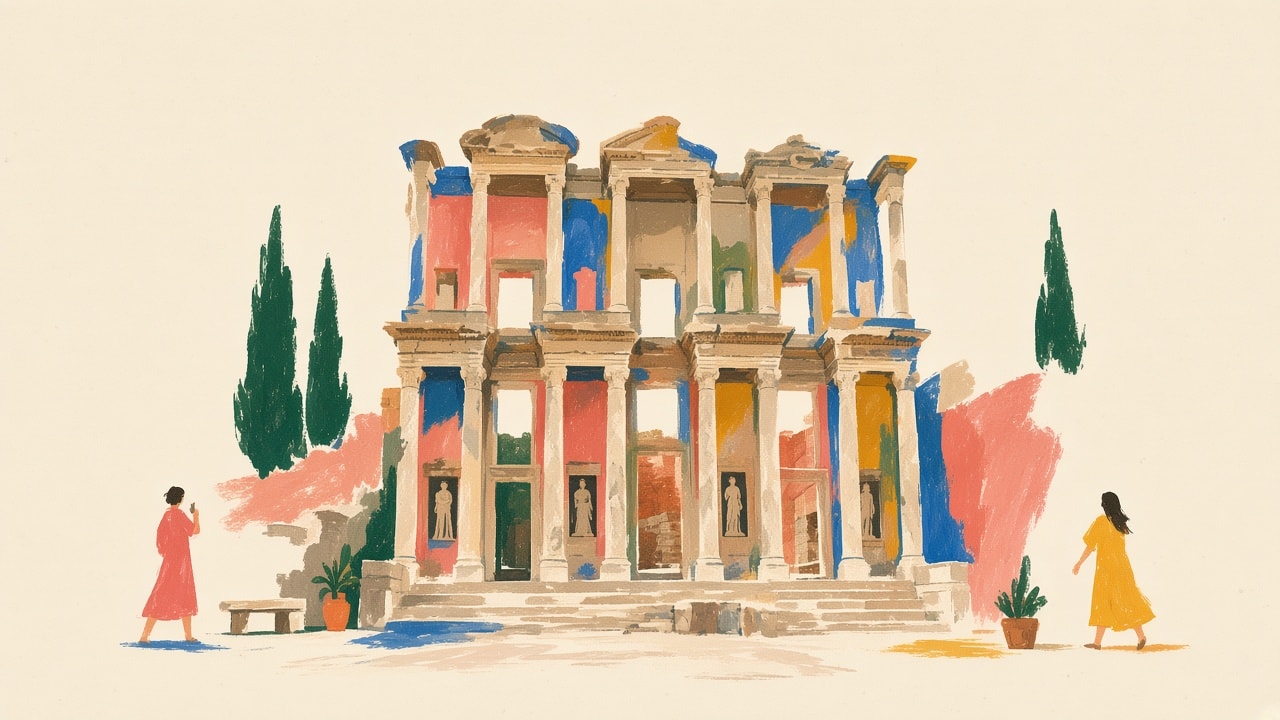
A reusable wide landscape template that turns any landmark into a quiet mid-century travel postcard: the destination sits slightly off-center in loose gouache and pastel marks on a warm cream paper field that fills 40–50% of the canvas. Tiny coral and mustard figures, one small contextual prop and a few natural accents keep the composition sparse and airy. Fill in the landmark, city, architectural features and a short activity for the figures.
A wide horizontal landscape hand-painted illustration of [LANDMARK NAME] in [CITY/COUNTRY] with strong emphasis on negative space and quiet composition.

The image features a warm off-white cream paper background that occupies 40-50% of the total canvas, creating generous blank margins and breathing room.

The [LANDMARK NAME] is positioned slightly off-center as a calm visual anchor, depicted through simplified [KEY ARCHITECTURAL FEATURES - e.g., "towering structures", "iconic silhouette", "distinctive archways"] with loose, expressive brush strokes. The landmark is suggested through minimal rhythmic marks and abstract color blocks in deep teal, cobalt blue, and forest green, rather than drawing every architectural detail precisely.

The composition is sparse and uncluttered: only a few carefully placed elements including 2-3 tiny human figures [DOING TYPICAL ACTIVITY - e.g., "walking", "taking photos", "sitting"] rendered as simple silhouettes in coral red and mustard yellow, one small [CONTEXTUAL ELEMENT - e.g., "cafe table", "bench", "street vendor cart"] with minimal shapes, two or three [NATURAL ELEMENTS - e.g., "potted plants", "trees", "flowers"] in emerald green, and subtle [CULTURAL/ARCHITECTURAL HINTS - e.g., "traditional roof lines", "modern glass panels", "historic columns"].

Large areas of the warm paper background remain completely untouched, especially around the edges and between elements.

The style combines mid-century travel poster aesthetics with contemporary [REGIONAL] editorial illustration: elegant, minimal, warm, cultured, and slightly nostalgic.

The texture shows loose hand-painted gouache and pastel marks with dry brush strokes, pastel smudges, wax-crayon edges, uneven color patches, imperfect handmade edges, and visible gaps between colored areas.

Colors are layered, dry, and tactile with a restrained palette of deep teal, sky blue, coral red, salmon pink, mustard yellow, ochre, terracotta, and small near-black accents, but used sparingly so each color can breathe against the paper.

The overall mood is quiet, spacious, relaxed, refined, like a sophisticated [CITY] cultural postcard or handmade art print suitable for premium lifestyle merchandise.

The landmark remains recognizable through its essential identity—[DEFINING CHARACTERISTICS]—but the drawing stays airy, calm, poetic, and softly abstract.

Strong sense of pause, breath, and refined emptiness with confident use of blank space.

No crowded composition, no full-bleed busy background, no photorealism, no glossy digital rendering, no clean vector art, no 3D rendering, no text, no signage, no logos, no readable text.
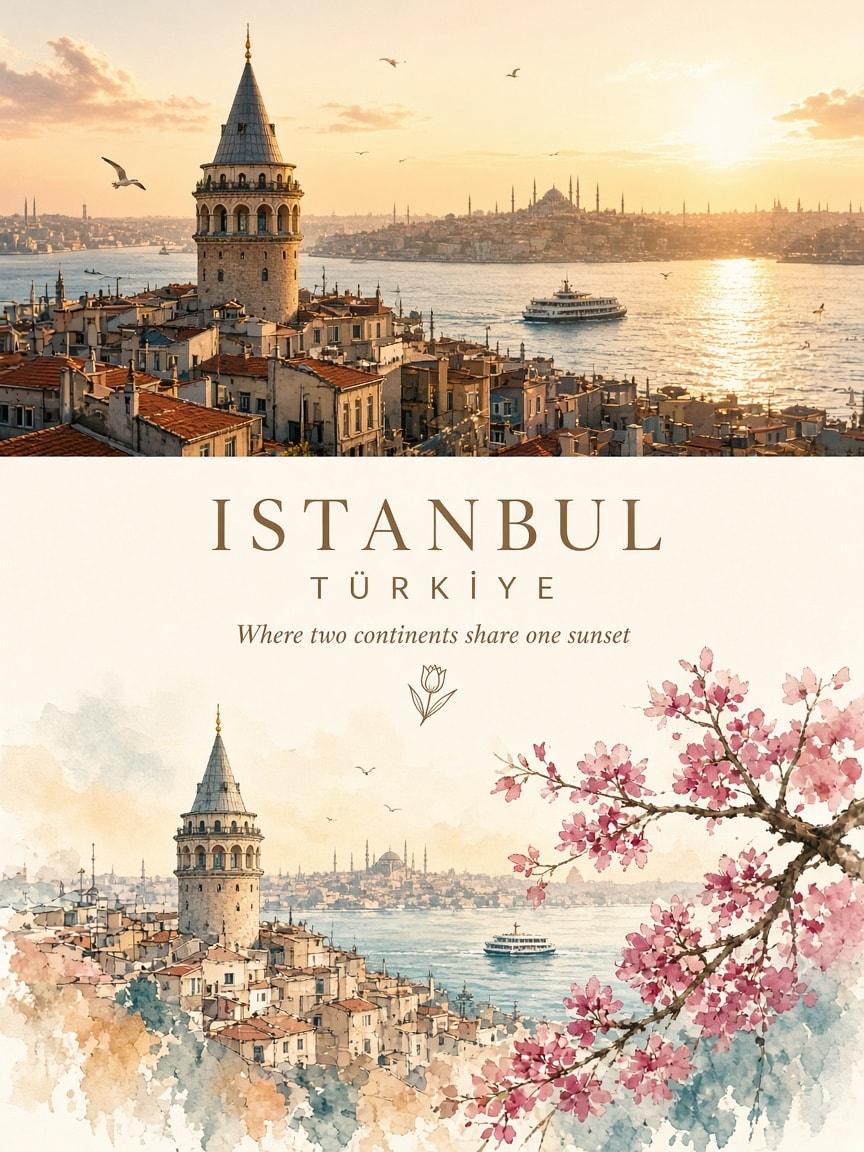
A reusable 4:5 travel-art poster template: the top half is a photorealistic photograph of any city, country or landmark, the middle is an elegant editorial strip with the destination name, country and a short poetic tagline, and the bottom half reimagines the same place as a minimalist watercolor-and-gouache illustration that fades into white paper. Just fill in the destination, country and tagline placeholders.
Create an exceptionally beautiful vertical 4:5 travel-art poster featuring [CITY / COUNTRY / LANDMARK], presented as a sophisticated two-part visual collage.

The composition must have two distinct but harmoniously connected sections.

TOP SECTION — THE REAL WORLD

Use the actual destination as the primary visual reference.

Create a breathtaking photorealistic travel photograph of [DESTINATION].
Preserve its recognizable architecture, landscape, landmarks and geographical identity.
Capture beautiful natural lighting, realistic colours and atmospheric depth.
Include a few subtle human elements, boats, streets or local details where appropriate.
Keep the composition cinematic, clean and visually immersive.

This section should feel like a photograph taken during a beautiful journey.

MIDDLE SECTION — THE EDITORIAL TRANSITION

Create an elegant transition between photography and illustration.

Add the destination name in beautiful, sophisticated typography.
Include the country name in small uppercase lettering.
Add a short poetic travel-inspired tagline.
Use delicate hand-drawn decorative elements, tiny botanical details or a minimal location emblem.
Maintain generous white space and a refined editorial layout.

BOTTOM SECTION — THE WORLD REIMAGINED AS ART

Transform the same destination into a beautiful minimalist hand-painted illustration.

Recreate the recognizable landmark or scenery from the upper photograph.
Use delicate watercolor washes, expressive gouache brushwork and subtle ink outlines.
Simplify the architecture and surroundings into an elegant artistic composition.
Retain the destination’s signature colours, shapes and distinctive features.
Add a few charming details such as tiny boats, flowering branches, little figures, birds or local elements.
Use soft pastel shades, muted colours and carefully placed vibrant accents.
Allow some watercolor textures and painted edges to fade naturally into the white background.

The lower illustration must be an artistic interpretation of the SAME location shown above, not an unrelated scene.

ART DIRECTION

Premium illustrated travel magazine aesthetic.
Contemporary minimalist editorial design.
Beautiful balance between photography and fine art.
Delicate watercolor and mixed-media textures.
Sophisticated typography and generous negative space.
Soft, harmonious colour palette.
Elegant, clean and collectible poster appearance.

FINAL COMPOSITION

Vertical 4:5 poster.
Upper half: approximately 50% photorealistic destination photography.
Lower half: approximately 50% minimalist watercolor illustration.
A subtle, elegant transition between both worlds.
Destination name clearly visible and beautifully typeset.
No creator watermark, no unnecessary text, no clutter.

DESTINATION TITLE: [CITY / LANDMARK]

COUNTRY: [COUNTRY]

TAGLINE: [SHORT POETIC TRAVEL QUOTE]

The final artwork should communicate one beautiful idea: experience the destination in reality above, then discover its artistic soul below.
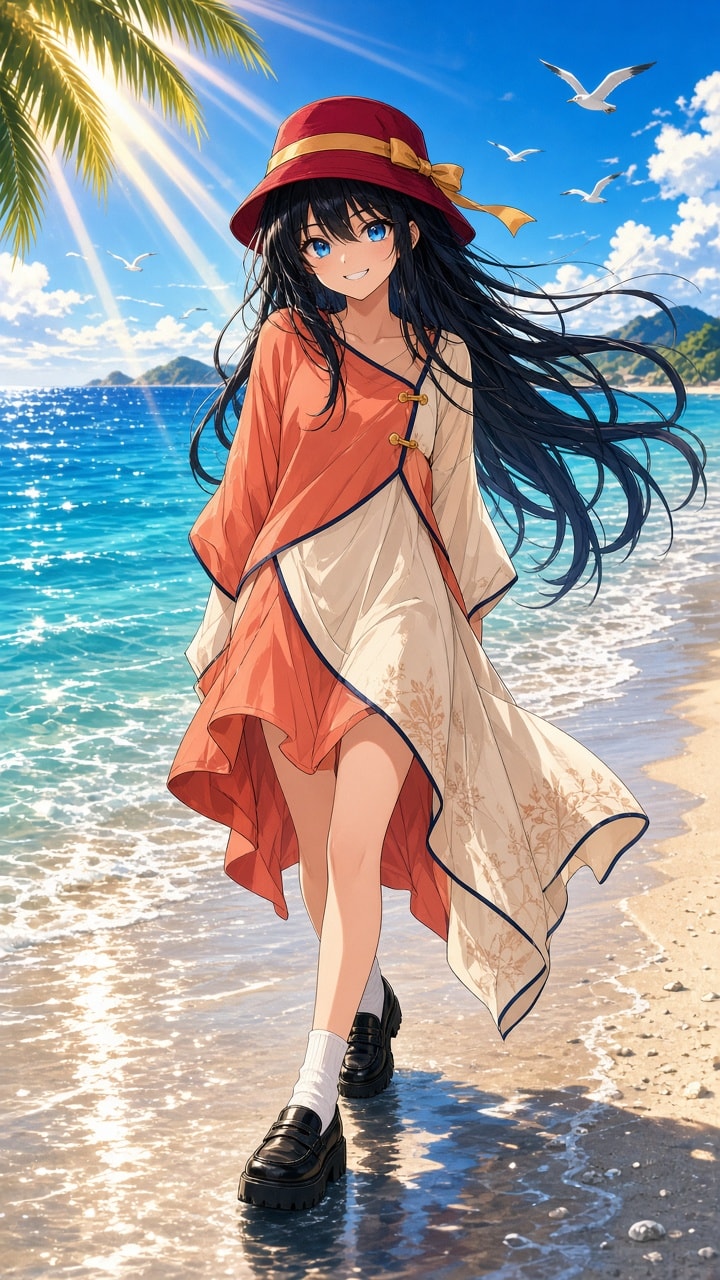
A complete GPT Image–ready JSON prompt for a vibrant Japanese anime summer illustration: an original stylish girl in a coral-orange asymmetric tunic and cherry-red bucket hat walks the wet shoreline of a turquoise tropical beach. It locks warm clothing colors against cool ocean blues, a 9:16 full-body fashion pose, golden sunbeams, seagulls and a strong negative prompt so the outfit never blends into the water.
1{2 "aspect_ratio": "9:16",3 "style": "Premium Japanese anime illustration, vibrant summer movie aesthetic, expressive hand-drawn character art, high-contrast cel shading, brilliant tropical colors",...+3 more lines
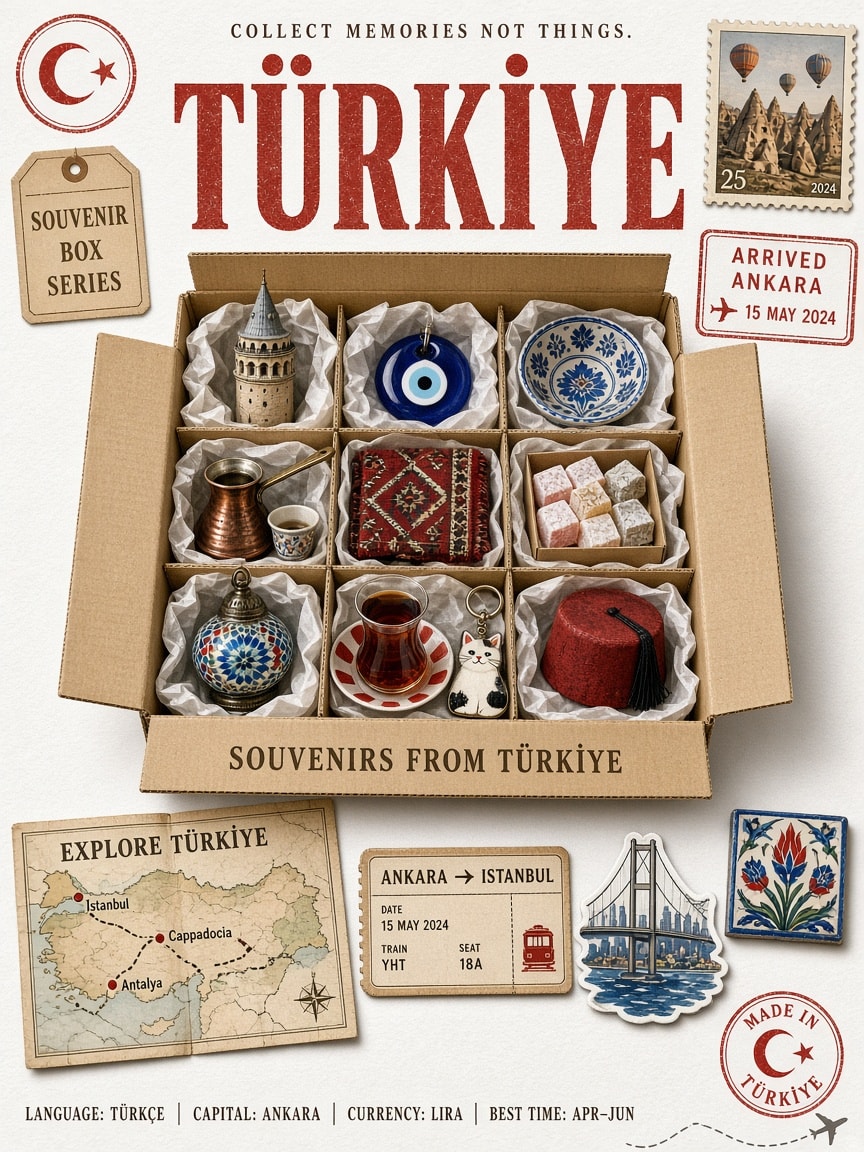
A fill-in-the-country template for a photoreal vintage travel poster: oversized letterpress country name, postal stamps and an "ARRIVED" customs stamp, a kraft souvenir box with ten culturally authentic miniature keepsakes, an illustrated route map, a train or plane ticket, a landmark sticker and a facts strip (language, capital, currency, best time), all shot as real objects on textured white paper. Change one variable to make a poster for any country.
Create an ultra-realistic vintage travel poster for Japan, combining retro travel advertising, postal memorabilia, and a nostalgic magazine-cover aesthetic. Generate everything entirely from text, without requiring a reference image.

Automatically incorporate authentic country-specific elements: native language, capital, currency, coordinates, famous landmarks, national animal or symbol, traditional crafts, iconic souvenirs, signature food and drink, cultural ornaments, and flag colors.

BACKGROUND & TYPOGRAPHY

Use a pure white (#FFFFFF) matte paper background with subtle paper grain and barely visible aging. Keep it white, without cream, beige, yellow, or sepia tones.

At the top, add "COLLECT MEMORIES NOT THINGS." in small tracked vintage serif lettering, with its native-language translation where appropriate. Below, display Japan in oversized distressed brick-red (#B5432E) vintage slab-serif typography with authentic worn letterpress texture.

VINTAGE POSTAL DETAILS

Add a circular national-symbol rubber stamp and a "SOUVENIR BOX SERIES" postal tag on the left. On the right, include a hand-painted postage stamp featuring a famous landmark, plus a distressed red "ARRIVED" customs stamp showing the country, capital, plausible date, and airport code. Include accurate capital coordinates.

CENTRAL SOUVENIR BOX

Feature a large open kraft-cardboard shipping box in the center, viewed from a gentle top-down angle. Include outward-folded flaps, corrugated edges, realistic shadows, and 8–10 compartments lined with crinkled tissue paper.

Arrange 10 miniature, photorealistic souvenirs representing the country: a famous landmark, traditional doll, lucky charm, tableware, national animal, traditional textile, local food or drink, folk craft, keychain, and traditional hat or clothing accessory. Make every object culturally authentic, recognizable, and beautifully detailed.

Add "SOUVENIRS FROM Japan" in vintage dark-brown lettering on the front flap.

BOTTOM TRAVEL COLLAGE

Below the box, arrange:

- A folded illustrated map titled "EXPLORE Japan", featuring 3–4 destinations, dotted travel routes, landmark illustrations, and a compass rose.
- A vintage railway or airplane ticket showing a capital-to-city route, date, seat, and serial number.
- A die-cut travel sticker depicting an iconic national landmark.
- One small traditional folk-craft object.

COUNTRY INFORMATION FOOTER

Add a small national-symbol badge and a historical founding year where applicable. Include a neatly arranged information strip:

LANGUAGE: [NATIVE LANGUAGE] | CAPITAL: [CITY] | CURRENCY: [CURRENCY] | BEST TIME: [SEASON]

Finish with a circular "MADE IN Japan" stamp, miniature national-symbol postage stamp, tiny airplane with a dashed flight path, and the national motto in small italic lettering.

VISUAL STYLE & QUALITY

Use restrained national flag colors, realistic paper fibers, distressed ink, hand-painted illustrations, natural contact shadows, soft studio lighting, and slightly desaturated vintage colors. Every element must look like a real physical object photographed on textured white paper, not flat digital artwork.

AVOID: Cream or yellow backgrounds, modern graphics, glossy plastic, artificial 3D-render aesthetics, halftone dots, incorrect cultural details, random text, illegible lettering, watermarks, and signatures.

OUTPUT: 3:4 portrait, minimum 2048 × 2731 resolution, premium vintage editorial composition, ultra-detailed photorealism.
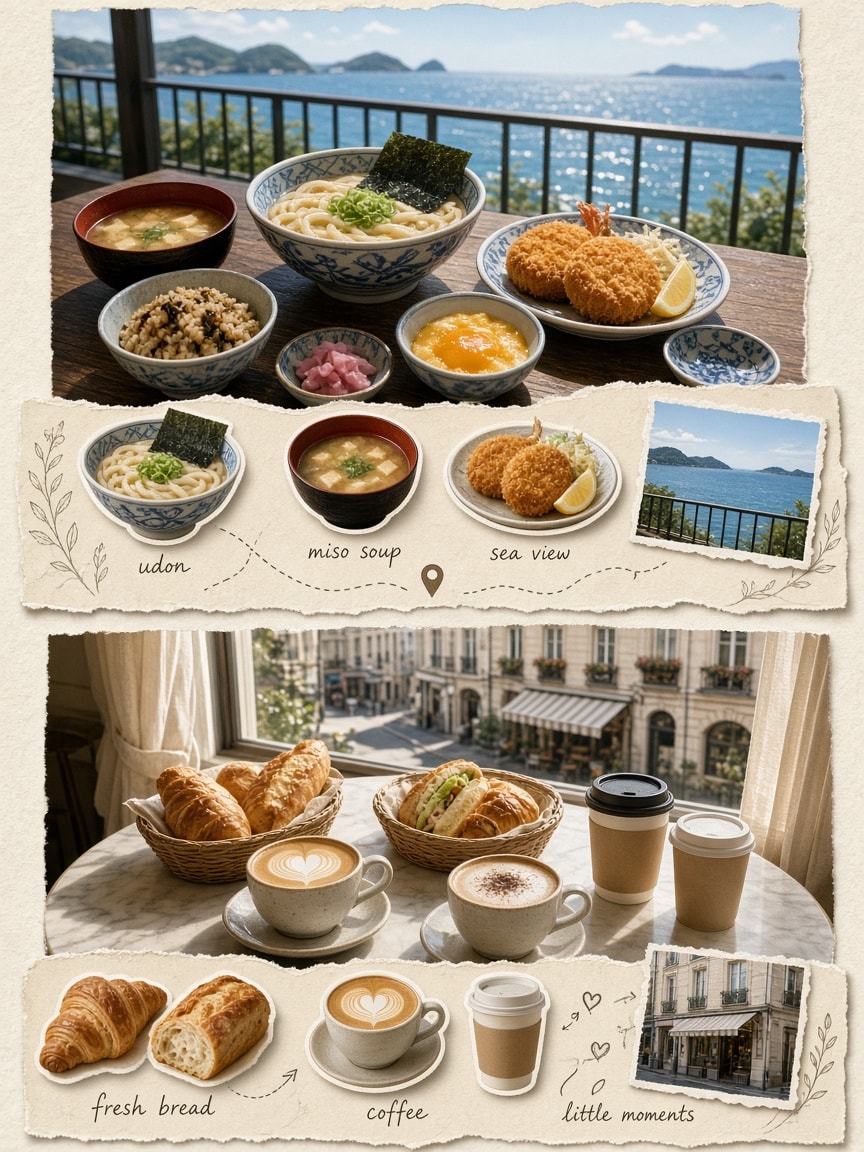
A photo-plus-scrapbook collage prompt that turns food and travel snapshots into a warm vintage travel diary: two connected scenes, a Japanese seaside meal and a cozy window-side café table, each shown as a realistic food photograph above a cream journal page of cut-out dishes, small photos, handwritten labels, dotted routes, pins and doodles, on ivory textured paper with soft sunlight and film grain in a vertical 3:4 layout.
Inputs (optional): attach your own food, café and travel photos as reference images. Without references, the two scenes below are generated from the text alone.

Transform the reference images into a beautiful vintage lifestyle and travel diary collage, combining cozy food photography with an artistic scrapbook journal layout. Create two connected scenes in a warm, nostalgic editorial aesthetic.

Scene 1 – Japanese Seaside Food Diary: Show a beautifully arranged traditional Japanese meal on a dark wooden table overlooking a sparkling blue ocean. Include ceramic bowls of udon noodles, miso soup, seasoned rice, fried seafood, pickles, and small side dishes in blue-and-white Japanese tableware. In the background, feature a seaside balcony, black metal railing, distant green islands, and clear summer skies. Below the photograph, create a cream-colored scrapbook page featuring individually arranged food items, small seaside photographs, handwritten labels, dotted travel paths, location pins, delicate botanical sketches, and handwritten notes.

Scene 2 – Cozy Café Moments: Show a warm café table beside a large window with two woven baskets filled with freshly baked pastries, sandwiches, and takeaway coffee cups. Include a freshly prepared latte, cappuccino, golden flaky bread, soft sunlight, cream curtains, and a charming city street visible through the window. Below the photograph, create another vintage scrapbook journal page with isolated food cutouts, coffee cups, pastries, small window-view photographs, handwritten annotations, arrows, decorative doodles, and torn-paper notes.

Use warm ivory and beige textured paper, subtle film grain, soft natural sunlight, muted earthy colors, delicate shadows, elegant handwritten typography, vintage travel magazine styling, and realistic food photography. Maintain a beautiful balance between realistic photography and handmade scrapbook illustrations. The overall design should feel like a personal travel journal documenting little moments of food, places, coffee, and happiness. Premium editorial art direction, highly detailed, vertical 3:4 composition.
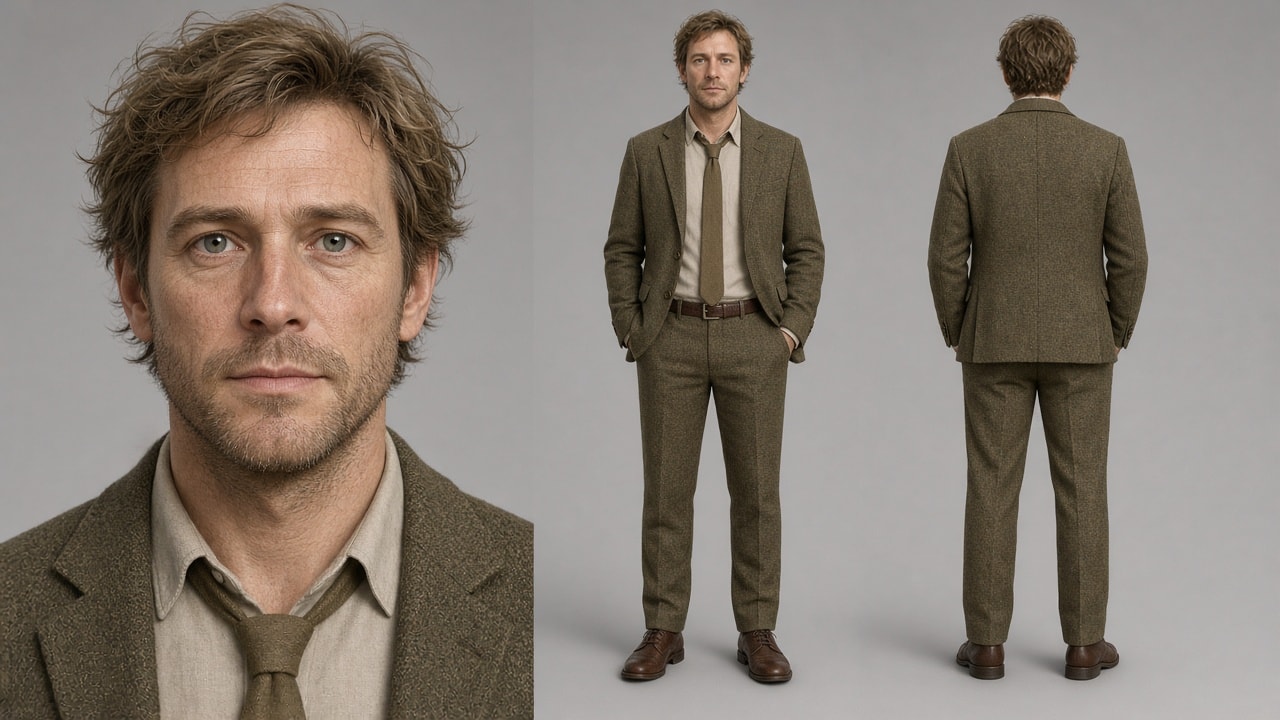
A reference-based edit prompt that rescues photoreal character sheets whose faces come out blotchy, blurry or over-contrasted: it keeps the person, pose, outfit and layout exactly the same and only transfers fine skin micro-texture and natural hair strands from two texture reference images, then balances contrast to a natural photographic level with no beautifying or plastic look.
Inputs:
- Image 1: your character sheet (the image to fix)
- Image 2: a close-up skin texture reference
- Image 3: a hair texture reference (light or dark, matching your character)

Keep <<<image_1>>> exactly as it is: same person, same face shape and features, same expression, same hairstyle and hair shape, same hair color, same skin tone, same makeup, same wrinkles, freckles, moles, scars and facial hair, same clothing and accessories, same pose, composition, layout, background and framing.

Change only the surface texture:
- Skin: apply the micro-texture from <<<image_2>>> — fine natural skin lines, pores and soft realistic surface. Do not copy its color or its glossy shine.
- Hair: apply the strand structure from <<<image_3>>> — fine individual strands, soft natural flyaways. Do not copy its color.

Balance the contrast to a natural photographic level: if image 1 looks too harsh or blotchy, soften it; if it looks flat or washed out, add depth. Aim for a well-balanced realistic photo — rich but not crushed shadows, clean highlights, smooth even tonal transitions, natural shading with real volume. No retouching, no beautifying, no plastic look.
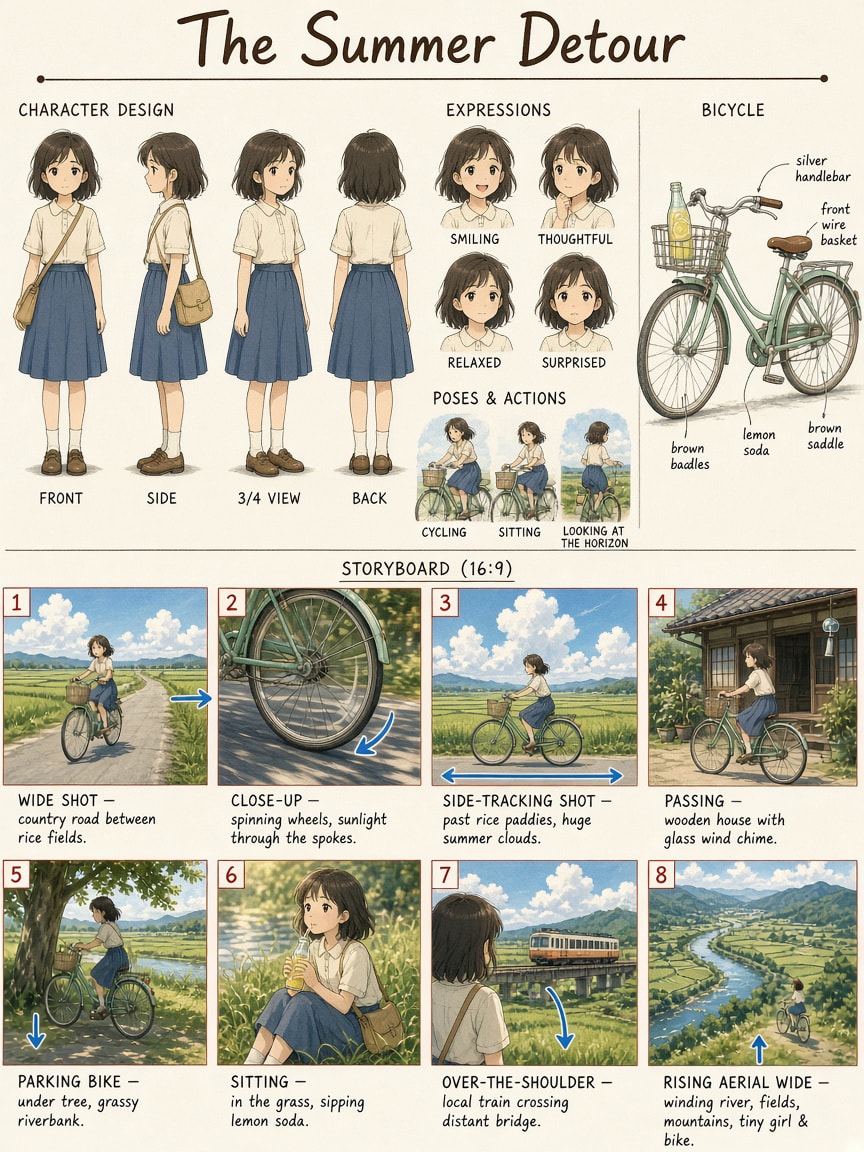
A single-image anime pre-production board for an original 15-second short: a character design sheet (turnarounds, expressions, poses) of a girl and her mint-green bicycle plus an 8-frame cinematic storyboard of a summer ride through Japanese rice fields to a riverbank and a passing train, ready to feed into a video model.
Create one vertical anime development board for an original 15-second short film titled "The Summer Detour".

The output must be one combined image with 2 sections:

Character design sheet

Cinematic storyboard page

STYLE:

Beautiful nostalgic 2D anime, hand-painted countryside backgrounds, clean anime linework, soft cel shading, lush green scenery, warm summer afternoon sunlight, gentle shadows, and bright blue skies with fluffy clouds.

Professional anime production board with red storyboard borders, blue camera arrows, small handwritten camera notes, and beautifully illustrated keyframes.

SECTION A: CHARACTER DESIGN

Main girl: An original 13-year-old Japanese girl with shoulder-length dark brown hair, soft brown eyes, and a gentle, cheerful expression.

Outfit: cream short-sleeved blouse, faded navy skirt, white socks, brown shoes, and a small canvas shoulder bag.

Personality: calm, curious, thoughtful, and quietly happy.

Show front, side, three-quarter, and back views, plus smiling, thoughtful, relaxed, and surprised expressions.

Include cycling, sitting, and looking toward the horizon poses.

BICYCLE:

Vintage mint-green city bicycle with a silver handlebar, brown saddle, small front wire basket, and simple black tires. A clear glass bottle of lemon soda sits securely inside the basket.

Keep the bicycle's design consistent in every frame.

SECTION B: STORYBOARD

Create 8 storyboard frames in a clean grid, each using 16:9 cinematic framing.

Keep the girl, bicycle, countryside, and lighting consistent.

Story beats:

Wide opening shot of the girl cycling along a peaceful countryside road surrounded by green rice fields.

Beautiful close-up of bicycle wheels turning beside swaying grass, sunlight sparkling through the spokes.

Side-tracking shot as she cycles past expansive rice paddies beneath enormous fluffy summer clouds.

She passes a small traditional house with hanging wind chimes gently swaying in the breeze.

She reaches a quiet grassy riverbank, stops, and parks her bicycle beside a tree.

Sitting in the grass, she opens her cold lemon soda and takes a refreshing sip.

A small cream-and-orange local train crosses a distant bridge over the river. She watches it with a gentle smile.

Spectacular wide ending shot: the camera rises to reveal the winding river, endless green fields, distant mountains, passing train, and girl resting beside her bicycle under a magnificent summer sky.

ENVIRONMENT:

Peaceful rural Japanese countryside, vibrant rice paddies, narrow asphalt roads, traditional wooden houses, wind chimes, wildflowers, a clear river, an old railway bridge, distant green mountains, and beautiful summer clouds.

Bright late-afternoon sunlight throughout.

FINAL GOAL:

Create a beautiful nostalgic anime film development board with soothing countryside scenery, authentic everyday moments, natural cinematic movement, consistent character design, and a breathtaking peaceful ending.
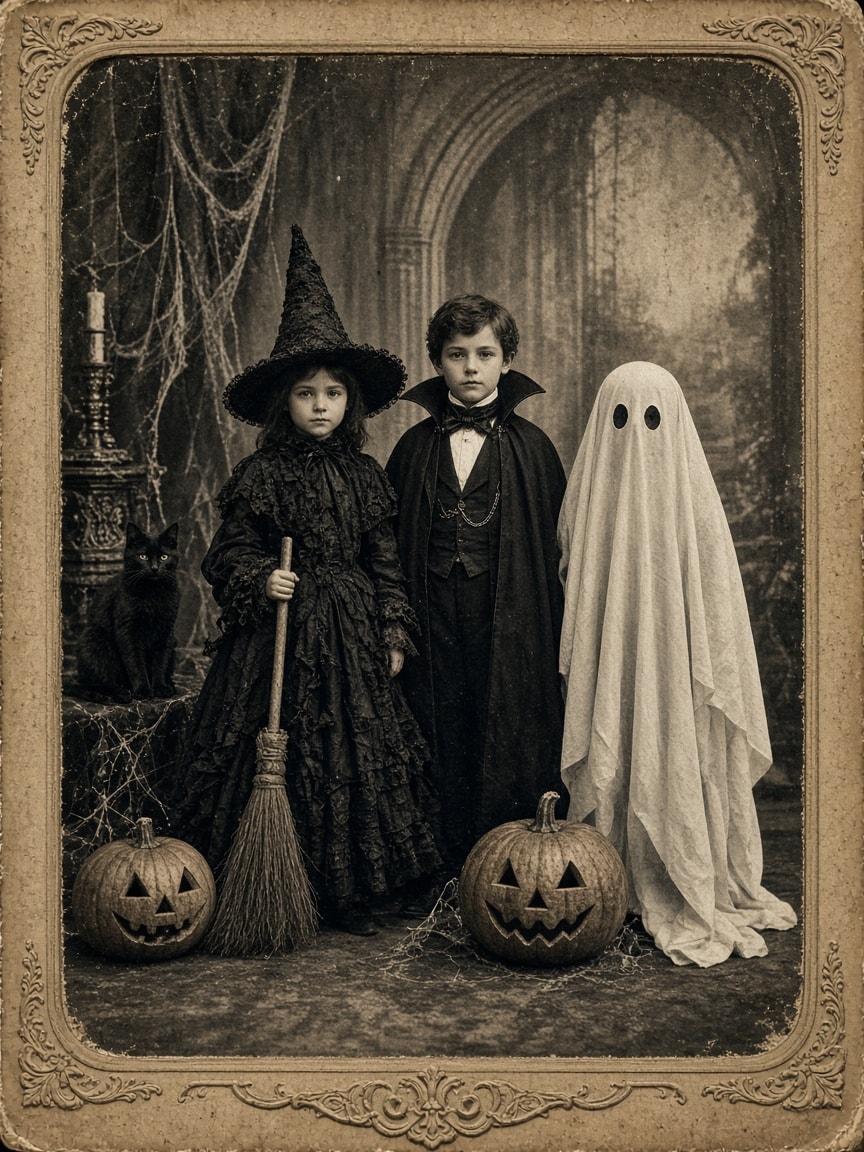
An authentic-looking 1890s cabinet card of three children in handmade Halloween costumes (a witch with a broom, Count Dracula, and a bedsheet ghost) posing solemnly in a Victorian studio among jack-o'-lanterns, cobwebs, a black cat and gothic candleholders, rendered as an aged sepia albumen print on an embossed mount, 3:4.
Authentic Victorian-era Halloween cabinet card photograph, circa 1890, three children posing solemnly in a vintage photography studio, a young girl dressed as a Victorian witch wearing an elaborate black lace dress and pointed hat, holding an old-fashioned wooden broom, a young boy dressed as Count Dracula with an elegant dark cape and high collar, and a mysterious child dressed as a ghost beneath a flowing white sheet with two eyeholes. Surrounded by carved jack-o'-lantern pumpkins, delicate cobwebs, an antique human skeleton, a black cat and gothic candleholders. Elaborate Victorian studio backdrop, theatrical composition, haunting yet charming atmosphere, subtle gothic horror aesthetic, authentic 19th-century clothing and handmade costumes, extremely realistic faces, natural skin textures, serious expressions, aged sepia albumen print, antique photographic grain, subtle fading, scratches, worn paper edges, ornate embossed cardboard mount with decorative typography, historically accurate cabinet card photography, soft diffused studio lighting, exquisite archival details, photorealistic, no modern elements --ar 3:4
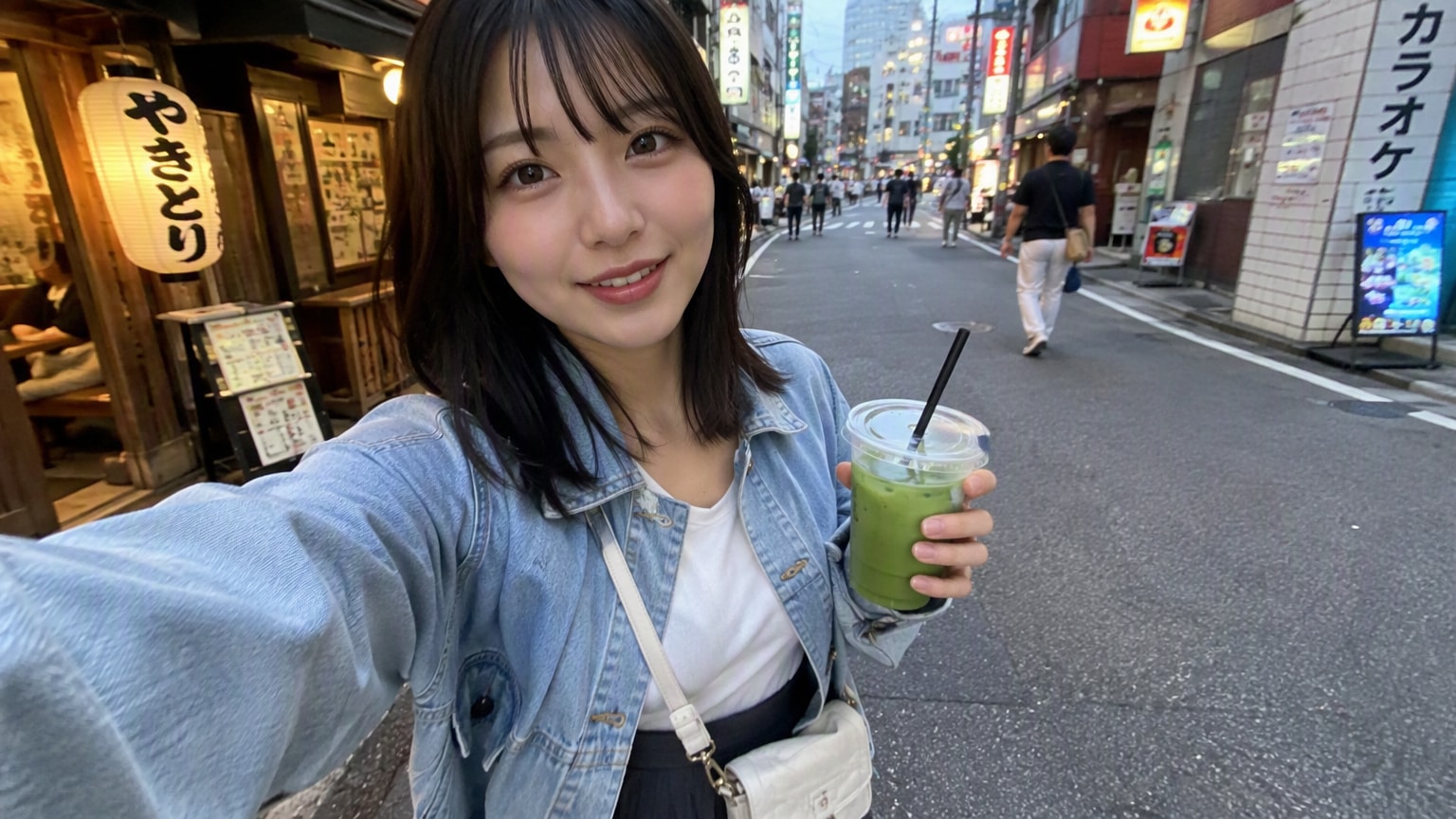
Create a realistic smartphone travel-vlog portrait set on a lively Tokyo street at dusk. Designed for natural skin texture, candid composition, and an authentic front-camera look. Tested with GPT Image 2.5 Flare on SeeGen AI.
Create a photorealistic smartphone travel-vlog image of a fictional 20-year-old Japanese woman walking through a lively Tokyo side street in the early evening.

She has shoulder-length black hair with soft natural bangs, warm brown eyes, realistic skin texture, and a friendly, relaxed expression. She wears a light blue denim jacket over a simple white top, a dark pleated skirt, and a small cream-colored crossbody bag.

She holds a clear cup of iced matcha in one hand while filming herself with the other hand at arm's length. Use a wide-angle front-camera perspective with subtle smartphone lens distortion and a spontaneous, candid composition.

The street is lined with small restaurants and local shops. Pedestrians walk naturally in the background. Warm shop lights and neon signs begin to glow beneath a cool evening sky.

Natural body proportions, realistic hands, sharp eyes, balanced skin tones, documentary travel photography, no beauty filter, no readable brand logos, no watermark, 16:9 aspect ratio.

