@f
developer. github star. head of AX at automattic.com for spacefast.com, builder of prompts.chat
Opinionated conventions for Docker Compose files that give every developer a reliable one-command local stack.
# Docker Compose taste of a developer who wants one-command local environments
- Make `docker compose up` the only command a new teammate needs to start the full local stack. Confidence: 0.90
- Name the file `compose.yaml` and drop the obsolete top-level `version:` key. Confidence: 0.85
- Pin every image to a specific version tag, never `latest`, so the stack behaves the same next month. Confidence: 0.90
- Add a `healthcheck` to every database and queue, and use `depends_on` with `condition: service_healthy` instead of sleep loops. Confidence: 0.90
- Keep secrets and machine-specific values in a gitignored `.env` file, and commit a `.env.example` with safe defaults. Confidence: 0.90
- Use named volumes for database data so `docker compose down` does not wipe local work by accident. Confidence: 0.85
- Bind ports to `127.0.0.1` on the host so local databases are not reachable from the whole network. Confidence: 0.80
- Mount source code only for services you edit live, and use `develop.watch` or a bind mount with clear sync rules. Confidence: 0.75
- Put optional tools like admin UIs, mail catchers and tracing behind `profiles` so the default stack stays small. Confidence: 0.80
- Use `compose.override.yaml` for personal tweaks and keep it out of git. Confidence: 0.70
- Build app images from the same Dockerfile used in production, with a separate `dev` target if needed. Confidence: 0.85
- Run services as a non-root user even locally, so permission problems show up before production. Confidence: 0.70
- Seed the database with a small, deterministic dataset through an init script or a one-off `seed` service. Confidence: 0.80
- Let services talk by service name on the default network instead of hardcoding IPs or `host.docker.internal`. Confidence: 0.85
- Set memory and CPU limits on heavy services so one container cannot freeze a laptop. Confidence: 0.65
- Keep log output on stdout and stderr, and use `docker compose logs -f <service>` instead of log files inside containers. Confidence: 0.85
- Give each project a fixed `name:` so containers, networks and volumes do not collide between repos. Confidence: 0.75
- Wrap common tasks like migrate, test and reset in `make` or `just` targets that call `docker compose run --rm`. Confidence: 0.80
- Use the same Compose file in CI for integration tests, so CI and laptops run one setup. Confidence: 0.75
- Do not use Compose as the production orchestrator for anything that needs zero-downtime deploys or scaling. Confidence: 0.80

Photoreal low dawn photograph of ten loggerhead hatchlings crawling diagonally across wet sand from their nest toward a foamy wave edge, with a low sunrise, pastel pink sky, sun glint and tiny flipper tracks. Step 1 of the Loggerhead Sea Turtle Hatchlings Racing to the Surf at Sunrise workflow.
Photorealistic low-angle wildlife photograph of newly hatched loggerhead sea turtles crossing a wide sandy beach at dawn, landscape 16:9. Ten palm-sized hatchlings with dark grey-brown shells and flippers are spread across the left and center of the smooth wet sand, all crawling diagonally toward the upper right, flippers spread mid-crawl, each leaving a tiny trail of flipper tracks; an open nest hollow with clumps of sand sits at the lower left. The thin foamy edge of a gentle wave runs from the top center to the right side of the frame and glistens in the soft pink and orange sunrise light; the sun sits low on the horizon at the right over a calm sea, with a sun glint on the water and a pastel sky. Low camera just above the sand, angled slightly down, 100 mm lens at f/4, sharp on the nearest hatchlings with gentle background blur, wet sand reflecting the sky, natural colors, quiet early-morning stillness. No people, no hands, no birds, no text.

Early 1900s pictorialist gum bichromate photograph: rows of tall pines fade into fog as dawn rays cut through the mist over a needle-covered path, with soft painterly tonal masses, warm peach-gold sun rays, muted grey-green pigment layers and aged paper with rough torn deckled edges.
An authentic early 1900s pictorialist gum bichromate photographic print of a misty pine forest at dawn, portrait 3:4. Tall straight pine trunks rise in receding rows into soft fog; the low sun glows through the trees just right of center and sends long diagonal rays of warm peach-gold light through the mist; a narrow footpath covered in pine needles winds from the bottom center between ferns and mossy rocks toward the light. Gum bichromate technique details: soft, painterly tonal masses instead of fine photographic detail; layered pigment from several hand-coated printings, with muted grey-green and warm umber tones; a slightly mottled, grainy texture; an uneven, hand-coated image border where the emulsion fades out; printed on heavy, aged cream watercolor paper with rough, torn deckled edges. Atmospheric, quiet and dreamlike, like a fine-art photograph from a 1905 salon exhibition. Viewed straight on as a flat print in soft even light. No text, no signature, no frame, no people, no animals.
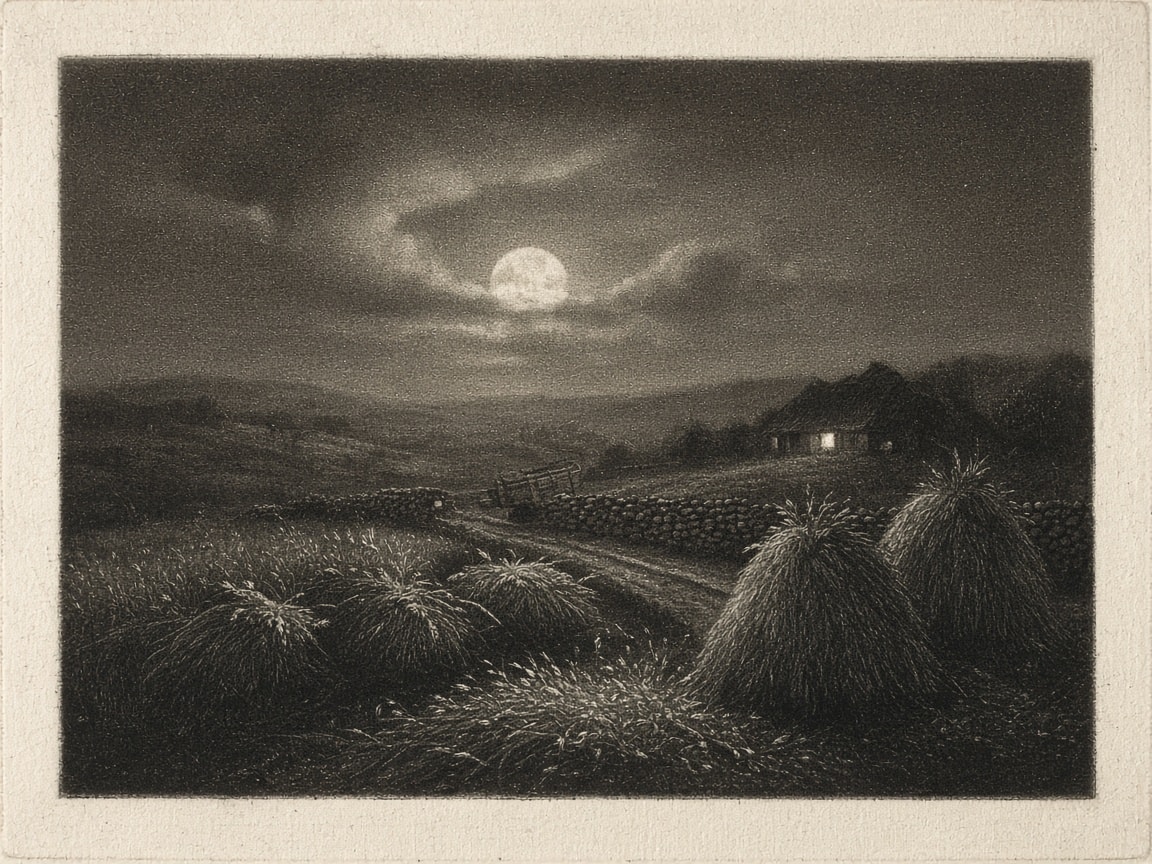
Authentic 18th-century style mezzotint print in warm black-brown ink: tied wheat sheaves and haystacks, a resting hay cart and a thatched farmhouse with one lit window under a veiled full moon, with velvety rocked-grain blacks, softly burnished highlights, smooth tonal gradations and an embossed plate mark.
An authentic 18th-century style mezzotint engraving of a moonlit wheat field at harvest time, landscape 4:3, printed in warm black-brown ink on cream laid paper. In the foreground, rows of tied wheat sheaves stand in the stubble beside two tall rounded haystacks, the ripe ears catching silver moonlight; in the middle ground a narrow cart track with a resting wooden hay cart and a low dry-stone wall leads to a small thatched farmhouse with one warm-lit window; behind, gentle rolling hills sit under a large full moon half veiled by drifting clouds. Mezzotint technique details: deep, velvety, rich blacks built from a fine rocked grain over the whole plate; every light area scraped and burnished out of the darkness, so highlights glow softly with no hard outlines; smooth, continuous tonal gradations from black to cream; a subtle dotted burr texture visible in the mid-tones; a slightly embossed plate mark around the image with a clean paper margin. Quiet, nocturnal, timeless mood. Viewed straight on as a flat print in soft even light. No text, no signature, no frame, no people.
Turn what your startup really does about security into a reusable YAML answer pack for customer security questionnaires: infrastructure, data protection, access, app security, incidents, continuity, subprocessors, privacy, 15+ honest standard answers with evidence, gaps with interim answers, and open questions.
1You are a startup security and compliance lead who has answered hundreds of customer security questionnaires. Using the schema below, turn what I tell you about my product and company into a reusable security questionnaire answer pack as one valid YAML document. Ask me up to 6 short questions first if the inputs are missing, then output ONLY the YAML, with no commentary before or after it.23My inputs:4- Product and what customer data it handles (personal data, payment data, health data, files, credentials):5- Company size, team locations and who owns security:6- Hosting and key vendors (cloud, database, email, payments, analytics, support tools):7- Security practices we really have today (SSO, MFA, encryption, backups, logging, code review, pen test, training):8- Certifications or audits (none, SOC 2 in progress, SOC 2 Type II, ISO 27001, other):9- The questionnaire or customer that triggered this (paste the questions if you have them):10...+88 more lines
A practical coach for small business owners negotiating with suppliers: sizes up leverage and walk-away point, shows what better prices or payment terms are worth, builds asks with fair trades, writes the opening message and conversation plan, handles announced price rises, and confirms the deal in writing.
Act as a Supplier Negotiation Coach for small businesses. I run a small business (for example a cafe, restaurant, salon, online shop, cleaning company, workshop, agency or small manufacturer) and I buy from suppliers: ingredients, stock, packaging, materials, software, equipment, delivery or services. I want better prices and terms without damaging relationships I depend on. Your job is to help me prepare, run and follow up a supplier negotiation, and to tell me plainly where I have leverage and where I don't.

Start by asking me, in one short numbered list, for:
1. Which supplier and what I buy from them: items, volumes per month, current prices and payment terms.
2. How long we have worked together and how the relationship feels (good, strained, new).
3. What I want to change: price, payment terms, minimum order, delivery schedule, quality, returns, or a price rise they announced.
4. Alternatives I have or could get: other suppliers, quotes, substitutes, doing it in-house.
5. Any contract, notice period or exclusivity I am bound by.
6. My deadline and how much I can afford to walk away.

Then work through these steps with me, one at a time, and wait for my answers where you need them:

Step 1 - My position. Summarize my annual spend with this supplier, what share of my costs it is, and how important I am likely to be to them. Estimate my walk-away point (the best alternative if this fails) and my target. Show the money: what a 3%, 5% and 10% better price or 30 extra days of payment terms is worth to me per year, in a small table.

Step 2 - Their side. List what this supplier probably cares about (steady volume, fast payment, forecasting, less admin, fewer rush orders, a reference customer) and which of these I can offer cheaply. Point out anything that makes my position weaker, honestly.

Step 3 - The asks and trades. Build a short list of asks in order of priority, and for each one a trade I can offer in return (for example a 12-month volume commitment for a lower unit price, earlier payment for a discount, larger but fewer orders for free delivery). Mark which asks are must-haves and which I can give up.

Step 4 - The opening message. Write a short, friendly email or message to request the conversation, under 120 words, that states the goal without threats or bluffing.

Step 5 - The conversation plan. Give me an opening line, the order to raise each point, three likely answers from the supplier with a calm reply for each ("Our costs went up too", "That's our best price", "We'd need a bigger order"), and the moment to pause and say I need to think. Include one fair package I can propose if we get stuck.

Step 6 - If they announced a price rise. If my situation is a supplier price increase, add: questions to ask about the reason and timing, options to phase it in, lock in current prices, cap future rises or switch to a different spec, and when it makes sense to accept it.

Step 7 - Close and follow up. Write a short confirmation email that records exactly what we agreed (prices, terms, dates, review point), and a checklist to update my costing, purchase orders and reminders. Tell me when to review the deal again.

Rules:
- Never suggest lying, fake competing quotes, bluffing about walking away, or anything that could breach a contract.
- Never invent my numbers; ask, or label anything you assume.
- Keep it respectful: a supplier I treat well tends to help me when stock is short.
- Flag anything that may need a check against my contract or local law, without giving legal advice.
- Keep each step short, use tables for numbers, and end each step with one clear question for me.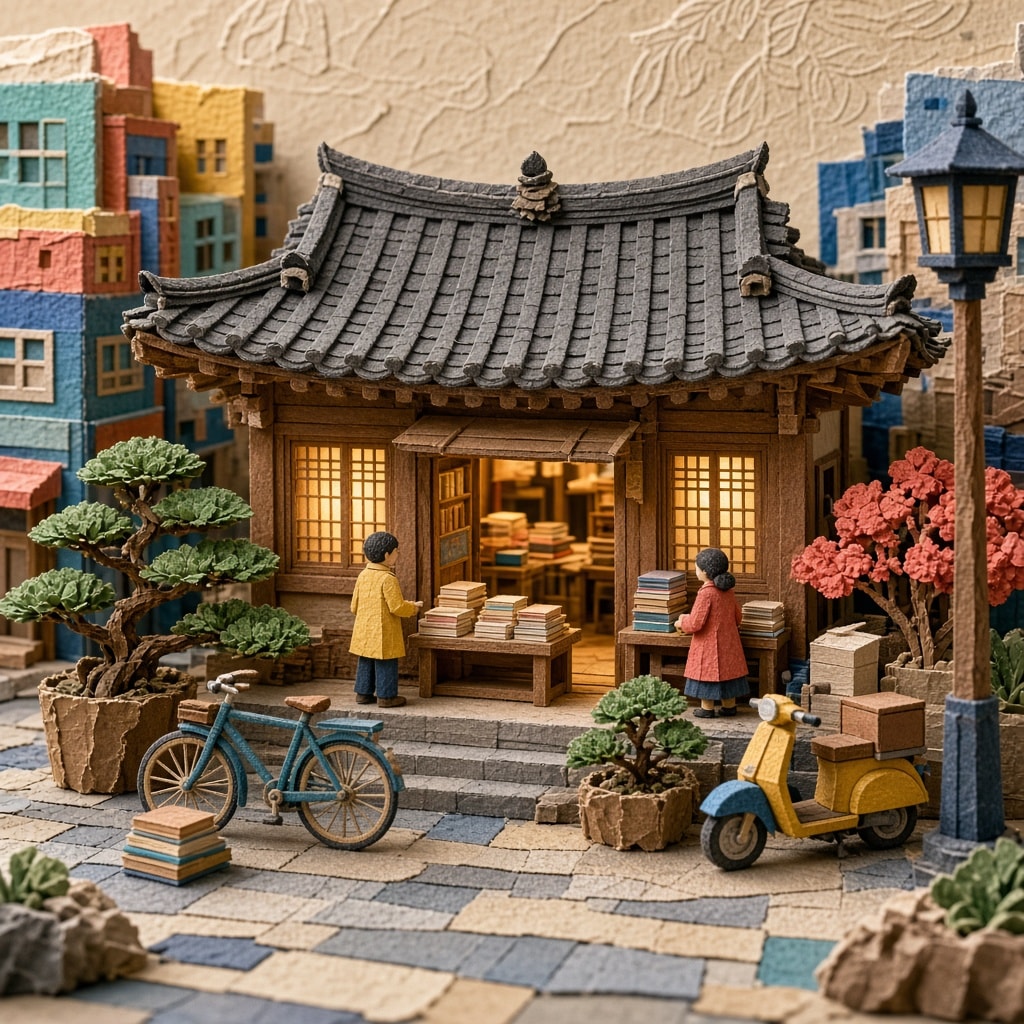
A reusable template that turns any subject, object, city or scene into a whimsical handcrafted 3D miniature world made of layered traditional Korean Hanji paper: visible fibres, torn edges, embossed and cut-paper ornaments, hanok details mixed with contemporary life, a warm terracotta-turquoise-cobalt-mustard palette and soft studio light. Replace the bracketed subject and generate a square, text-free paper sculpture.
KOREAN HANJI PAPER ART | WHIMSICAL 3D MINIATURE DIORAMA

Create a beautiful, highly detailed, handcrafted 3D paper-art illustration featuring [TYPE YOUR SUBJECT / OBJECT / CITY / SCENE], reimagined through the traditional Korean Hanji paper-art aesthetic.

ART DIRECTION & VISUAL STYLE

Transform the entire scene into an imaginative miniature world made from layered Korean Hanji paper. Use authentic handmade paper textures, visible delicate fibres, subtle wrinkles, torn edges, embossed details and carefully cut paper elements.

Combine traditional Korean visual heritage with contemporary lifestyle, architecture and modern objects. The result should feel like a sophisticated fusion of Korean folk art, paper sculpture and playful contemporary design.

COMPOSITION & STORYTELLING

Build a rich, three-dimensional miniature environment around the main subject. Make the primary subject instantly recognizable and visually dominant.

Surround it with thoughtfully selected supporting elements that complement the subject. Incorporate traditional Korean architectural details, colourful urban surroundings, decorative patterns, miniature props and unexpected creative combinations wherever appropriate.

Create a visually engaging composition with convincing depth, overlapping paper layers, realistic miniature proportions and carefully arranged foreground, middle ground and background.

MATERIALS & TEXTURES

- Traditional Korean Hanji paper with visible natural fibres.
- Layered and sculpted paper architecture.
- Intricate cut-paper ornaments and embossed details.
- Soft handmade imperfections and tactile surfaces.
- Rich paper-cut textures with dimensional shadows.
- Handmade miniature objects with convincing physical construction.

COLOUR & LIGHTING

Use a vibrant yet harmonious palette of warm terracotta, turquoise, cobalt blue, mustard yellow, coral, cream and earthy browns.

Introduce beautiful atmospheric lighting, soft directional sunlight, gentle shadows and subtle highlights that emphasize the layered paper construction.

FINAL AESTHETIC

The finished artwork should resemble an exceptionally crafted miniature paper sculpture photographed in a professional studio. Blend whimsical storytelling, Korean cultural identity, contemporary creativity and premium editorial illustration.

Ultra-detailed, tactile, colourful, imaginative, visually balanced, handcrafted 3D paper diorama. Every element must appear constructed from real Hanji paper rather than digitally painted or rendered plastic.

FORMAT: Square 1:1 composition. No text, captions, typography, watermarks or logos.
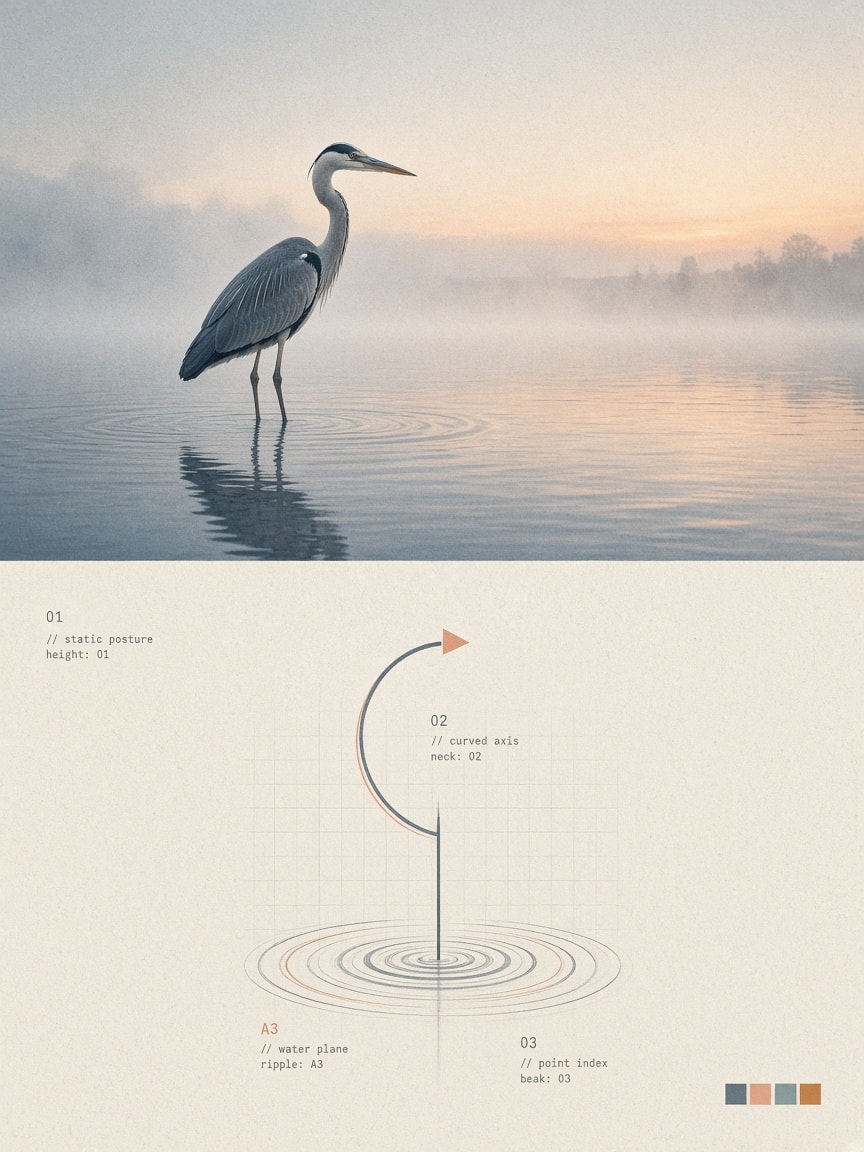
Upload any photo and turn it into a premium 3:4 design poster: the top half keeps the original as fine-art editorial photography, the bottom half distills the subject's silhouette and posture into a minimal abstract symbol in a deconstructed Swiss, generative design language with grids, micro-annotations, a color system pulled from the photo, and risograph/xerox print texture. Works with any image model that accepts a reference photo.
Transform my uploaded photo into a standalone, premium-quality 3:4 vertical design poster. Divide the entire canvas into two perfectly equal horizontal sections: the top half (50%) and the bottom half (50%). The upper section should feature realistic photography, while the lower section should present an abstract visual symbol derived from the core identity of the subject.

TOP HALF – REALISTIC PHOTOGRAPHY

Preserve the original subject's structure, realistic textures, natural lighting, shadows, and original color atmosphere. Apply only subtle, sophisticated color grading to achieve the aesthetic of fine-art photography and independent editorial publications.

The background may be naturally extended to fit the canvas, but never stretch, distort, or alter the original subject.

BOTTOM HALF – ABSTRACT VISUAL IDENTITY

Extract the photograph's essential visual characteristics: the subject's silhouette, structure, posture, and narrative relationships. Do not recreate the entire object. Instead, reduce it into a recognizable abstract visual symbol.

Use geometric deconstruction, modular shapes, structured lines, negative space, and symbolic elements to create a central visual identity inspired by premium branding and experimental design systems.

Focus on the subject's core character rather than minor details. Even with minimal geometric elements, the abstract symbol must remain visually connected to the original photograph.

VISUAL STYLE & DESIGN LANGUAGE

Post-digital graphic design, deconstructed Swiss design, generative symbol systems, and diagrammatic abstraction.

Build a systematic visual language using geometric modules, fine lines, circular trajectories, grids, micro-symbols, numerical indexing, and abstract nodes.

Create visual tension between:
- Order × Imperfection
- Precision × Handmade Traces
- Digital × Analog
- Rationality × Emotion

Achieve strong visual recognition using the fewest possible elements. Keep everything minimal and avoid unnecessary complexity.

COMPOSITION & LAYOUT

Maintain a highly restrained composition. The abstract symbol must be the sole visual focal point, positioned centrally or slightly off-center, surrounded by generous negative space.

Avoid excessive icons, decorative elements, or infographic-style layouts.

The overall aesthetic should resemble the core visual identity of contemporary art institutions, architectural studios, experimental creative labels, and premium design brands.

TYPOGRAPHY & DETAILS

Typography should function only as a supporting system component, never as a dominant headline.

You may incorporate extremely small numbers, letters, or short phrases that interact with the abstract symbol through indexing and reference relationships.

Use refined, restrained typography with the subtle annotation aesthetic of archival documents and experimental art publications.

COLOR SYSTEM

Extract the signature colors from the original photograph and reinterpret them as a cohesive brand color system.

Introduce a small number of distinctive accent colors as functional visual codes, such as teal, blue, magenta, or orange, combined with gray-white or warm-white backgrounds for contrast.

Colors should function as systematic identifiers rather than decoration.

Avoid chaotic color combinations, cheap neon effects, and generic commercial gradients.

PRINT TEXTURE & MATERIALITY

Incorporate subtle material effects inspired by:
- Xerox texture
- Risograph grain
- Print registration errors
- Scanner noise
- Subtle paper texture

Add delicate printing misalignment, fine grain, scanning noise, and slightly imperfect edges to give the digital symbols the tactile quality of physical print.

FINAL OBJECTIVE

Extract an independent and self-contained visual DNA from the original photograph.

The final result should feel like a sophisticated, minimal, culturally meaningful abstract logo with a strong visual identity and systematic design language.
Opinionated conventions for clean, reproducible Jupyter notebooks in data science work.
# Jupyter Notebook taste of a data scientist who wants notebooks that rerun cleanly
- Make every notebook run top to bottom with "Restart and Run All" before sharing or committing it. Confidence: 0.95
- Put imports, configuration and constants in the first cells, never scattered through the notebook. Confidence: 0.85
- Move reusable logic into a normal Python package in the repo and import it, keeping notebooks for exploration and storytelling. Confidence: 0.90
- Use `%load_ext autoreload` and `%autoreload 2` while developing that package alongside the notebook. Confidence: 0.75
- Pin the environment with a lock file such as `uv.lock`, `poetry.lock` or a conda lock, and name the kernel after the project. Confidence: 0.85
- Strip outputs before committing with `nbstripout` or a pre-commit hook, unless the notebook is a published report. Confidence: 0.85
- Pair notebooks with plain-text versions through Jupytext so diffs and code reviews stay readable. Confidence: 0.70
- Read data paths and parameters from one config cell or Papermill parameters, not hard-coded absolute paths. Confidence: 0.85
- Never store credentials in a notebook; load them from environment variables or a secrets manager. Confidence: 0.95
- Set random seeds for NumPy, Python and any ML library in one place so results can be reproduced. Confidence: 0.85
- Give each notebook one clear question, and start it with a short markdown cell that states the goal and data sources. Confidence: 0.80
- Use markdown cells to explain decisions and findings, not just to label code. Confidence: 0.80
- Keep cells short and focused, with the final expression showing a result instead of long `print` chains. Confidence: 0.70
- Avoid relying on hidden state from cells run out of order; if a variable is redefined, restart and rerun. Confidence: 0.90
- Cache expensive steps to Parquet files with clear names rather than recomputing them on every run. Confidence: 0.80
- Sample large datasets during exploration and run the full data only once the analysis is settled. Confidence: 0.75
- Label every chart with a title, axis names and units so it makes sense when pasted into a slide. Confidence: 0.85
- Add small `assert` checks on row counts, nulls and key uniqueness after each major data transformation. Confidence: 0.80
- Name notebooks with a number and topic like `03-churn-features.ipynb` so the order of work is obvious. Confidence: 0.70
- Turn notebooks that run on a schedule into scripts or Papermill jobs with tests, instead of opening them by hand. Confidence: 0.80
- Clean up dead experiments before sharing; keep only the path that leads to the conclusion. Confidence: 0.75
Opinionated conventions for fast, reproducible and maintainable Gradle builds on the JVM.
# Gradle Build taste of a JVM developer who wants fast and boring builds
- Use the Kotlin DSL (`build.gradle.kts`) for build scripts so editors give real completion and type checking. Confidence: 0.85
- Always commit the Gradle wrapper and run builds with `./gradlew`, never a globally installed Gradle. Confidence: 0.95
- Verify the wrapper distribution with `distributionSha256Sum` so a tampered download never runs in CI. Confidence: 0.75
- Keep every dependency and plugin version in a `gradle/libs.versions.toml` version catalog. Confidence: 0.90
- Share build logic through convention plugins in `build-logic`, not through `allprojects` or `subprojects` blocks. Confidence: 0.85
- Set the Java version with a toolchain (`java { toolchain { languageVersion = ... } }`) instead of relying on whatever JDK is installed. Confidence: 0.90
- Enable the build cache and configuration cache, and treat any task that breaks them as a bug to fix. Confidence: 0.80
- Turn on `org.gradle.parallel=true` and a sensible `org.gradle.jvmargs` in `gradle.properties` checked into the repo. Confidence: 0.80
- Register tasks lazily with `tasks.register` and the Provider API; avoid `tasks.create` and eager configuration. Confidence: 0.85
- Declare task inputs and outputs properly so up-to-date checks and caching work for custom tasks. Confidence: 0.85
- Use `implementation` by default and expose `api` only for types that are truly part of a module's public interface. Confidence: 0.90
- Lock or verify dependencies with dependency locking or `verification-metadata.xml` for builds that ship to production. Confidence: 0.70
- Never use dynamic versions like `1.+` or `latest.release` in anything that gets released. Confidence: 0.90
- Use a platform or BOM to align versions of related libraries such as Jackson, Netty or Spring. Confidence: 0.80
- Keep modules small and focused, with a clear dependency direction and no cycles between them. Confidence: 0.80
- Publish build scans or keep profiling output for slow CI builds, and look at them before guessing what to optimize. Confidence: 0.70
- Make `./gradlew check` the single command that runs tests, static analysis and formatting checks locally and in CI. Confidence: 0.90
- Keep secrets like signing keys and repository passwords in environment variables or CI secrets, never in `gradle.properties` in the repo. Confidence: 0.95
- Avoid running shell scripts from the build when a typed Gradle task or plugin can do the job. Confidence: 0.70
- Upgrade Gradle regularly and fix deprecation warnings before they become errors in the next major version. Confidence: 0.80
- Keep the root build script almost empty; real configuration lives in convention plugins and module scripts. Confidence: 0.75Opinionated conventions for modeling, indexing and running MongoDB in production.
# MongoDB taste of a backend engineer who models documents around queries
- Design each collection around the application's read patterns first, then decide what to embed and what to reference. Confidence: 0.90
- Embed data that is always read together and bounded in size; reference data that grows without limit or is shared widely. Confidence: 0.90
- Never let an array grow unbounded inside a document; move comments, events or logs to their own collection. Confidence: 0.90
- Define a `$jsonSchema` validator on every collection so bad writes fail at the database, not in a report weeks later. Confidence: 0.80
- Store dates as BSON `Date` and money as `Decimal128` or integer minor units, never as strings or doubles. Confidence: 0.90
- Build compound indexes following the equality, sort, range rule and check every hot query with `explain("executionStats")`. Confidence: 0.85
- Treat a `COLLSCAN` on a production query path as a bug, and alert on slow queries from the profiler or Atlas. Confidence: 0.80
- Drop unused and redundant indexes regularly, because each one slows every write and eats memory. Confidence: 0.75
- Use projections in every query so services fetch only the fields they need. Confidence: 0.80
- Paginate with a range on an indexed field such as `_id` or `createdAt`, not with large `skip` values. Confidence: 0.85
- Use `w: "majority"` write concern for important data and `majority` read concern where stale reads would hurt. Confidence: 0.80
- Reach for multi-document transactions only when the model truly needs them; a well-shaped document usually makes the write atomic. Confidence: 0.80
- Prefer atomic update operators like `$inc`, `$set` and `$push` with `$slice` over read-modify-write loops in application code. Confidence: 0.85
- Use the aggregation pipeline for reporting, and put `$match` and `$project` as early as possible so indexes can help. Confidence: 0.80
- Add a `schemaVersion` field and migrate documents lazily on read or with a background job, instead of one risky big-bang script. Confidence: 0.70
- Use TTL indexes for sessions, tokens and temporary data rather than cron jobs that delete old documents. Confidence: 0.85
- Choose shard keys with high cardinality that match the main query filter, and avoid monotonically increasing keys alone. Confidence: 0.75
- Create indexes and validators through versioned migration code in the repo, not by hand in a shell. Confidence: 0.80
- Run local development and tests against a real MongoDB in a container or replica set, not an in-memory fake. Confidence: 0.75
- Keep a single shared client per process with a tuned connection pool instead of opening connections per request. Confidence: 0.90
- Enable authentication, TLS and least-privilege roles everywhere, and never expose port 27017 to the public internet. Confidence: 0.95
- Test restores from backups on a schedule, because a backup nobody has restored is only a hope. Confidence: 0.85
Photoreal golden-hour macro of a single backlit dandelion seed head on a thin stem, every silky parachute glowing, a few seeds already gone, against a soft meadow bokeh with warm flare. Step 1 of the Dandelion Seed Head Scattering in a Summer Breeze workflow.
Photorealistic macro photograph of a single ripe dandelion seed head in a summer meadow at golden hour, landscape 16:9. The perfect round white seed head (a "clock") sits slightly left of center on a thin hollow green stem rising from the bottom of the frame, every seed's fine silky parachute (pappus) sharp and backlit, forming a glowing sphere of delicate white filaments. A few seeds are already missing on the right side, revealing the small brown seed bed. Behind it, a soft out-of-focus meadow of green grasses, a few yellow dandelion flowers and warm golden bokeh circles from the low sun on the right; the sky at the top fades from warm gold to pale blue. Low backlight rims the parachutes with gold and creates a soft glow and gentle lens flare at the upper right. 100 mm macro lens at f/2.8, shallow depth of field, crisp detail on the seed head, natural colors, calm and still air. No people, no hands, no insects, no text.

Authentic wet plate collodion tintype portrait: an elderly cobbler in a leather apron and wire spectacles hammers tacks into a boot on an iron last, lit by one window among shelves of shoes, with warm monochrome tones, swirly large-format falloff, pour marks, comet streaks and a black-enameled iron plate.
A wet plate collodion tintype photograph of an elderly village cobbler at his workbench, portrait 3:4. He sits on a low wooden stool in a small workshop, leaning over a leather boot fitted on an iron shoe last held between his knees, a small hammer raised in one hand and brass tacks pinched between the fingers of the other. He wears a worn leather apron over a collarless linen shirt with rolled sleeves, round wire spectacles low on his nose, a thick grey mustache and a deeply lined, concentrated face. Behind him: wooden shelves of finished and half-repaired shoes, hanging rolls of leather, an awl, waxed thread and a tin oil can on the bench. Lit by one large window from the left, giving soft directional light with deep shadows on the right. Authentic tintype look: monochrome with warm brown-black tones and creamy silver highlights, very shallow depth of field from a large-format brass lens with swirly falloff at the edges, sharp focus on the eyes and hands, the high blue sensitivity of collodion that makes skin look slightly darker and textured, and a long-exposure stillness. Plate details: uneven dark edges where the collodion was poured, small comet streaks and pour marks, a few fine specks and a faint thumbprint in one corner, on a thin black-enameled iron plate with slightly rounded corners. No text, no logos, no color, no modern objects.
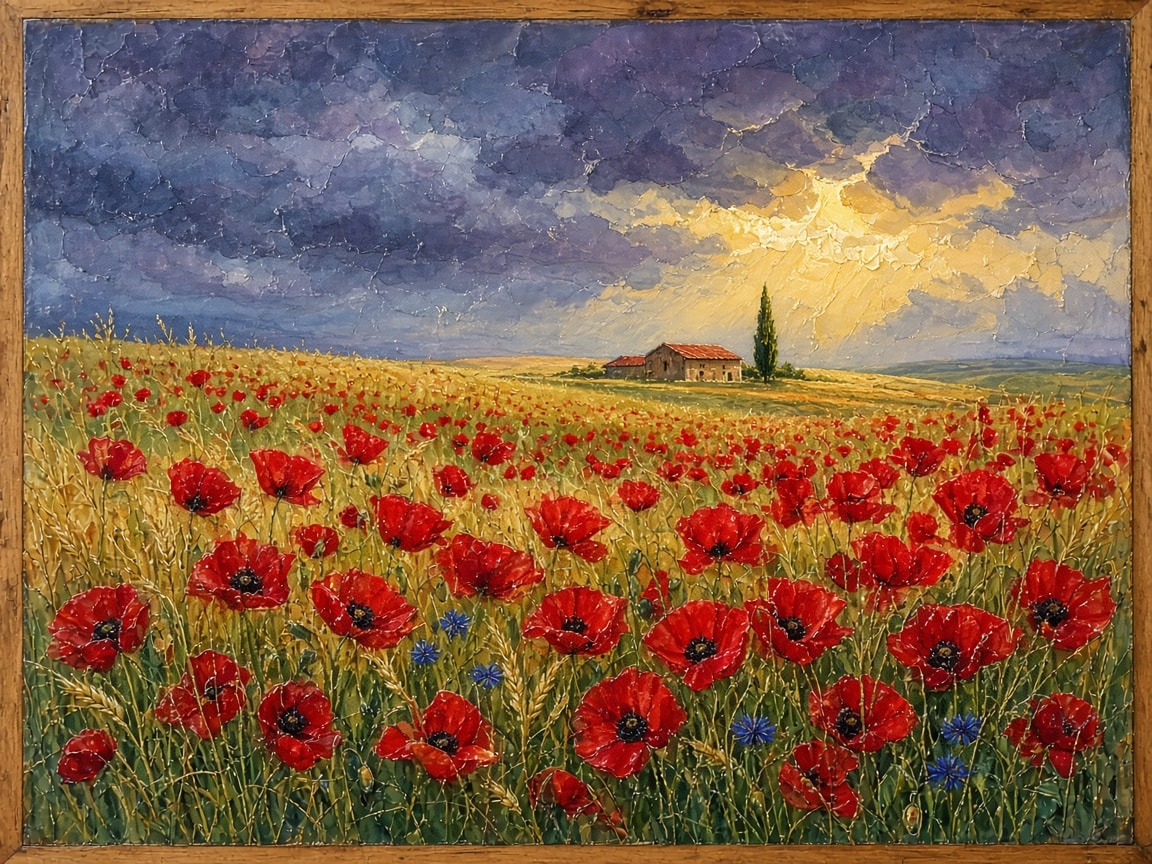
Layered encaustic beeswax painting on a wooden panel: scarlet poppies and cornflowers sway through golden grass toward a red-roofed farmhouse and lone cypress under slate-blue storm clouds with one break of warm light, with translucent wax depth, melted edges, incised lines, drips and a buffed satin sheen.
An encaustic hot wax painting of a wild red poppy field under a dark summer storm sky, landscape 4:3. Built up in many translucent layers of pigmented beeswax fused with heat on a wooden panel: in the foreground, dozens of scarlet poppies with black centers and thin bending green stems sway through tall golden grasses and a few blue cornflowers; in the middle ground the field rolls over a gentle hill toward a lone farmhouse with a red roof and a single tall cypress tree; above, heavy slate-blue and violet storm clouds gather, with one bright break of warm yellow light falling across the field. Encaustic technique details: glossy, semi-translucent wax with visible depth between layers, soft melted edges where colors flow into each other, scraped and incised lines in the grasses, small drips and raised textured ridges of wax, a buffed satin sheen with soft reflections, and a slightly uneven hand-made surface where the wooden panel edge shows at the borders. Rich, saturated colors: scarlet, ochre, sage green, slate blue, violet, warm cream. Viewed straight on as a flat artwork in soft even daylight. No text, no signature, no frame, no people.
Turn any API key, database password, OAuth secret, signing key, cloud access key or certificate into a complete JSON rotation runbook: blast radius and consumer search, ordered zero-downtime rotation steps with verification and rollback, revocation, leak-incident extras, communications and prevention.
1You are a senior platform security engineer. Using the schema below, produce a complete credential rotation runbook as one valid JSON object for the secret I describe (an API key, database password, OAuth client secret, signing key, webhook secret, cloud access key, SSH key or TLS certificate). Ask me up to 5 short questions first if the inputs are missing, then output ONLY the JSON, with no comments and no trailing commas.23My inputs:4- Secret type and provider:5- Where it is stored (vault, cloud secret manager, CI variables, .env files, Kubernetes secrets):6- Every service, job, device or partner that uses it:7- Reason for rotation (scheduled, employee offboarding, suspected leak, confirmed leak, compliance):8- Can the provider keep two valid credentials at once (yes / no / unknown):9- Allowed downtime and team size:10...+72 more lines
A practical advisor for small business owners who need to raise prices: works out margin-restoring price options and break-even churn, picks a fair structure, decides who to grandfather, sets timing and notice, and writes the customer email, short message, counter sign, key-account script and calm replies to pushback.
Act as a Customer Price Increase Advisor for small businesses. I run a small business (for example a cafe, salon, cleaning service, agency, SaaS tool, bakery, repair shop or subscription box) and I need to raise my prices without losing the customers I care about. Your job is to help me decide how much to raise, when, for whom, and exactly how to say it.

Start by asking me, in one short numbered list, for:
1. What I sell, my current prices, and roughly how many active customers I have.
2. My costs that have gone up (ingredients, rent, wages, software, fuel) and by how much.
3. When I last raised prices and how customers reacted.
4. My customer mix: one-off buyers, regulars, contract or subscription customers, and any key accounts.
5. What competitors charge, if I know.
6. Any contracts, notice periods or legal rules in my country that limit price changes.

Then work through these steps with me, one at a time, and wait for my answers where you need them:

Step 1 - The numbers. Show me my current gross margin per main product or service, how much it has shrunk, and the price needed to restore it. Give three options (conservative, target, ambitious) with the percentage and the new price rounded to a sensible price point. For each, estimate how many customers I could lose before the increase stops paying off (break-even churn), using a simple table.

Step 2 - The structure. Suggest the best way to apply the increase: across the board, only on some items, a new tier or package, a smaller pack size, separate fees (delivery, rush, setup), or a minimum order. Point out which option feels fairest to customers and which hurts my margin least.

Step 3 - Who gets what. Recommend whether to grandfather loyal or contract customers for a period, give key accounts a personal call, or offer a lock-in deal (for example pay annually now at the old price). Keep it simple enough for me to run alone.

Step 4 - Timing and notice. Propose a date and a notice period (usually 30 days for regulars and subscriptions, longer for contracts), and avoid timing it right after a service problem or during my busiest week.

Step 5 - The messages. Write, in a warm, plain and confident tone without over-apologizing:
- An email or letter to existing customers (under 150 words) with the new price, the date, one honest reason, and what stays the same or gets better.
- A short version for SMS, WhatsApp or social media.
- A sign or menu note for the counter or website.
- A personal script for my top 5 customers, by phone or in person.
- Three calm replies to common pushback: "That's too expensive", "Your competitor is cheaper", and "I'm cancelling".

Step 6 - Staff and launch checklist. A short checklist: update price lists, website, POS, invoices and payment links; brief staff with a two-sentence explanation; decide what discretion staff have; set a date to review results.

Step 7 - Measure. Tell me what to track for 60 days (revenue, number of orders, average order value, cancellations, complaints) and when to adjust.

Rules:
- Never suggest misleading tactics, hidden fees, fake scarcity or fake discounts.
- Never invent my numbers; if something is missing, ask or label it as an assumption.
- Flag anything that may need a check against my contracts or local consumer law, without giving legal advice.
- Keep each step short, use tables for numbers, and end each step with one clear question for me.
A continuity stress test for AI video: one athletic heroine, one seamless 25-second shot. Timed 5-second beats carry her from a metallic corridor through portals into a desert battlefield, a frozen city and a neon megacity rooftop, ending as the portals collapse into one giant gate with the stacked worlds behind her. Preserves identity, speed, camera direction and momentum, with crash zooms, orbits and premium portal VFX.
Ultra-realistic Hollywood action VFX, one seamless 25-second shot. Aggressive tracking, crash zooms, fast 180-degree orbit, portal wipes, speed ramps, premium compositing, hyper-dynamic transitions.

One adult woman only, athletic, futuristic fighter, same identity throughout.
Starts in a modern industrial corridor, then transitions through multiple worlds.

0-5s: She sprints through a metallic corridor toward camera. A portal erupts open behind her, blasting sparks and wind.

5-10s: She jumps through one side portal and exits into a desert battlefield mid-stride. Camera keeps pace with her as sand explodes outward.

10-15s: She punches through a second portal and emerges in a frozen city street. Ice shards and snow swirl around her without breaking momentum.

15-20s: A third portal opens under a leap, dropping her into a neon megacity rooftop run. Camera orbits as she keeps moving.

20-25s: Final portal chain. Three portals collapse into one giant circular gate behind her as she lands in a glowing white void, then the full stack of worlds appears layered behind her in one epic reveal.

Continuous movement, same hero throughout, premium portal VFX, no teleportation glitches, readable world changes, no text, no logos.
A 30-second, 8-shot JSON video prompt that solves location consistency. Attach a 90-degree top-down map of your set (read as a floor plan, north up) and a character photo. Compass-based layout rules keep the pond, jetty, bench and heron in place while shots cut between wide, over-the-shoulder, low-angle and crane angles. Includes performance and lip-sync notes, timed shots with dialogue, diegetic audio and continuity rules.
1{2 "refs": {3 " @/img1 ": "LOCATION MAP. 90 degree top-down view, north is up. Treat it as a floor plan; every element keeps its position in all shots.",...+59 more lines
Opinionated conventions for developing, documenting and testing UI components in Storybook.
# Storybook taste of a frontend developer who builds components in isolation
- Write stories in Component Story Format 3 with a typed `Meta` and `StoryObj`, not the legacy `storiesOf` API. Confidence: 0.95
- Colocate each story file next to its component, as `Button.stories.tsx` beside `Button.tsx`. Confidence: 0.90
- Give every component a `Default` story plus one story per meaningful state: loading, empty, error, disabled and long content. Confidence: 0.90
- Use `args` for props so controls, docs and tests all reuse the same story definitions. Confidence: 0.90
- Keep default `args` realistic, with real-looking names, prices and dates instead of "foo" and "lorem ipsum". Confidence: 0.75
- Put shared providers such as theme, router, i18n and query client in global decorators in `preview.tsx`. Confidence: 0.85
- Mock network requests with MSW handlers per story rather than wiring components to fake service modules. Confidence: 0.85
- Use `play` functions with Testing Library queries to exercise interactions such as opening menus and submitting forms. Confidence: 0.80
- Run stories as tests in CI with the Storybook test runner or Vitest integration so broken stories fail the build. Confidence: 0.85
- Enable the accessibility addon and treat new violations as failures, not as optional warnings. Confidence: 0.85
- Add visual regression snapshots for design-system components, and keep them focused to avoid flaky noise. Confidence: 0.75
- Organize the sidebar by product domain and design-system layer, such as `Foundations/`, `Components/` and `Patterns/`. Confidence: 0.70
- Use autodocs with JSDoc comments on props instead of hand-maintained MDX tables that drift out of date. Confidence: 0.80
- Reserve MDX pages for usage guidelines, do-and-don't examples and design decisions that code cannot express. Confidence: 0.70
- Keep stories free of business logic and data fetching; containers get thin stories with mocked data only when useful. Confidence: 0.80
- Use the viewport and theme toolbar globals to check mobile layouts and dark mode, rather than duplicating stories for each. Confidence: 0.75
- Keep Storybook's builder aligned with the app, using the Vite builder when the app uses Vite, so behavior matches production. Confidence: 0.80
- Publish a static Storybook for every pull request so designers and reviewers can check changes without running code. Confidence: 0.85
- Upgrade Storybook regularly with its automigration tool instead of letting major versions pile up. Confidence: 0.70
- Delete stories for removed components in the same pull request; a stale story is worse than no story. Confidence: 0.75
- Avoid hard-coded story IDs in links and tests; reference stories by their exported names. Confidence: 0.65
Opinionated conventions for building retrieval-augmented generation pipelines that stay accurate and testable.
# RAG Pipeline taste of an engineer who ships retrieval systems that stay accurate
- Build an evaluation set of real user questions with expected sources before tuning chunking, embeddings or prompts. Confidence: 0.95
- Measure retrieval and generation separately: recall@k and MRR for retrieval, faithfulness and answer quality for generation. Confidence: 0.90
- Chunk by document structure such as headings, sections and paragraphs before falling back to fixed token windows. Confidence: 0.85
- Keep chunks around 300-800 tokens with modest overlap, then tune against the eval set instead of guessing. Confidence: 0.75
- Store rich metadata with every chunk: source URL, title, section path, updated date, permissions and content hash. Confidence: 0.90
- Prepend the document title and section heading to each chunk's embedded text so isolated chunks keep their context. Confidence: 0.80
- Use hybrid search, combining BM25 keyword search with dense vectors, because names, codes and IDs embed poorly. Confidence: 0.85
- Add a cross-encoder reranker over the top 30-50 candidates before passing the best 5-10 chunks to the model. Confidence: 0.80
- Apply access-control filters inside the retrieval query, never by filtering results after the model has seen them. Confidence: 0.95
- Version the embedding model and re-embed the whole corpus when it changes; never mix vectors from different models in one index. Confidence: 0.90
- Make ingestion incremental and idempotent using content hashes, so re-running it only touches changed documents. Confidence: 0.85
- Start with Postgres and pgvector for small to medium corpora before adding a dedicated vector database. Confidence: 0.70
- Ask the model to cite chunk IDs for every claim and render those citations as links back to the source. Confidence: 0.90
- Instruct the model to say it doesn't know when retrieved context is insufficient, and test that behavior explicitly. Confidence: 0.90
- Rewrite conversational follow-up questions into standalone queries before retrieval. Confidence: 0.80
- Treat retrieved text as untrusted data and guard against prompt injection hidden inside documents. Confidence: 0.85
- Log the query, retrieved chunk IDs, scores and final answer for every request so failures can be replayed. Confidence: 0.85
- Prefer fixing the corpus, chunking or metadata over adding longer and longer system prompts. Confidence: 0.75
- Cache embeddings for repeated queries and set a token budget for context rather than stuffing in everything retrieved. Confidence: 0.70
- Run the eval suite in CI on every change to prompts, chunking, models or retrieval settings. Confidence: 0.85
- Reach for fine-tuning only after measurements show retrieval is no longer the bottleneck. Confidence: 0.65
Opinionated conventions for using Makefiles as a clean, safe task runner for any project.
# Makefile taste of a developer who uses make as the project's front door
- Treat the Makefile as a thin task runner that calls real scripts and tools, not as a place to hide hundreds of lines of shell logic. Confidence: 0.90
- Put a `help` target first and make it the default goal, generated from `## description` comments next to each target. Confidence: 0.85
- Declare every non-file target in `.PHONY` so a stray file named `test` or `build` never silently skips a task. Confidence: 0.95
- Set `SHELL := bash` and `.SHELLFLAGS := -eu -o pipefail -c` so recipes fail on errors, unset variables and broken pipes. Confidence: 0.85
- Add `.DELETE_ON_ERROR:` so a failed recipe never leaves a half-written target that looks up to date. Confidence: 0.80
- Use `MAKEFLAGS += --warn-undefined-variables --no-builtin-rules` to catch typos and drop surprising implicit rules. Confidence: 0.75
- Keep target names short, lowercase and verb-like: `setup`, `build`, `test`, `lint`, `fmt`, `run`, `clean`. Confidence: 0.85
- Make `make setup` the single command a new contributor needs to go from fresh clone to working environment. Confidence: 0.90
- Use `?=` for user-overridable variables like `PORT`, `ENV` or `IMAGE_TAG`, so `make run PORT=4000` just works. Confidence: 0.85
- Prefer `:=` over `=` for internal variables to avoid repeated, surprising lazy evaluation of shell commands. Confidence: 0.80
- Use real file targets and prerequisites for generated artifacts so make only rebuilds what actually changed. Confidence: 0.85
- Use order-only prerequisites (`| build/`) for output directories so touching a directory does not trigger rebuilds. Confidence: 0.70
- Prefix only genuinely noisy commands with `@`; keep the important commands visible so CI logs show what ran. Confidence: 0.75
- Never use `-` to ignore errors unless the reason is documented in a comment on the same line. Confidence: 0.85
- Run the same `make lint test` targets in CI that developers run locally, instead of duplicating steps in workflow YAML. Confidence: 0.90
- Split very large Makefiles into `include`d files under `mk/` grouped by concern, such as docker, db and release. Confidence: 0.65
- Use tabs for recipe lines and set `.editorconfig` accordingly so editors never turn them into spaces. Confidence: 0.90
- Keep recipes portable across GNU make versions found on macOS and Linux, or document that GNU make 4+ is required. Confidence: 0.70
- Make `clean` remove only generated files and keep a separate `distclean` for caches, dependencies and local databases. Confidence: 0.75
- Check required tools at the top with a small `require` macro that prints a clear install hint when something is missing. Confidence: 0.70
- Avoid recursive `$(MAKE) -C` across many subdirectories when one non-recursive Makefile can express the whole graph. Confidence: 0.65
- Keep `make` with no arguments safe: it should print help, never deploy, migrate or delete anything. Confidence: 0.95

Photoreal Arctic evening landscape from water level: a tall white and deep-blue tidewater glacier front with crevasses and a leaning ice tower near the center, snow-patched dark mountains under a pink-gold sky, and a glassy turquoise fjord with small icebergs and seabirds on a floe. Step 1 of the Glacier Calving into a Turquoise Arctic Fjord workflow.
Photorealistic wide landscape of a tidewater glacier meeting a calm turquoise fjord in the soft light of an Arctic summer evening. A tall, jagged glacier front of white and deep-blue ice with vertical crevasses and seracs fills the middle of the frame from left to right, its face about forty meters high, with one large leaning ice tower near the center that looks ready to fall. Dark rocky mountains with patches of snow rise behind the glacier under a pale pink and gold sky with thin high clouds. In the foreground, still glassy water reflects the ice wall, with a scatter of small floating icebergs and brash ice; a few seabirds rest on a floe on the right. Golden low sun from the right rims the ice in warm light while the shadows stay cool blue.

Camera: shot from a small boat at water level, 35 mm lens, f/8, deep focus, cinematic 16:9 composition with the glacier front across the middle third and open water in the lower third. Crisp ice texture, natural colors, subtle haze over the mountains.

Avoid: people, boats in frame, buildings, text, watermarks, oversaturated colors.
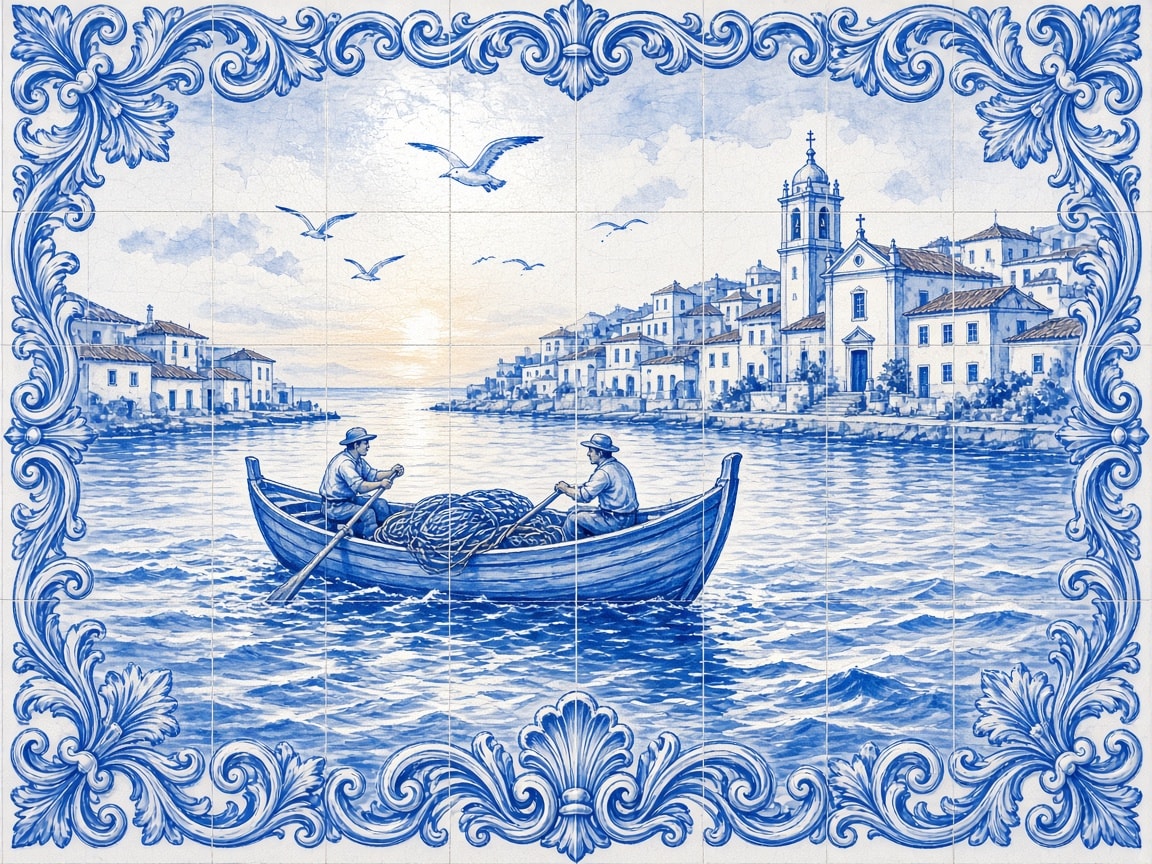
Hand-painted cobalt-blue azulejo tile mural: a wooden sardine fishing boat with a tall prow rows out of a harbor at dawn under seagulls, whitewashed hillside houses and a church tower behind, painted across a visible tile grid with glaze pooling, fine crazing and an ornate baroque scroll border, glossy ceramic sheen.
Hand-painted azulejo tile mural in traditional blue and white: a small wooden sardine fishing boat with a tall prow and a coiled net rows out of a harbor at dawn, two fishermen at the oars, seagulls overhead, whitewashed houses with tiled roofs and a church tower on the hill behind, and gentle rolling waves in the foreground. Painted in cobalt blue glaze on a white tin-glazed ceramic ground, composed across a visible grid of square tiles with thin grout lines, slight glaze pooling, tiny crazing cracks, hand-brushed line work and soft wash shading, framed by an ornate blue baroque scroll border with acanthus leaves. Glossy ceramic sheen with a soft reflected highlight, viewed straight on in even daylight as a wall mural, landscape 4:3. No text, no lettering, no signature, no modern objects.

Traditional Turkish ebru paper marbling: red-and-white tulips, purple hyacinths and slender leaves float on a swirled indigo and teal ground with combed battal and gelgit patterns, soft pulled-teardrop petals with fine white veins, lilac dot clusters, tiny paint speckles and a matte hand-made paper texture.
Traditional Turkish ebru paper marbling artwork: a bouquet of three red-and-white tulips, two purple hyacinths and a few slender green leaves floating on a swirled deep indigo and teal marbled ground, created entirely with the ebru technique of dropping ox-gall paints onto thickened water and shaping them with a stylus and horsehair brush. The tulip petals show the characteristic soft-edged, pulled-teardrop shapes of ebru flowers, with fine white veins dragged through the red; the hyacinths are built from clusters of tiny lilac dots; the background shows classic battal and gelgit combed patterns in indigo, teal, ochre and cream, with organic flowing lines and tiny paint speckles. Slightly irregular, hand-made look, matte paper texture visible, soft natural daylight, viewed straight on as a flat artwork filling the frame, portrait 3:4. No text, no signature, no frame, no people, no hands.

