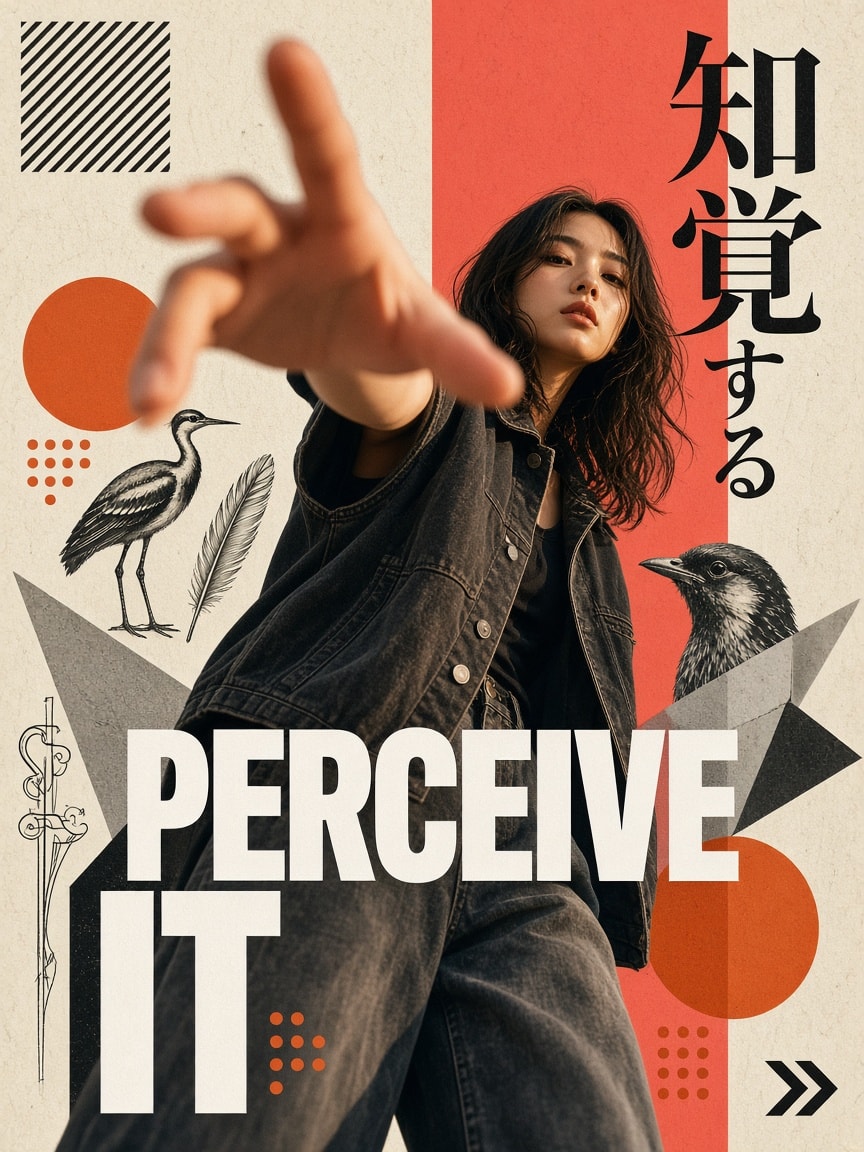
A detailed art-direction prompt for an avant-garde Japanese magazine poster in 2:3. A model in charcoal denim reaches toward a 24mm lens with extreme forced perspective, set on ivory paper with a coral-red panel, burnt-orange circles, vintage bird illustrations and paper cutouts. It specifies Japanese calligraphy, bold outlined "PERCEIVE IT." lettering, exact hex colours, warm side light, film grain and a negative space. Change the words, palette or subject to make your own poster.
Create a high-end experimental Japanese editorial fashion poster with a contemporary avant-garde graphic design aesthetic, vertical 2:3 composition.

MAIN SUBJECT & POSE:
A young East Asian woman with shoulder-length, naturally wavy, slightly messy dark brown-black hair, wearing a dark charcoal oversized sleeveless denim vest over a black top and loose-fitting washed charcoal-grey denim jeans. She has delicate facial features, a calm yet confident expression, slightly parted lips, and a direct gaze toward the camera. Her body is positioned at a slight angle, with her upper body leaning forward. One arm is dramatically extended directly toward the camera, with her hand reaching into the foreground. Use extreme forced perspective and exaggerated foreshortening, making the hand appear significantly larger than her face and body. Fingers are naturally spread and softly blurred due to shallow depth of field. The subject should feel dynamic, mysterious, artistic, and editorial.
POSE & CAMERA:
Low-angle fashion photography, close-up perspective, wide-angle lens aesthetic, approximately 24mm lens. The subject occupies most of the central frame. Her face remains relatively sharp while the outstretched hand dominates the foreground with strong perspective distortion. Natural body proportions, realistic skin texture, authentic photographic details.

BACKGROUND & COMPOSITION:
Warm ivory/off-white textured paper background with a subtle fine-grain printed canvas texture. Create an asymmetrical mixed-media collage composition with overlapping geometric shapes, abstract cutouts, vintage illustrations, and monochromatic photographic fragments.
Place a tall, vivid coral-red rectangular panel vertically behind the subject, slightly right of center, extending from near the top edge to the bottom edge. The rectangle partially overlaps the subject and creates a strong vertical visual division.

Add large burnt-orange circular shapes on the left-middle and bottom-right portions of the composition. Include smaller orange circular dots around these shapes.
Incorporate black-and-white vintage bird photographs and hand-drawn ornithological illustrations, partially cropped and layered behind the subject. Include abstract sketchbook-style bird drawings, feather details, and fragmented photographic elements. Add overlapping black and grey geometric paper cutouts, irregular triangular shapes, and diagonal collage fragments.

TYPOGRAPHY & JAPANESE DESIGN ELEMENTS:
At the upper-right area, incorporate large Japanese typography reading "知覚する" (Perceive). The first two Japanese characters, "知覚", should sit prominently over the coral-red rectangular panel in dark black calligraphic serif typography. The remaining characters, "する", extend toward the upper-right over the ivory background.

Across the lower-middle section, overlay bold uppercase white sans-serif typography reading:

"PERCEIVE"

Use a heavy condensed modern grotesk font, with selected letters featuring a thin outlined treatment to create a layered typographic effect.
Below it, aligned toward the left, place the word:

"IT."

Use oversized white uppercase typography with a partially outlined letter treatment.

Add small abstract decorative details, including a black diagonal striped square in the upper-left corner, tiny ornamental line drawings, geometric symbols, and a small black double-arrow symbol in the bottom-right corner.

COLOR PALETTE:

Warm ivory: #F1EEE5

Vivid coral red: #EF5558

Burnt orange: #E98A16

Charcoal black: #252323
Washed denim grey: #666665
Pure white: #FFFFFF
Maintain a strong contrast between warm orange and coral-red accents, monochromatic photography, and the neutral paper background.
LIGHTING & PHOTOGRAPHIC TREATMENT:
Warm directional sunlight hitting the woman's face and hand from the left side, creating rich amber highlights and deep cinematic shadows. Subtle film grain, slightly desaturated editorial photography, realistic skin tones, soft motion blur in the foreground, and high-contrast photographic details.
ART DIRECTION:
Japanese contemporary editorial magazine design meets avant-garde streetwear fashion photography. Experimental Swiss-inspired typography, vintage natural-history illustration, modern brutalist graphic design, analogue paper collage, layered cut-and-paste artwork, and sophisticated fashion magazine art direction.
FINAL QUALITY:
Ultra-detailed photorealistic fashion photography combined with professionally designed graphic collage elements. Sophisticated visual hierarchy, intentional asymmetrical balance, crisp typography, tactile paper texture, intricate details, and premium art-direction quality.

Vertical 2:3 poster, full-bleed composition, no borders, no mockup, no watermark.

cartoon, anime, illustration-only subject, 3D character, plastic skin, artificial face, distorted facial features, extra fingers, missing fingers, malformed hands, duplicate arms, unnatural anatomy, flat perspective, weak foreshortening, excessive background clutter, symmetrical composition, neon colors, oversaturated skin, glossy digital background, low resolution, blurry face, unreadable typography, random letters, misspelled Japanese characters, incorrect text placement, watermark, logo, poster mockup, frame, border.
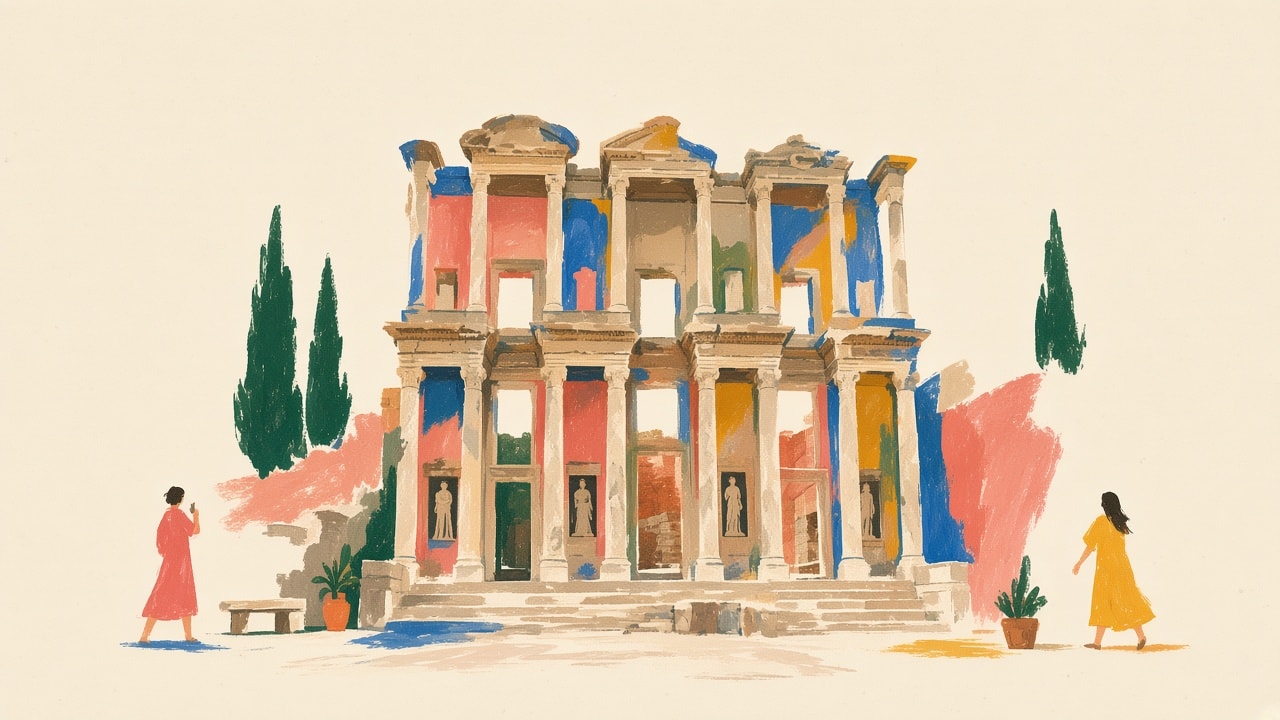
A reusable wide landscape template that turns any landmark into a quiet mid-century travel postcard: the destination sits slightly off-center in loose gouache and pastel marks on a warm cream paper field that fills 40–50% of the canvas. Tiny coral and mustard figures, one small contextual prop and a few natural accents keep the composition sparse and airy. Fill in the landmark, city, architectural features and a short activity for the figures.
A wide horizontal landscape hand-painted illustration of [LANDMARK NAME] in [CITY/COUNTRY] with strong emphasis on negative space and quiet composition.

The image features a warm off-white cream paper background that occupies 40-50% of the total canvas, creating generous blank margins and breathing room.

The [LANDMARK NAME] is positioned slightly off-center as a calm visual anchor, depicted through simplified [KEY ARCHITECTURAL FEATURES - e.g., "towering structures", "iconic silhouette", "distinctive archways"] with loose, expressive brush strokes. The landmark is suggested through minimal rhythmic marks and abstract color blocks in deep teal, cobalt blue, and forest green, rather than drawing every architectural detail precisely.

The composition is sparse and uncluttered: only a few carefully placed elements including 2-3 tiny human figures [DOING TYPICAL ACTIVITY - e.g., "walking", "taking photos", "sitting"] rendered as simple silhouettes in coral red and mustard yellow, one small [CONTEXTUAL ELEMENT - e.g., "cafe table", "bench", "street vendor cart"] with minimal shapes, two or three [NATURAL ELEMENTS - e.g., "potted plants", "trees", "flowers"] in emerald green, and subtle [CULTURAL/ARCHITECTURAL HINTS - e.g., "traditional roof lines", "modern glass panels", "historic columns"].

Large areas of the warm paper background remain completely untouched, especially around the edges and between elements.

The style combines mid-century travel poster aesthetics with contemporary [REGIONAL] editorial illustration: elegant, minimal, warm, cultured, and slightly nostalgic.

The texture shows loose hand-painted gouache and pastel marks with dry brush strokes, pastel smudges, wax-crayon edges, uneven color patches, imperfect handmade edges, and visible gaps between colored areas.

Colors are layered, dry, and tactile with a restrained palette of deep teal, sky blue, coral red, salmon pink, mustard yellow, ochre, terracotta, and small near-black accents, but used sparingly so each color can breathe against the paper.

The overall mood is quiet, spacious, relaxed, refined, like a sophisticated [CITY] cultural postcard or handmade art print suitable for premium lifestyle merchandise.

The landmark remains recognizable through its essential identity—[DEFINING CHARACTERISTICS]—but the drawing stays airy, calm, poetic, and softly abstract.

Strong sense of pause, breath, and refined emptiness with confident use of blank space.

No crowded composition, no full-bleed busy background, no photorealism, no glossy digital rendering, no clean vector art, no 3D rendering, no text, no signage, no logos, no readable text.
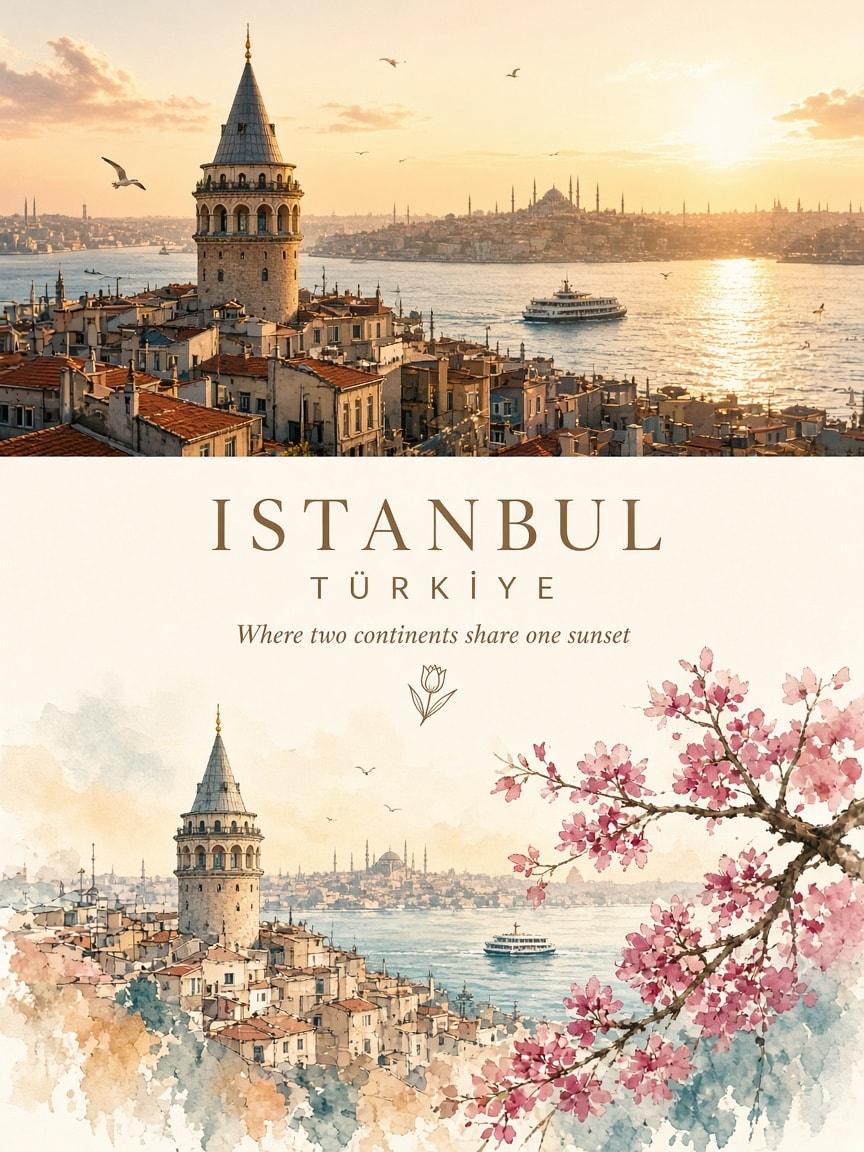
A reusable 4:5 travel-art poster template: the top half is a photorealistic photograph of any city, country or landmark, the middle is an elegant editorial strip with the destination name, country and a short poetic tagline, and the bottom half reimagines the same place as a minimalist watercolor-and-gouache illustration that fades into white paper. Just fill in the destination, country and tagline placeholders.
Create an exceptionally beautiful vertical 4:5 travel-art poster featuring [CITY / COUNTRY / LANDMARK], presented as a sophisticated two-part visual collage.

The composition must have two distinct but harmoniously connected sections.

TOP SECTION — THE REAL WORLD

Use the actual destination as the primary visual reference.

Create a breathtaking photorealistic travel photograph of [DESTINATION].
Preserve its recognizable architecture, landscape, landmarks and geographical identity.
Capture beautiful natural lighting, realistic colours and atmospheric depth.
Include a few subtle human elements, boats, streets or local details where appropriate.
Keep the composition cinematic, clean and visually immersive.

This section should feel like a photograph taken during a beautiful journey.

MIDDLE SECTION — THE EDITORIAL TRANSITION

Create an elegant transition between photography and illustration.

Add the destination name in beautiful, sophisticated typography.
Include the country name in small uppercase lettering.
Add a short poetic travel-inspired tagline.
Use delicate hand-drawn decorative elements, tiny botanical details or a minimal location emblem.
Maintain generous white space and a refined editorial layout.

BOTTOM SECTION — THE WORLD REIMAGINED AS ART

Transform the same destination into a beautiful minimalist hand-painted illustration.

Recreate the recognizable landmark or scenery from the upper photograph.
Use delicate watercolor washes, expressive gouache brushwork and subtle ink outlines.
Simplify the architecture and surroundings into an elegant artistic composition.
Retain the destination’s signature colours, shapes and distinctive features.
Add a few charming details such as tiny boats, flowering branches, little figures, birds or local elements.
Use soft pastel shades, muted colours and carefully placed vibrant accents.
Allow some watercolor textures and painted edges to fade naturally into the white background.

The lower illustration must be an artistic interpretation of the SAME location shown above, not an unrelated scene.

ART DIRECTION

Premium illustrated travel magazine aesthetic.
Contemporary minimalist editorial design.
Beautiful balance between photography and fine art.
Delicate watercolor and mixed-media textures.
Sophisticated typography and generous negative space.
Soft, harmonious colour palette.
Elegant, clean and collectible poster appearance.

FINAL COMPOSITION

Vertical 4:5 poster.
Upper half: approximately 50% photorealistic destination photography.
Lower half: approximately 50% minimalist watercolor illustration.
A subtle, elegant transition between both worlds.
Destination name clearly visible and beautifully typeset.
No creator watermark, no unnecessary text, no clutter.

DESTINATION TITLE: [CITY / LANDMARK]

COUNTRY: [COUNTRY]

TAGLINE: [SHORT POETIC TRAVEL QUOTE]

The final artwork should communicate one beautiful idea: experience the destination in reality above, then discover its artistic soul below.
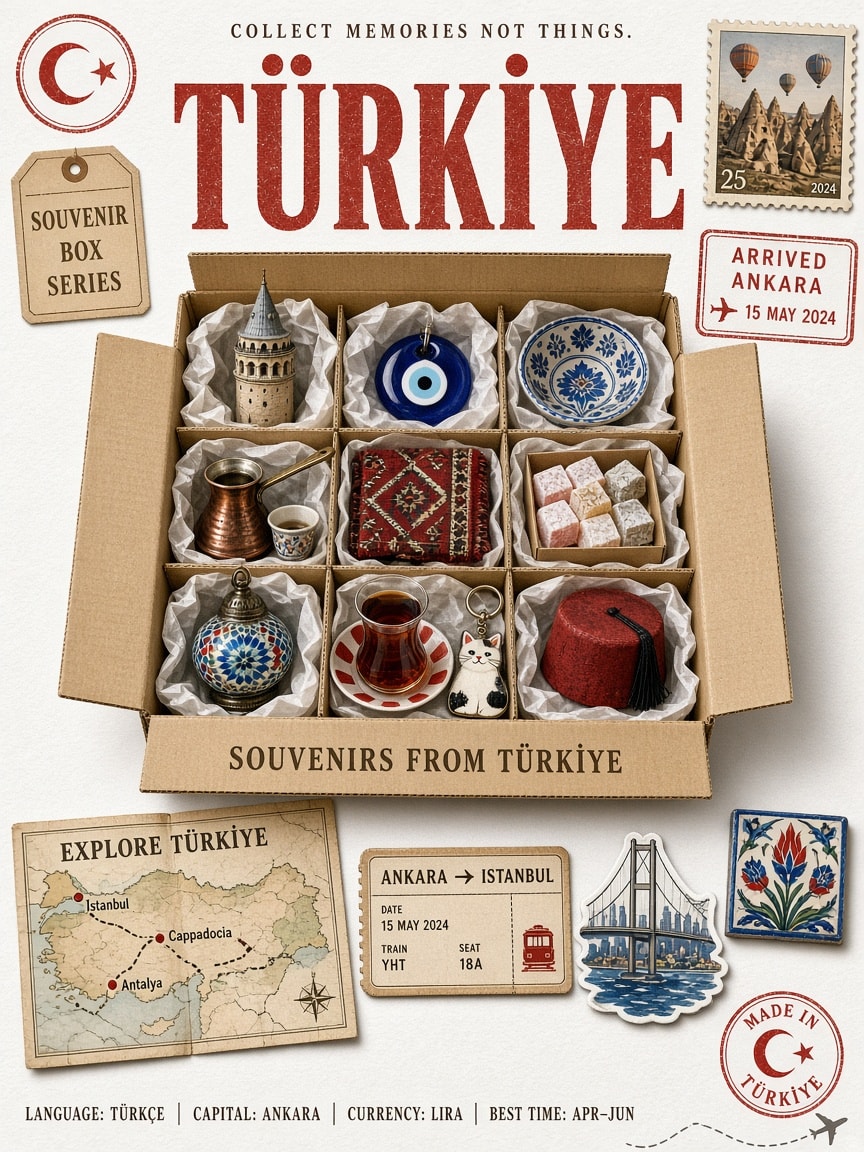
A fill-in-the-country template for a photoreal vintage travel poster: oversized letterpress country name, postal stamps and an "ARRIVED" customs stamp, a kraft souvenir box with ten culturally authentic miniature keepsakes, an illustrated route map, a train or plane ticket, a landmark sticker and a facts strip (language, capital, currency, best time), all shot as real objects on textured white paper. Change one variable to make a poster for any country.
Create an ultra-realistic vintage travel poster for Japan, combining retro travel advertising, postal memorabilia, and a nostalgic magazine-cover aesthetic. Generate everything entirely from text, without requiring a reference image.

Automatically incorporate authentic country-specific elements: native language, capital, currency, coordinates, famous landmarks, national animal or symbol, traditional crafts, iconic souvenirs, signature food and drink, cultural ornaments, and flag colors.

BACKGROUND & TYPOGRAPHY

Use a pure white (#FFFFFF) matte paper background with subtle paper grain and barely visible aging. Keep it white, without cream, beige, yellow, or sepia tones.

At the top, add "COLLECT MEMORIES NOT THINGS." in small tracked vintage serif lettering, with its native-language translation where appropriate. Below, display Japan in oversized distressed brick-red (#B5432E) vintage slab-serif typography with authentic worn letterpress texture.

VINTAGE POSTAL DETAILS

Add a circular national-symbol rubber stamp and a "SOUVENIR BOX SERIES" postal tag on the left. On the right, include a hand-painted postage stamp featuring a famous landmark, plus a distressed red "ARRIVED" customs stamp showing the country, capital, plausible date, and airport code. Include accurate capital coordinates.

CENTRAL SOUVENIR BOX

Feature a large open kraft-cardboard shipping box in the center, viewed from a gentle top-down angle. Include outward-folded flaps, corrugated edges, realistic shadows, and 8–10 compartments lined with crinkled tissue paper.

Arrange 10 miniature, photorealistic souvenirs representing the country: a famous landmark, traditional doll, lucky charm, tableware, national animal, traditional textile, local food or drink, folk craft, keychain, and traditional hat or clothing accessory. Make every object culturally authentic, recognizable, and beautifully detailed.

Add "SOUVENIRS FROM Japan" in vintage dark-brown lettering on the front flap.

BOTTOM TRAVEL COLLAGE

Below the box, arrange:

- A folded illustrated map titled "EXPLORE Japan", featuring 3–4 destinations, dotted travel routes, landmark illustrations, and a compass rose.
- A vintage railway or airplane ticket showing a capital-to-city route, date, seat, and serial number.
- A die-cut travel sticker depicting an iconic national landmark.
- One small traditional folk-craft object.

COUNTRY INFORMATION FOOTER

Add a small national-symbol badge and a historical founding year where applicable. Include a neatly arranged information strip:

LANGUAGE: [NATIVE LANGUAGE] | CAPITAL: [CITY] | CURRENCY: [CURRENCY] | BEST TIME: [SEASON]

Finish with a circular "MADE IN Japan" stamp, miniature national-symbol postage stamp, tiny airplane with a dashed flight path, and the national motto in small italic lettering.

VISUAL STYLE & QUALITY

Use restrained national flag colors, realistic paper fibers, distressed ink, hand-painted illustrations, natural contact shadows, soft studio lighting, and slightly desaturated vintage colors. Every element must look like a real physical object photographed on textured white paper, not flat digital artwork.

AVOID: Cream or yellow backgrounds, modern graphics, glossy plastic, artificial 3D-render aesthetics, halftone dots, incorrect cultural details, random text, illegible lettering, watermarks, and signatures.

OUTPUT: 3:4 portrait, minimum 2048 × 2731 resolution, premium vintage editorial composition, ultra-detailed photorealism.
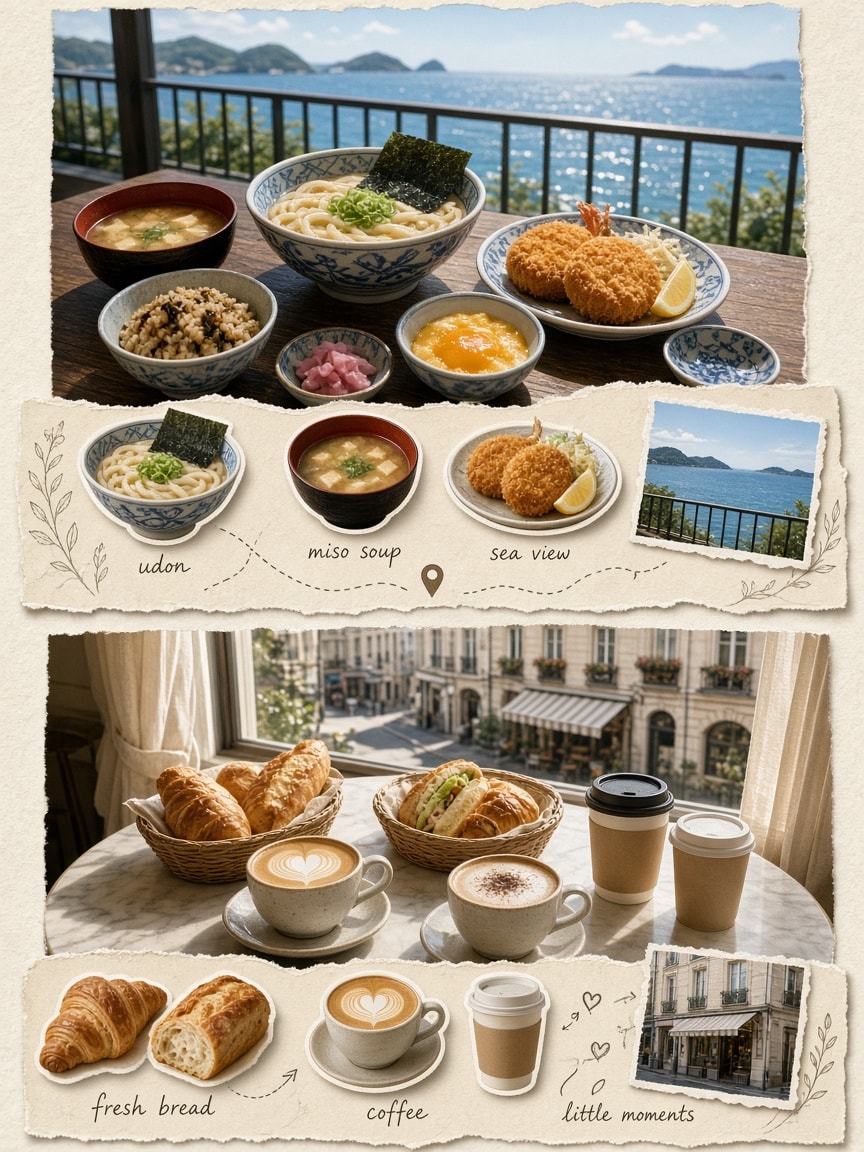
A photo-plus-scrapbook collage prompt that turns food and travel snapshots into a warm vintage travel diary: two connected scenes, a Japanese seaside meal and a cozy window-side café table, each shown as a realistic food photograph above a cream journal page of cut-out dishes, small photos, handwritten labels, dotted routes, pins and doodles, on ivory textured paper with soft sunlight and film grain in a vertical 3:4 layout.
Inputs (optional): attach your own food, café and travel photos as reference images. Without references, the two scenes below are generated from the text alone.

Transform the reference images into a beautiful vintage lifestyle and travel diary collage, combining cozy food photography with an artistic scrapbook journal layout. Create two connected scenes in a warm, nostalgic editorial aesthetic.

Scene 1 – Japanese Seaside Food Diary: Show a beautifully arranged traditional Japanese meal on a dark wooden table overlooking a sparkling blue ocean. Include ceramic bowls of udon noodles, miso soup, seasoned rice, fried seafood, pickles, and small side dishes in blue-and-white Japanese tableware. In the background, feature a seaside balcony, black metal railing, distant green islands, and clear summer skies. Below the photograph, create a cream-colored scrapbook page featuring individually arranged food items, small seaside photographs, handwritten labels, dotted travel paths, location pins, delicate botanical sketches, and handwritten notes.

Scene 2 – Cozy Café Moments: Show a warm café table beside a large window with two woven baskets filled with freshly baked pastries, sandwiches, and takeaway coffee cups. Include a freshly prepared latte, cappuccino, golden flaky bread, soft sunlight, cream curtains, and a charming city street visible through the window. Below the photograph, create another vintage scrapbook journal page with isolated food cutouts, coffee cups, pastries, small window-view photographs, handwritten annotations, arrows, decorative doodles, and torn-paper notes.

Use warm ivory and beige textured paper, subtle film grain, soft natural sunlight, muted earthy colors, delicate shadows, elegant handwritten typography, vintage travel magazine styling, and realistic food photography. Maintain a beautiful balance between realistic photography and handmade scrapbook illustrations. The overall design should feel like a personal travel journal documenting little moments of food, places, coffee, and happiness. Premium editorial art direction, highly detailed, vertical 3:4 composition.

