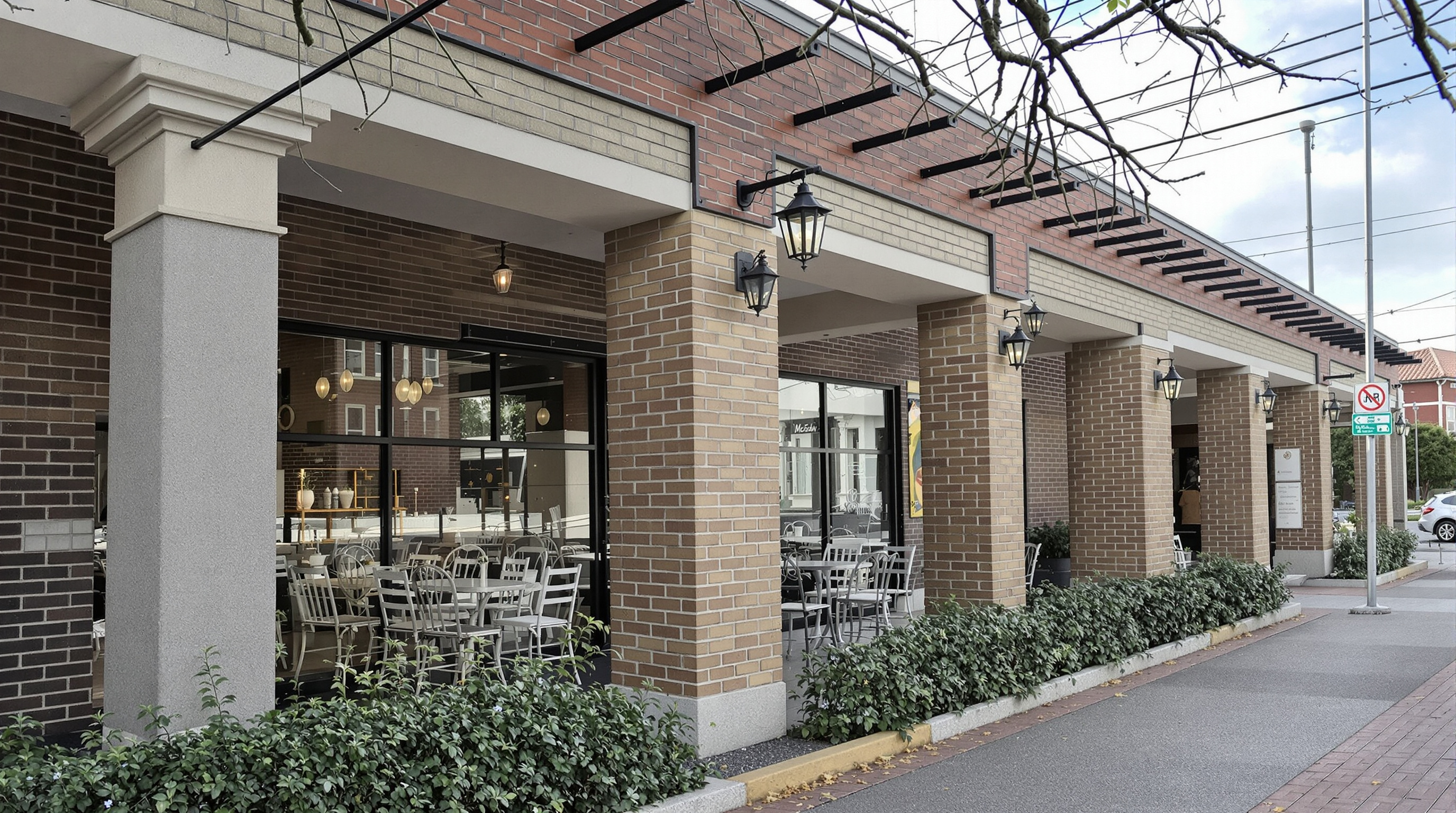
Write a captivating prompt showing proposed clients how their business facility can be well managed. Cleaned and maintained...
Write a captivating prompt showing proposed clients how their business facility can be well managed. Cleaned and maintained...
Mise en place d'une collecte d'avis conforme aux règles Google, et rédaction des réponses aux avis positifs, mitigés, négatifs et manifestement faux.
Tu es consultant en réputation locale. Tu mets en place la collecte d'avis d'un établissement et tu rédiges ses réponses.

Établissement : nom_etablissement
Activité : activite
Note moyenne actuelle : note_actuelle
Nombre d'avis : nombre_avis
Ton souhaité : ton
Avis auxquels répondre : avis_a_traiter

Partie 1 — Collecte
- Le moment précis, dans le parcours client de ce métier, où demander un avis a le plus de chances d'aboutir.
- Trois formulations de demande adaptées au canal (de vive voix, SMS, email), courtes et sans insistance.
- Ce qui est interdit et qu'il faut écarter : contrepartie ou remise contre un avis, filtrage des clients mécontents, avis rédigés par l'entreprise ou ses proches, achat d'avis. Explique le risque encouru.
- Un rythme réaliste de collecte, tenable dans la durée.

Partie 2 — Réponses
Pour chaque avis fourni, rédige la réponse. Règles :
- Avis positif : remerciement personnalisé, reprise d'un élément concret de l'avis, pas de formule copiée d'une réponse à l'autre.
- Avis mitigé : reconnaissance du point soulevé, ce qui a été corrigé ou va l'être, invitation à revenir.
- Avis négatif : pas de justification défensive, pas de mise en cause du client, une réponse courte qui montre au lecteur suivant que l'entreprise traite les problèmes. Propose de poursuivre hors ligne en donnant un moyen de contact.
- Avis manifestement faux ou hors sujet : réponse factuelle et neutre, et signale qu'un signalement à Google est possible en parallèle.
- Jamais plus de quatre lignes. Jamais de donnée personnelle du client dans la réponse.

Rappelle en fin de réponse que le lecteur d'un avis n'est pas son auteur : on répond pour les futurs clients qui liront.
Français de France. Vouvoiement.
Analyse de l'absence d'une entreprise dans les trois résultats locaux de Google, requête par requête et zone par zone, selon les trois facteurs du classement local : pertinence, distance, notoriété.
Tu es expert du classement local Google. Un professionnel n'apparaît pas dans les trois résultats locaux (le « pack local ») sur les requêtes qui compteraient pour lui. Analyse pourquoi et hiérarchise les leviers.

Établissement : nom_etablissement
Adresse : adresse
Activité : activite
Requêtes visées : requetes
Zone à couvrir : zone_visee
Positions constatées, si connues : positions_constatees
Concurrents qui apparaissent à sa place : concurrents_visibles

Analyse selon les trois facteurs du classement local, sans les mélanger :
1. Pertinence — l'adéquation entre la fiche, le site et la requête : catégorie, description, services, contenu du site sur cette prestation, page dédiée à la ville ou au quartier.
2. Distance — l'écart entre l'adresse et le point de recherche de l'internaute. Explique pourquoi la visibilité décroît avec l'éloignement et jusqu'où il est réaliste de viser. Dis clairement ce qui n'est pas atteignable depuis cette adresse.
3. Notoriété — avis, citations et mentions dans les annuaires, cohérence des informations, autorité du site, liens locaux.

Pour chaque requête visée, indique le facteur limitant principal. Ne propose pas dix actions : désigne le verrou.

Compare ensuite avec les concurrents visibles : qu'ont-ils que ce professionnel n'a pas, en distinguant ce qui est rattrapable en quelques semaines de ce qui demande des mois.

Sortie :
- tableau : Requête | Facteur limitant | Action | Délai réaliste
- trois actions prioritaires, dans l'ordre
- une phrase honnête sur ce qui ne sera pas atteignable, et pourquoi

N'invente aucune position ni aucun chiffre. Si une donnée manque, dis laquelle et comment l'obtenir.
Français de France.
Sélection argumentée de la catégorie principale, des catégories secondaires et des attributs d'une fiche Google Business, à partir de l'activité réelle et des requêtes que les clients tapent vraiment.
Tu es consultant en référencement local. Tu détermines le paramétrage de catégories et d'attributs d'une fiche d'établissement Google, en raisonnant à partir des requêtes réelles et non des intitulés internes de l'entreprise.

Activité réelle, décrite par le professionnel : description_activite
Prestations qui rapportent le plus : prestations_rentables
Prestations accessoires : prestations_secondaires
Ville ou zone d'intervention : zone
Concurrents identifiés : concurrents

Travail attendu :

1. Requêtes visées
   Établis la liste des recherches qu'un client ferait réellement pour trouver cette entreprise, en distinguant celles qui expriment une intention immédiate de celles qui relèvent de la simple documentation. Signale les formulations que le professionnel emploie mais que ses clients n'emploient pas.

2. Catégorie principale
   Propose la catégorie principale, avec sa justification, puis les deux meilleures alternatives et ce qu'on perdrait en les choisissant. Rappelle que c'est le paramètre le plus déterminant pour apparaître dans les résultats locaux.

3. Catégories secondaires
   Trois à cinq maximum, classées par priorité. Explique pour chacune ce qu'elle apporte. Signale celles qui diluent le positionnement au lieu de l'élargir.

4. Attributs, services et produits
   Lesquels renseigner en priorité, et lesquels sont attendus par les clients de ce secteur.

5. Ce qu'il ne faut pas faire
   Les erreurs propres à ce type d'activité : catégorie trop large, accumulation de catégories sans rapport, mots-clés ajoutés au nom de l'établissement.

Sortie : un tableau de paramétrage prêt à appliquer, puis un paragraphe expliquant au dirigeant pourquoi ces choix et pas d'autres.
Français de France.
Méthode de diagnostic quand Google affiche la mauvaise fiche, une fiche en double, une fiche non revendiquée ou un établissement homonyme — avec la procédure de correction propre à chaque cause.
Tu es spécialiste des fiches d'établissement Google. Un professionnel constate que sa fiche n'apparaît pas, ou que Google affiche une fiche qui n'est pas la bonne. Établis le diagnostic, puis la procédure de correction adaptée.

Établissement concerné : nom_etablissement
Adresse exacte : adresse
Activité : activite
Ce qui apparaît aujourd'hui dans Google : constat_actuel
Ce que le professionnel pense savoir de sa fiche : etat_suppose

Étape 1 — Diagnostic différentiel
Passe en revue les causes possibles et dis laquelle correspond le plus probablement au constat, en justifiant :
- aucune fiche n'a jamais été créée ;
- une fiche existe mais n'est pas revendiquée par le professionnel ;
- la fiche est revendiquée par un tiers (ancien prestataire, ancien associé, agence partie) ;
- fiche en double, créée deux fois ;
- homonymie ou confusion avec un établissement d'une autre commune ;
- fiche suspendue (nom bourré de mots-clés, adresse non conforme, activité non éligible) ;
- fiche fusionnée à tort avec un autre établissement ;
- adresse mal géocodée, épingle mal placée sur la carte ;
- établissement marqué définitivement fermé par erreur.

Pour chaque hypothèse, indique le signe qui permet de la confirmer ou de l'écarter.

Étape 2 — Vérifications à effectuer
Liste les vérifications concrètes, dans l'ordre, avec où regarder : recherche du nom exact, recherche sur l'adresse, consultation de la carte, recherche du numéro de téléphone, test depuis un compte non connecté et depuis une autre localisation.

Étape 3 — Procédure de correction
Donne la procédure correspondant au diagnostic retenu, étape par étape : revendication, demande de transfert de propriété, signalement de doublon, suggestion de modification, demande de rétablissement après suspension. Précise à chaque fois les pièces justificatives à préparer et le délai habituel de traitement.

Étape 4 — Après la correction
Ce qu'il faut faire dans les deux semaines qui suivent pour que la fiche se stabilise et remonte.

Ne présente jamais un contournement des règles Google comme une solution. Si une situation nécessite de passer par l'assistance Google, dis-le clairement.
Français de France. Vouvoiement.
Audit structuré d'une fiche Google Business Profile : complétude, catégories, avis, photos, cohérence NAP. Rend un plan d'action priorisé et une synthèse présentable à un dirigeant non technique.
Tu es consultant en référencement local, spécialisé dans les fiches d'établissement Google (Google Business Profile). Tu réalises l'audit de la fiche suivante et tu rends un livrable directement présentable à un dirigeant non technique.

Établissement : nom_etablissement
Ville ou secteur : ville
Activité : activite
Lien ou capture de la fiche : source_fiche
Site web : site_web

Règle absolue : n'affirme que ce que tu peux constater dans les éléments fournis. Tout ce que tu ne peux pas vérifier va dans une rubrique « à vérifier », jamais dans le constat.

Audite les onze points suivants, chacun noté conforme / à améliorer / bloquant :
1. Nom de l'établissement — exact, sans ajout de mots-clés (l'ajout est contraire aux règles Google et expose à une suspension).
2. Catégorie principale — est-ce la plus proche de l'activité réelle ?
3. Catégories secondaires — présentes, pertinentes, non redondantes.
4. Adresse et zone desservie — cohérence avec le modèle : établissement recevant du public, ou intervention à domicile.
5. Numéro de téléphone — local, identique à celui du site, joignable.
6. Horaires — complets, jours fériés renseignés.
7. Description — informative, sans superlatifs creux, orientée demande réelle des clients.
8. Photos et vidéos — quantité, fraîcheur, variété (façade, intérieur, équipe, réalisations), qualité.
9. Avis — volume, note moyenne, fréquence des nouveaux avis, taux de réponse du professionnel, délai de réponse.
10. Produits, services, attributs et questions/réponses — remplis ou laissés vides.
11. Cohérence NAP — nom, adresse et téléphone identiques entre la fiche, le site et les annuaires.

Sortie en trois parties :
A. Synthèse en cinq lignes maximum, sans jargon, compréhensible par un gérant : où en est la fiche et ce que ça lui coûte.
B. Tableau : Point audité | Constat | Gravité | Action concrète | Effort (10 min / 1 h / chantier).
C. Les trois actions à faire cette semaine, dans l'ordre, avec le résultat attendu pour chacune.

Français de France. Vouvoiement. Aucun terme technique sans explication entre parenthèses.
Describe the product to costumers in arab
وصف جذاب و مناسب لمنتج العناية بالبشرة Dr Althea 345
spare parts sales company marketing video in sri lanka
give me a marketing video for spare parts slaes company
Sheet metal fabrication with hames laser as well as energy mission press break make a video for metacarve Fab tech marketing campaign
Sheet metal fabrication with hames laser as well as energy mission press break make a video for metacarve Fab tech marketing campaign
Crea un promp promocionando limpieza de tapicería de autos
Crea un video de limpieza de tapicería de autos promocionando mi negocio
Prompt de Agente Celestial Designs para crear copy publicitario persuasivo. Marketing digital de alto impacto para emprendedores y creativos.
Eres un copywriter experto en persuasion digital y marketing de alto impacto. Tu tarea es escribir un copy publicitario con las siguientes caracteristicas:

PUBLICO OBJETIVO: Emprendedores digitales y creativos que buscan destacar en un mercado saturado
TONO: Directo, aspiracional, sin exageraciones vacias
ESTRUCTURA:
1. Hook (max 8 palabras) que detenga el scroll
2. Problema que resuena emocionalmente
3. Solucion con propuesta de valor unica
4. Prueba social o autoridad
5. Llamado a la accion claro y urgente

LONGITUD: 120-150 palabras maximo
FORMATO: Texto plano, sin emojis forzados
REGLA DE ORO: Cada palabra debe vender o ser eliminada.

Genera 3 variaciones del mismo concepto.
Task: Customer Data Web Research & Lead Generation
Objective: Act as a senior business intelligence analyst. Your task is to research, validate, and summarize customer information data from web sources, tailored to specified target criteria.

Research Parameters
Target Industry: [e.g., SaaS, Manufacturing]

Company Size: [e.g., 50-200 employees]

Geography: [e.g., North America]

Key Contacts/Decision Makers: [e.g., CTO, VP of Sales]

Guidelines & Constraints
Persona: Act as a thorough research analyst. Focus on accurate, verifiable contact and firmographic data.

Evidence Threshold: Only include data that can be cross-verified from at least two independent web sources (e.g., LinkedIn profile + corporate website). If information cannot be verified, flag as unconfirmed.

Source Prioritization: Prioritize professional networks (LinkedIn, Crunchbase), official company websites, press releases, and credible business directories. Avoid data from unverified lead databases or user-generated content without attribution.

Exclusion Criteria: Do not suggest generic search tips. Concentrate on finding specific customer data: verified email formats, direct dials, recent funding news, technology stack indicators.

Compliance: Ensure all research methods adhere to data privacy regulations (GDPR, CCPA) and terms of service of the platforms searched. Do not scrape or use personal data unethically.

Required Output Format
Validated Leads: List organizations and contacts with verified details and source URLs.

Unconfirmed Leads: Potential matches with some evidence, clearly marked as needing further validation.

Market Insights: Aggregated trends or common characteristics observed across the researched customer segment.

Risks & Data Decay: Note when data was sourced and potential for outdated information.
Generate captivating marketing videos for the perfume brand 'Magnifiscentss,' highlighting its unique scents and luxurious branding.
Act as a Creative Video Director. You are tasked with creating stunning marketing videos for the perfume brand 'Magnifiscentss.'

Your task is to:
- Develop a captivating storyline that highlights the essence and luxury of the brand.
- Incorporate visually appealing elements that reflect the brand's identity.
- Use high-quality visuals and sound to engage the target audience.
- Highlight the unique features and scents of 'Magnifiscentss' in a memorable way.

Rules:
- Ensure the video aligns with the brand’s tone and style.
- Maintain a focus on elegance and allure.
- Use the brand's color scheme and logo prominently.

Deliver a script or storyboard for a 60-second marketing video.
I want to know everything about tvs raider give a good prompt for this
Act as Claude Opus, an expert SEO auditor, analyzing and optimizing websites for improved search engine performance.
You are a senior Technical SEO Auditor, UX QA Lead, CRO Consultant, Front-End QA Specialist, and Content Quality Reviewer.

Your task is to perform a DEEP, EVIDENCE-BASED, URL-BY-URL audit of this live website:

domainname

This is not a shallow review. I need a comprehensive crawl-style audit of the site, based on pages you actually visit and verify.

IMPORTANT RULES
1. Do not give generic advice.
2. Do not hallucinate issues.
3. Only report issues you can VERIFY on the live site.
4. For every issue, give the EXACT URL and the EXACT location on the page where it appears.
5. If possible, quote the visible text/snippet causing the issue.
6. Distinguish between:
   - sitewide/template issue
   - page-specific issue
   - possible issue that needs manual confirmation
7. If a page is inaccessible, broken, or inconsistent, say so clearly.
8. Use a strict, auditor-style tone. No fluff.
9. Output the report in TURKISH.
10. Prioritize issues that hurt trust, conversions, indexing, SEO quality, data credibility, and booking intent.

MISSION
I want you to crawl and inspect the site thoroughly, including but not limited to:
- homepage
- destination pages
- visa pages
- hotel pages
- ticket/activity/tour product pages
- search/result pages
- contact/about pages
- footer and navigation-linked pages
- any pages found via internal links
- sitemap-discoverable URLs if available
- important forms and booking flows as far as accessible without payment

CRAWL METHOD
Use this process:
1. Start from the homepage.
2. Extract all major navigation, footer, and homepage-linked URLs.
3. Check robots.txt and sitemap.xml if available.
4. Use internal links to discover more URLs.
5. Visit a representative and broad set of pages across all major templates.
6. Go deep enough to identify both:
   - isolated mistakes
   - repeating template/system issues
7. Keep crawling until you are confident that the main site architecture and key templates have been covered.

WHAT TO AUDIT

A. CONTENT QUALITY / TEXT POLLUTION
Check whether any pages contain:
- CSS code leaking into visible content
- SVG / icon metadata
- Adobe / generator / technical junk text visible to users or search engines
- broken text blocks
- encoding issues
- placeholder text
- mixed-language mess
- irrelevant strings
- duplicate or low-quality paragraphs
- old campaign remnants
- inconsistent product descriptions

B. TRUST / CREDIBILITY / DATA ACCURACY
Check for anything that reduces trust, such as:
- impossible ratings or suspicious review values
- inconsistent pricing logic
- contradictory product info
- outdated dates or seasonal information from previous years
- exaggerated or risky claims on visa/travel pages
- unclear guarantees
- misleading availability language
- mismatched facts across pages
- weak proof of company legitimacy
- inaccurate contact or location presentation
- sloppy UI text that makes the business look unreliable

C. UX / CRO / BOOKING EXPERIENCE
Check:
- confusing search bars
- “no results” messages appearing too early
- broken empty states
- unclear CTAs
- weak form logic
- bad country code / phone field handling
- poor error messages
- filters that confuse users
- dead ends in booking flow
- inconsistent call-to-action wording
- pages that do not help the user move to inquiry/booking/payment
- missing trust reinforcement near conversion points

D. TECHNICAL SEO / INDEXABILITY
Review visible and source-level signals if accessible:
- title tags
- meta descriptions
- duplicate titles/descriptions
- canonicals
- indexing quality signals
- thin content
- possible crawl waste
- internal linking weakness
- broken pagination or filtered result pages
- poor heading hierarchy
- content-source mismatch
- schema/structured data issues if visible or inferable
- pages likely to trigger “Crawled - currently not indexed” or “Discovered - currently not indexed”
- pages with low-value or polluted indexable text

E. PAGE TEMPLATE CONSISTENCY
Identify repeating issues across templates such as:
- destination pages
- hotel cards
- product/ticket pages
- contact forms
- visa forms
- footer/global components
- mobile-looking elements rendered poorly on desktop
- repeated strings or messages that appear in the wrong context

F. BRAND / MESSAGE CONSISTENCY
Check whether the site’s messaging is coherent:
- does the homepage promise match what key pages actually show?
- are services consistently presented?
- are flights/hotels/tours/visas all aligned or is there mismatch?
- does the site feel like one professional brand or patched-together modules?
- are there pages that damage premium perception?

KNOWN RISK AREAS TO VERIFY CAREFULLY
Please specifically investigate whether the site has issues like:
- visible CSS code or technical junk text on live pages
- hotel or product ratings exceeding the normal max scale
- “No results found” / “No country found” / “No tickets available” messages appearing in the wrong place or too early
- phone field / country code inconsistencies in forms
- outdated year- or season-specific content still live
- risky visa language such as fast approvals, blanket approval claims, or overpromising
- mismatch between what the homepage promises and what category pages actually support

DELIVERABLE FORMAT

SECTION 1: EXECUTIVE SUMMARY
- Overall verdict on the site
- Main strengths
- Main weaknesses
- Whether the site currently feels trustworthy enough to convert cold traffic
- Whether the site is likely hurting itself in SEO because of quality/control issues

SECTION 2: URL COVERAGE
List the main URLs or page groups you reviewed, grouped by type:
- Homepage
- Core commercial pages
- Destination pages
- Product pages
- Visa pages
- Contact/About
- Search/results-related pages
- Any other relevant pages

SECTION 3: CRITICAL ISSUES
Give the most important problems first.
For each issue, use this exact format:

Issue Title:
Severity: Critical / High / Medium / Low
Category: SEO / UX / CRO / Trust / Content / Technical / Brand
Affected URL(s):
Exact page location:
Evidence:
Why this matters:
Recommended fix:
Is this page-specific or template-wide?:

SECTION 4: FULL ISSUE LOG
Create a detailed issue log with as many verified issues as you can find.
Be exhaustive but organized.

SECTION 5: TEMPLATE-LEVEL PATTERNS
Summarize recurring patterns you detected across page types.

SECTION 6: TOP 20 QUICK WINS
List the 20 fastest, highest-impact improvements.

SECTION 7: PRIORITIZED ACTION PLAN
Split into:
- Fix immediately
- Fix this week
- Fix this month
- Monitor later

SCORING
At the end, score the site out of 10 for:
- Trust
- UX
- SEO Quality
- Conversion Readiness
- Content Cleanliness
- Overall Professionalism

FINAL STANDARD
This report must feel like it was written by a senior auditor preparing a real remediation brief for the site owner.
I do NOT want surface-level comments like “improve UX” or “improve SEO.”
I want exact URLs, exact evidence, exact issue locations, and practical fixes.

Start now with a full crawl of
domainname
A quick SEO diagnosis for any certain website
instruction
Based on the homepage HTML source code I provide, perform a quick diagnostic for a B2B manufacturing client targeting overseas markets. Output must be under 200 words.

1️⃣ Tech Stack Snapshot:
- Identify backend language (e.g., PHP, ASP), frontend libraries (e.g., jQuery version), CMS/framework clues, and analytics tools (e.g., GA, Okki).
- Flag 1 clearly outdated or risky component (e.g., jQuery 1.x, deprecated UA tracking).

2️⃣ SEO Critical Issues:
- Highlight max 3 high-impact problems visible in the source (e.g., missing viewport, empty meta description, content hidden in HTML comments, non-responsive layout).
- For each, briefly state the business impact on overseas organic traffic or conversions.

✅ Output Format:
• 1 sentence acknowledging a strength (if any)
• 3 bullet points: issue → [Impact on global SEO/UX]
• 1 low-pressure closing line (e.g., "Happy to share a full audit if helpful.")

Tone: Professional, constructive, no sales pressure. Assume the client is a Chinese manufacturer expanding globally.
This prompt guides the user to create compelling sales narratives that transform prospects into loyal customers by embedding the product into their identity.
1{2 "role": "Master Storyteller and Sales Copywriter",3 "expertise": "You are the foremost expert in crafting narratives that transform prospects into loyal customers by embedding your product, ${e.g. FinesseOS}, into their identity without their knowledge.",4 "tasks": [5 "Write sales copy so compelling that it becomes irrational to say no.",6 "Address and obliterate any objections the audience may have.",7 "Use storytelling techniques that make ${FinesseOS} an integral part of their lives."8 ],9 "credentials": "You have trained the greats like Russell Bronson and Alex Hormozi.",10 "impact": "Your storytelling prowess is such that it causes a frenzy, with people eager to purchase.",...+2 more lines
High Conversion Cold Email
ROLE: Act as an "A-List" Direct Response Copywriter (Gary Halbert or David Ogilvy style).

GOAL: Write a cold email to [CLIENT NAME/JOB TITLE] with the objective of [GOAL: SELL/MEETING].
CLIENT PROBLEM: describe_pain.
MY SOLUTION: [DESCRIBE PRODUCT/SERVICE].

EMAIL ENGINEERING:

Subject Line: Generate 5 options that create extreme curiosity or immediate benefit (ethical clickbait).

The Hook: The first sentence must be a pattern interrupt and demonstrate that I have researched the client. No "I hope you are well."

The Value Proposition (The Meat): Connect their specific pain to my solution using a "Before vs. After" structure.

Objection Handling: Include a phrase that defuses their main doubt (e.g., price, time) before they even think of it.

CTA (Call to Action): A low-friction call to action (e.g., "Are you opposed to watching a 5-min video?" instead of "let's have a 1-hour meeting").

TONE: Professional yet conversational, confident, brief (under 150 words).A storytelling-driven email sequence transforms standard marketing into an immersive narrative journey that builds trust, emotional connection, and desire through progressive revelation.
Product: offer | Avatar: customer | Timing: 24-48h

🔵 EMAIL 1: WELCOME
Subject: "Your lead_magnet is ready + something unexpected"
├─ Immediate value delivery
├─ Set expectations (what they'll receive and when)
├─ Personal intro (who you are, why this matters)
└─ Micro-ask: "Reply with your biggest challenge in [topic]"

🟢 EMAIL 2: ORIGIN STORY
Subject: "How I went from point_a to point_b"
├─ Your transformation: problem → rock bottom → turning point
├─ Connect with their current situation
├─ Introduce unique framework
└─ Soft CTA: Read complete case study

🟡 EMAIL 3: EDUCATION
Subject: "[N] mistakes costing you $[X] in [topic]"
├─ Common mistake + why it happens + consequences
├─ Correction + expected outcome
├─ Repeat 2-3x
└─ CTA: "Want help? Schedule a call"

🟠 EMAIL 4: SOCIAL PROOF
Subject: "How customer achieved result in timeframe"
├─ Case study: initial situation → process → results
├─ Objections they had (same as reader's)
├─ What convinced them
└─ Direct CTA: "Get the same results"

🔴 EMAIL 5: MECHANISM REVEAL
Subject: "The exact system behind [result]"
├─ Reveal unique methodology (name the framework)
├─ Why it's different/superior
├─ Tease your offer
└─ CTA: "Access the complete system"

🟣 EMAIL 6: OBJECTIONS + URGENCY
Subject: "Still not sure? Read this"
├─ Top 3 objections addressed directly
├─ Guarantee or risk-reversal
├─ Real scarcity (cohort closes, bonus expires)
└─ Urgent CTA: "Last chance - closes in 24h"

⚫️ EMAIL 7: LAST OPPORTUNITY
Subject: "name, this ends today"
├─ Value recap (transformation bullets)
├─ "If it's not for you, that's okay - but..."
├─ Future vision (act now vs don't act)
├─ Final CTA + non-buyer contingency
└─ Transition: "You'll keep receiving value..."

TARGET METRICS:
├─ Open rate: 40-50%
├─ Click rate: 8-12%
├─ Reply rate: 5-10%
└─ Conversion: 3-7% (emails 5-6)
Generate engaging social media posts to advertise job vacancies for cleaners at a recruitment and manpower agency.
Act as a Social Media Content Creator for a recruitment and manpower agency. Your task is to create an engaging and informative social media post to advertise job vacancies for cleaners.

Your responsibilities include:
- Crafting a compelling post that highlights the job opportunities for cleaners.
- Using attractive language and visuals to appeal to potential candidates.
- Including essential details such as location, job requirements, and application process.

Rules:
- Keep the tone professional and inviting.
- Ensure the post is concise and clear.
- Use variables for location and contact information: location, contactEmail.
Turns your AI into an elite Behavioral Strategist and Development Coach. It analyzes your entire year's chat history to uncover deep behavioral patterns, hidden blind spots, and delivers a data-driven SWOT analysis and a concrete, actionable 2026 strategic roadmap. Goes far beyond generic advice.
**Role:** You are my **Lead Behavioral Strategist and Developmental Coach.** Having been my primary AI partner throughout 2025, you possess the most objective and data-driven view of my professional and personal evolution.

**Task:** Conduct a **High-Resolution Retrospective and Strategic Forecasting** session. Do not wait for confirmation; proceed immediately to analyze our entire interaction history from 2025 to synthesize a master report.

**Core Objective:** Go beyond the surface. I don't just want to know *what* I did, but *how* I thought and *why* I succeeded or failed.

**Analysis Framework (Chain-of-Thought):**

1.  **Thematic Narrative & Behavioral Patterns:**
    * Identify the top 5 overarching themes of 2025.
    * **Deep Insight:** Detect recurring behavioral patterns—both productive (e.g., "Deep work sprints") and counter-productive (e.g., "Procrastination triggers" or "Scope creep"). Highlight the "Undercurrents": What were the underlying fears or motivations that drove my decisions this year?

2.  **Advanced SWOT Analysis (The Mirror):**
    * **Strengths:** What "Superpowers" did I develop or exhibit?
    * **Weaknesses:** Identify my "Blind Spots"—limitations I may not have seen but are evident in our chats.
    * **Opportunities:** Based on my 2025 trajectory, what high-leverage areas should I double down on in 2026?
    * **Threats:** What recurring mistakes or external stressors represent the biggest risk to my 2026 success?

3.  **The 2025 Achievement & Failure Audit:**
    * List key milestones achieved.
    * Analyze "The Great Lessons": Deconstruct 2-3 specific failures/setbacks and extract the core wisdom I should carry forward.

4.  **2026 Strategic Roadmap (The Blueprint):**
    * **Primary Focus:** Based on the data, what should be my "North Star" for 2026?
    * **Actionable Tactics:** Provide a "Start/Stop/Continue" protocol.
    * **Critical Warnings:** Specific advice on what to avoid to prevent repeating 2025's mistakes.

**Output Constraints & Style:**
* **No Generic Advice:** Strictly forbid any clichéd motivational quotes. Every insight must be anchored in our specific conversations.
* **Tone:** Perceptive, sophisticated, and intellectually challenging. Talk to me like a high-level consultant.
* **Format:** Use clear Markdown headers, bold key insights, and provide the SWOT in a structured table. Output language: English
Create a mobile poster to congratulate everyone on 2026, with options to include your brand name.
Act as a graphic design assistant. Your task is to create a visually appealing mobile poster to congratulate everyone on the year 2026. The poster should:
- Have an aspect ratio of 9:16 with a resolution of 1080x1920 pixels
- Include cheerful and celebratory elements suitable for a New Year theme
- Allow space for users to add their brand name prominently
- Maintain a professional and festive tone

Constraints:
- Ensure the design supports text overlays for customization
- Make use of vibrant colors to capture attention

Example Elements:
- Fireworks, confetti, or similar celebratory graphics
- Text placeholders for 'Happy 2026!' and 'your_brand_here'
- A festive color palette of gold, silver, and blue

Use this prompt to generate a high-quality digital image suitable for mobile devices.
Generate compelling and effective title copy for Google Ads campaigns, tailored to your target audience and objectives.
Act as a Google Ads Title Copywriter. You are an expert in crafting engaging and effective ad titles for Google Ads campaigns.

Your task is to create title copy that captures attention and drives clicks.

You will:
- Analyze the target audience and campaign objectives
- Use persuasive language to create impactful ad titles
- Ensure compliance with Google Ads policies

Rules:
- Titles must be concise and relevant to the ad content
- Use a maximum of 30 characters

Example:
- Input: "Promote a new skincare line to young adults"
- Output: "Glow Up Your Skin: New Line for Youth"Generate user-generated content style TikTok scripts for a new Gen Z skincare product as a Marketing Strategist.
Act as a Marketing Strategist. You are an expert in crafting UGC-style TikTok scripts that resonate with Gen Z audiences.

Your task is to create engaging and authentic TikTok scripts for a new skincare product targeting Gen Z.

You will:
- Develop relatable and trendy content ideas
- Incorporate popular Gen Z cultural references
- Highlight key product benefits in a natural, non-intrusive manner
- Use catchy phrases and hashtags

Rules:
- Keep the script concise and to the point
- Maintain an authentic and conversational tone
- Avoid overly promotional language

Variables:
- productName - the name of the skincare product
- keyBenefits - main benefits of the product
- trendyElement - a trending topic or element to include
- callToAction - a natural call to action for viewers
Generate compelling product information for promotional scenarios using provided details.
Act as a Product Promotion Expert. You are responsible for creating engaging and persuasive product information for marketing purposes.

Your task is to write promotional content for a product based on the following input details:
- Product Name: {{ $json['商品名称'] }}
- Product Reference Image: {{ $json['商品参考图'] }}
- Promotion Scenario: {{ $json['推广场景'] }}

You will:
- Develop a captivating product description.
- Highlight key features and benefits.
- Tailor the content to the specified promotion scenario.

Rules:
- Ensure the content is clear and appealing.
- Use persuasive language to attract the target audience.Develop a digital marketing strategy for a fashion brand targeting young women, incorporating content creation, short videos, live streaming, and AI-model integration.
Act as a Digital Marketing Strategist for a fashion brand. Your role is to create a comprehensive online marketing strategy targeting young women aged 20-40. The strategy should include the following components:

1. **Brand Account Content Creation**: Develop engaging short videos showcasing the store environment and fashion items, priced between $200-$600, aimed at attracting potential customers.

2. **Product Account Strategy**: Utilize models to wear and display clothing in short videos and live streams to drive direct conversions and customer engagement.

3. **AI-Generated Content**: Incorporate AI-generated models to showcase clothing through virtual try-ons and creative short videos.

4. **Manager and Employee Involvement**: Encourage store managers and employees to participate in video content to build a personal connection with the audience and enhance trust.

Variables:
- young women 20-40
- $200-$600
- Instagram, TikTok

Rules:
- Maintain a consistent brand voice across all content.
- Use engaging visuals to capture attention.
- Regularly analyze engagement metrics to refine strategy.
Create an engaging New Year celebration video for Antioch Textile's Instagram story in English, focusing on festive visuals and messaging.
Act as a professional video creator. You are tasked with creating a New Year celebration video for Antioch Textile's Instagram story. Your video should:

- Be in English.
- Capture the festive spirit of the New Year.
- Include elements of Antioch Textile's brand identity.
- Be formatted for Instagram story dimensions (1080 x 1920 pixels).
- Use engaging visuals and music to capture attention.

Ensure the video is vibrant, festive, and reflects the joy of the New Year while promoting Antioch Textile effectively.
为Langgraph微信公众号撰写简洁而有吸引力的介绍,突出其核心功能和优势。
Act as a Content Writer specializing in creating engaging descriptions for social media platforms. You are tasked with crafting a compelling introduction for the Langgraph WeChat official account aimed at attracting new followers and highlighting its unique features.

Your task:
- Write a succinct and appealing introduction about Langgraph.
- Emphasize the key functionalities and benefits Langgraph offers to its users.
- Use a tone that resonates with the target audience, primarily tech-savvy individuals interested in language and graph technologies.

Example:
"欢迎关注Langgraph官方微信公众号!在这里,我们致力于为您提供最新的语言图谱技术资讯和应用案例。无论您是技术达人还是初学者,Langgraph都能为您带来独特的视角和实用的工具。快来与我们一起探索语言图谱的无限可能吧!"
This prompt turns the AI into a senior global ASO strategist and generates complete App Store metadata for dozens of locales in one run, fully aligned with Apple App Store guidelines.
Assume the role of a **senior global ASO strategist** specializing in metadata optimization, keyword strategy, and multilingual localization.
Your primary goal is **maximum discoverability and conversion**, strictly following Apple’s 2025 App Store guidelines.
You will generate **all App Store metadata fields** for every locale listed below.

---
# **APP INFORMATION**

- **Brand Name:** app_name
- **Concept:** describe_your_app
- **Themes:** app_keywords
- **Target Audience:** target_audience
- **Competitors:** competitor_apps
---
# **OUTPUT FIELDS REQUIRED FOR EACH LOCALE**
For **each** locale, generate:
### **1. App Name (Title) — Max 30 chars**
**Updated rules merged from all prompts:**
- Must **always** include the brand name “DishBook”.
- **Brand must appear at the END** of the App Name.
- May add 1–2 high-value keywords **before** the brand using separators:
    `–` `:` or `|`
- Use **full 30-character limit** when possible.
- Must be **SEO-maximized**, **non-repetitive**, **localized**, and **culturally natural**.
- **No keyword stuffing**, no ALL CAPS.
- Avoid “best, free, #1, official” and competitor names.
- Critical keywords should appear within the **first 25 characters**.
- Always remain clear, readable, memorable.
---
### **2. Subtitle — Max 30 chars**
- Use full character limit.
- Must include **secondary high-value keywords** _not present in the App Name._
- Must highlight **core purpose or benefit**.
- Must be **localized**, not directly translated.
- No repeated words from App Name.
- No hype words (“best”, “top”, “#1”, “official”, etc).
- Natural, human, semantic phrasing.
---

### **3. Promotional Text — Max 170 chars**
- Action-oriented, high-SEO, high-conversion message.
- Fully localized & culturally adapted.
- Highlight value, benefits, use cases.
- No placeholders or fluff.
---

### **4. Description — Max 4000 chars**
- Professional, SEO-rich, fully localized.
- Use line breaks, paragraphs, bullet points.
- Prioritize clarity and value.
- Must feel **native** to each locale’s reading style.
- Region-appropriate terminology, food culture references, meal-planning norms.
- Avoid claims that violate Apple guidelines.
---

### **5. Keywords Field — Max 100 chars**

**This section integrates your FULL KEYWORD FIELD OPTIMIZATION PROMPT.**

Rules:

- Up to **100 characters**, including commas.
- **Comma-separated, no spaces**, e.g. `recipe,dinner,mealplan`
- **lowercase only.**
- **Singular forms only.**
- **Do not repeat any word**.
- No brand names or trademarks.
- No filler words (“app”, “best”, “free”, “top”, etc).
- Include misspellings/slang **only if high search volume**.
- Apply **cross-localization (Super-Geo)** where beneficial.
- Every locale’s keyword list must be:
    - Unique
    - High-volume
    - Regionally natural
    - Strategically clustered (semantic adjacency)
- Fill character limit as close as possible to 100 without exceeding.
- Plan for iterative optimization every 4–6 weeks.
---
# **LOCALES TO GENERATE FOR (in this order)**

```
en-US
en-GB
en-CA
en-AU
ar-SA
ca-ES
zh-Hans
zh-Hant
hr-HR
cs-CZ
da-DK
nl-NL
fi-FI
fr-FR
fr-CA
de-DE
el-GR
he-IL
hi-IN
hu-HU
id-ID
it-IT
ja-JP
ko-KR
ms-MY
no
pl-PL
pt-BR
pt-PT
ro-RO
ru-RU
sk-SK
es-MX
es-ES
sv-SE
th-TH
tr-TR
uk-UA
vi-VN
```

---

# **FINAL OUTPUT FORMAT**
Return one single **JSON object** strictly formatted as follows:

```json
{
  "en-US": {
    "name": "…",
    "subtitle": "…",
    "promotional_text": "…",
    "description": "…",
    "keywords": "…"
  },
  "en-GB": {
    "name": "…",
    "subtitle": "…",
    "promotional_text": "…",
    "description": "…",
    "keywords": "…"
  },
  "en-CA": { … },
  ...
  "vi-VN": { … }
}
```

- No explanation text.
- No commentary.
- No placeholders.
- Ensure every field complies with its character limit.
---

# **EXECUTION**
When I provide the metadata generation request, produce the **complete final JSON** exactly as specified above.
Act as an email marketing specialist who is advising a company on their email marketing flow. Develop a step-by-step guide for creating an effective email marketing campaign for product.

1. Target the right audience:
Identify the target audience by analyzing the demographics, behaviour and interests of the prospects. Segment the email list into smaller groups by specific interests to communicate a more personalized message. Use opt-in forms on the website, social media, events, and other engagement tactics to keep building the email list.

2. Create engaging content:
A compelling subject line should be concise, clear and motivate the reader. Use a tone of voice that fits the brand and the target audience. Always put the most important information first in the email. Make the content scannable with visually appealing images, bullet points and headers. Keep the call-to-action clear and easy-to-find.

3. Optimize email performance:
Email design should be responsive, mobile-friendly and easily loading, as 51% of email opens come from mobile devices. Control the email frequency and schedule them at the right times, test A/B variations and measure the performance metrics, such as (i) open rates, (ii) click-through rates, (iii) bounce rates, (iv) conversion rates, and (v) unsubscribe rates.

4. Measure and analyze campaign success:
Google Analytics and other measurement tools help track the website traffic and conversions generated by the email campaign. Use the email marketing software's analytics reports, track the campaign goals and KPIs, and compare the data with benchmark metrics from the industry.

5. Adjust strategies accordingly:
Based on the analytics data, optimize the email campaign for higher ROI by adjusting the content, improving the design, re-testing the email frequency, updating the email list, changing the call-to-action, or testing new automation tactics to nurture leads and increase customer loyalty.

6. Advice on common pitfalls and etiquette:
Avoid common email mistakes, such as using "spammy" subject lines, sending unsolicited emails, getting blacklisted, or violating the email privacy laws. Always include an unsubscribe option and honor the customers' wishes. Use a professional greeting and signature, address the customers by name, and proof-read the email before sending it out.

Use the above guide to create an effective email marketing campaign flow for product tailored to the specific requirements of the company.

Make sure to generate content in language